
Flat Filter Tea Bag · String, Tag & Envelope
Filter Tea Bag with Envelope Packing Machine
Qualify the tea, filter-bag drawing, string/tag scope and outer envelope before selecting a configuration.
For tea brands, hotel and foodservice suppliers, and co-packers evaluating classic flat filter tea bags with an individual envelope. Start with the tea, target dose, inner-bag drawing, string/tag requirement, outer-envelope format, target output and site conditions.
Confirm first: Projects that need pyramid or nylon-mesh tea bags, hanging-ear drip coffee bags, or premade-pouch rotary packing without a filter-bag route.
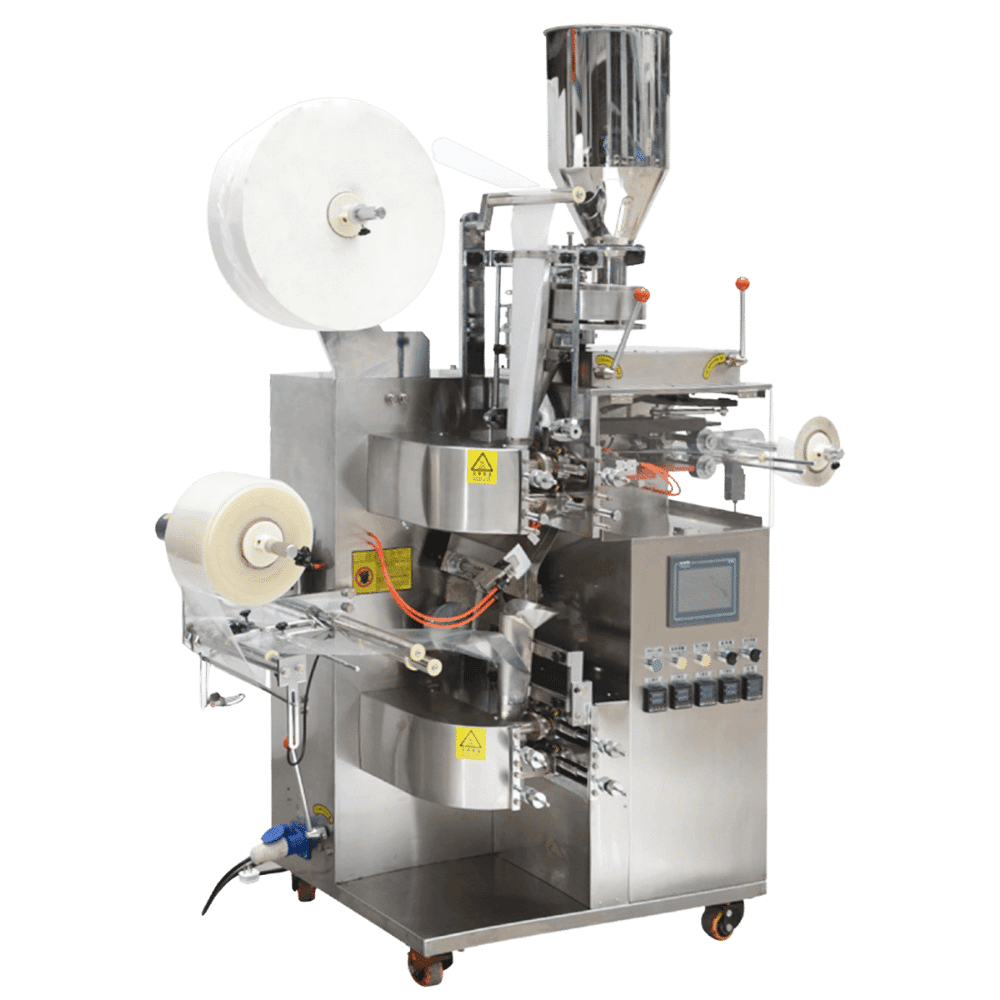
- Best fit
- Tea brands, hotel/office/foodservice suppliers and co-packers who need a flat filter tea bag plus an individual envelope, with string and tag confirmed when th…
- Confirm before selection
- Representative product, pouch samples or drawing, target dose and required output.
Start with three project facts
-
01
What are you packing?
Flow, dust, viscosity, particle size and target dose.
-
02
Which real pouch will run?
Drawing, dimensions, material, zipper and opening behavior.
-
03
What result is required?
Target speed, coding, gas, inspection and downstream needs.
Your Project Snapshot
Review the current starting point
Selections you make below, ready to carry into your request.
- Application
- Broken / fine-cut black or green tea
- Pack format
- Filter tea bag with string and tag
- Model range
- SPM-T100
- Line
- Configured to product
Product Fit
What product do you need to pack?
Every filter-tea project starts with the product. Select the closest tea profile to review the inputs needed for a technical assessment. These categories do not confirm compatibility or a feed route.
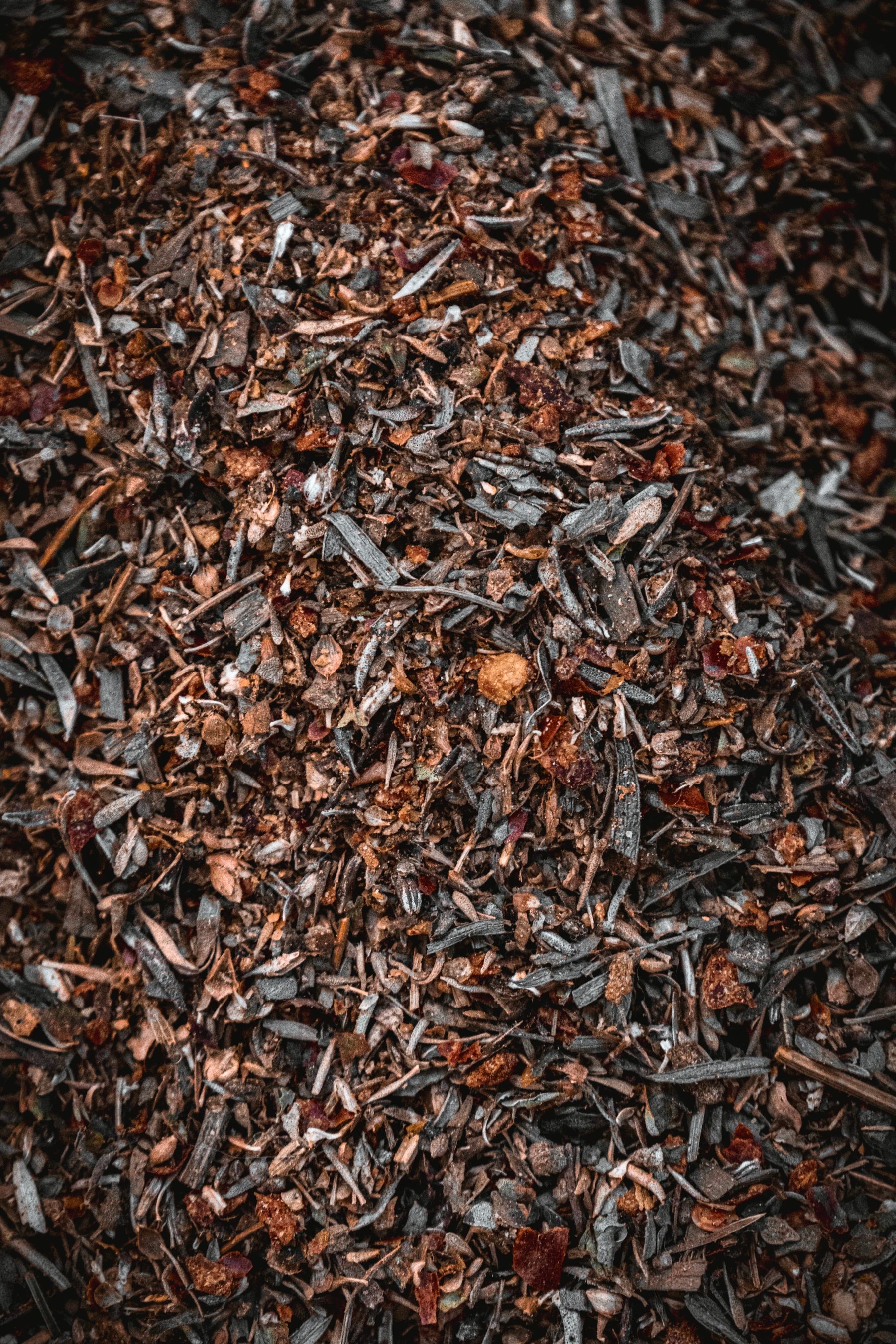
Broken / fine-cut black or green tea Packaging
Typical dosing
Dosing route to be confirmed from representative tea
Key checks
- Particle distribution
- Fines or dust
- Flow consistency
- Target dose
Classic envelope tea is often a cut grade. Send the production blend, including expected fines — a product name is not enough.
Sample validation. Final compatibility and machine configuration are confirmed using representative product and pouch samples.
Bag Format Capability
Inner Bag & Outer Envelope Options
Choose the inner-bag presentation and the outer-envelope route. String, tag, envelope format, materials, dimensions and included equipment are confirmed for each project.

Inner Bag Options
-
Filter tea bag with string and tag
Classic rectangular heat-seal filter bag intended to steep, with string and tag when the finished pack requires them.
-
Filter tea bag without string
The same flat filter bag without string and tag — named on the current Tea & Coffee hub as a separate presentation.

Outer Envelope Options
-
Three-side-seal outer envelope
An individual envelope around the filter bag. Current hub copy lists a three-side-seal outer bag as one option.
-
Pillow / other outer envelope
Current hub copy also lists a pillow outer bag. Exact seal geometry is confirmed from the drawing, not the name.
Project confirmation. Heat-sealable filter paper, tag stock, thread and envelope film or paper are different materials. Send drawings and physical samples for each layer. Pack photographs on this page are published format references, not production samples.
Proof You Can Rely On
See the machine work, then look closer
Official-channel footage shows one running configuration of a filter tea bag with envelope. It does not prove a speed, dose, material or a string/tag scope for your tea.
Main evidence · Official-channel filter tea bag with envelope
How Filter Tea Bag Packaging Machine Works
One official-channel running context; it is not a specification or a guaranteed project result.
Equipment in action
- Complete operating cycle. One running configuration — not a universal speed or performance claim.
- Reference photographs. Close-ups of the current reference machine, below the videos.
A closer look at the system — 4 reference photographs
Photographs of the current reference machine. Final station tooling, filling system, options and component brands are confirmed against the product, pouch samples and project requirements.
-
High-speed tea bag packaging machine with envelope sealing
-

A tea bag packing machine designed for filter tea bags with envelope packaging
-
High-efficiency envelope packing machine for filter tea bags
-

Triangular tea bag enclosed in an outer envelope for freshness
Configure Complete Line
See the Complete Route from Product Feed to Outer Envelope
The published dedicated page describes filling, sealing, enveloping and cutting on one machine. Inner-bag-only, string/tag and the outer envelope remain separate scope decisions until the proposal lists them.
-
01 · Dose
Measure the tea
Select the feed construction after real tea, dose and sample review.
-
02 · Inner bag
Form, seal and cut inner
The dedicated page describes metering tea into filter bags, then sealing each bag.
-
03 · Outer envelope
Insert, seal and cut outer
The dedicated page describes placing each bag into an envelope and sealing it. Pillow or three-side-seal is confirmed from the drawing.
-
04 · Discharge
Finished pack output
Coding, counting and downstream collection are listed only when they appear in the proposal.
Route confirmation. Stage scope, included equipment and change parts are confirmed against your product sample, bag format and finished-pack requirement.
Discuss Your Packaging RouteModels & Parameters
One machine platform. Confirm the complete system.
This filter tea bag with envelope equipment is offered as one platform, SPM-T100. Two current Spack Machine pages list different speed and bag-size figures — they are not combined here.
Model
SPM-T100
- Inner bag width
- Confirm inner-bag drawing
- Inner bag length
- Confirm envelope drawing
- Speed
- Confirm after sample test
Metric primary · US customary in parentheses where published.
| Parameter | Specification | Note |
|---|---|---|
| Model | SPM-T100 | Single model named on the current dedicated page and the Tea & Coffee hub. |
| Primary application | Flat filter tea bag with individual envelope | Not a pyramid mesh bag and not a hanging-ear drip coffee bag. |
| Inner presentation | With string and tag, or without string | Hub names both. String/tag are scoped per project, not assumed. |
| Outer envelope | Pillow bag or three-side-seal bag | Listed on the current hub. Exact seal geometry follows the drawing. |
| Published speed — dedicated page | 80 bags/min | old-page-only. Conflicts with the hub figure. Not a guaranteed output. |
| Published speed — Tea & Coffee hub | About 50 bags/min | old-page-only. Conflicts with the dedicated page. Not a guaranteed output. |
| Inner bag size — dedicated page | Do not use as a filter-bag range | Listed min 10 mm W × 40 mm L / max 200 mm W × 280 mm L — not a credible filter-bag window; likely VFFS paste. |
| Inner bag size — hub listing | L 50–75 × W 50–75 mm (2.0–3.0 × 2.0–3.0 in) | old-page-only. Same millimetres appear on the drip-coffee hub block; confirm against a drawing. |
| Outer bag size — hub listing | L 85–120 × W 75–95 mm (3.3–4.7 × 3.0–3.7 in) | old-page-only. Dedicated page has no separate outer size. Confirm against a drawing. |
| Frame | 304 stainless-steel frame | Listed on the current dedicated page; exact build remains project-specific. |
| HMI | Multi-language HMI | Listed on the current dedicated page. |
| Registration | Photoelectric eye | Listed on the current dedicated page for tag/envelope registration when used. |
| Recipe storage | 20 product recipes | Listed on the current dedicated page. |
| Date printer | Listed on the current dedicated page | Treat as in-scope only when the proposal marks it included. |
| Guard door | Listed on the current dedicated page | Safety guarding is confirmed with the final build. |
| CE conformity | 2006/42/EC · EN ISO 12100, EN 60204-1, EN 415-1 | Covers SPM-T100. UDEM Cert. M.2024.206.C100050, valid to 2029-04-25. |
Confirmation boundary. Two current Spack Machine pages disagree on speed and bag size. Do not combine them. Final parameters are frozen against your tea sample, bag drawing and project test.
Technical Reference
Open only the level of detail you need
The dedicated page describes one inner-and-envelope route: meter tea, seal the filter bag, place it in an envelope, seal and cut. Use that published sequence to prepare samples and drawings — it is not a station map or a bill of materials.
Published process on the current dedicated page — not a controlled manual diagram. Final stations require project confirmation.
- Station 01 Tea feed and dosing
- Station 02 Filter-bag forming and sealing
- Station 03 String and tag (when in scope)
- Station 04 Envelope insert, seal and cut
Detailed station configuration notes
- 01 · Tea feed and dosing. The dedicated page describes loose tea loaded into a hopper or feeder and metered into filter bags. The actual feed construction is confirmed from the sample.
- 02 · Filter-bag forming and sealing. The dedicated page describes sealing each tea bag after filling. Filter-paper structure, width and sealing behaviour require a material sample.
- 03 · String and tag (when in scope). The dedicated page headline includes strings and tags. The hub also names a bag without string. Mark this station included or out of scope in the proposal.
- 04 · Envelope insert, seal and cut. The dedicated page describes placing each bag into an envelope, sealing it and cutting it from the roll. Envelope format follows the drawing.
Configuration boundary. This sequence explains a typical process path for this machine family. It is not a final engineering drawing or a promise that every optional process is included.
Feeding, dosing, handling and inspection options selected around the real project. Final selection depends on the product, dose, pouch, required output and site layout.
01 Listed on the current dedicated page 6 equipment types
-
Date printer
Named on the current page. Confirm print method, location and artwork with the envelope drawing.
Status: Listed option
-
Tear notch
Named under Options. Confirm position against the envelope drawing.
Status: Listed option
-
Materials infeed conveyor
Named under Options. Confirm product, rate and hopper interface.
Status: Listed option
-
Package collator conveyor
Named under Options. Confirm pack orientation and downstream handoff.
Status: Listed option
-
Metal detector
Named under Options. Product, aperture and standard must be confirmed.
Status: Listed option
-
Checkweigher
Named under Options. Target range, pack stability and rejection logic are project-specific.
Status: Listed option
02 Prepare the engineering inputs 6 equipment types
-
Representative tea sample
Status: Required input
-
Target dose and acceptance
Status: Required input
-
Inner-bag drawing and filter-paper sample
Status: Required input
-
String/tag yes or no, plus tag artwork if yes
Status: Required input
-
Envelope drawing, material and coding
Status: Required input
-
Target output, utilities and site constraints
Status: Required input
Images are representative visual references for equipment routes. Final equipment, configuration and performance are confirmed with the product, dose, pouch, required output and line layout.
Configurable options reviewed per project. Status labels describe how each option is confirmed — not a promise that it is included.
Service & Support
What happens after the machine ships
Support continues after shipment. Warranty runs 12 months from receipt; installation, training, spare parts and remote support are scoped for your region and stated in the quotation — review them with us before you order.
-
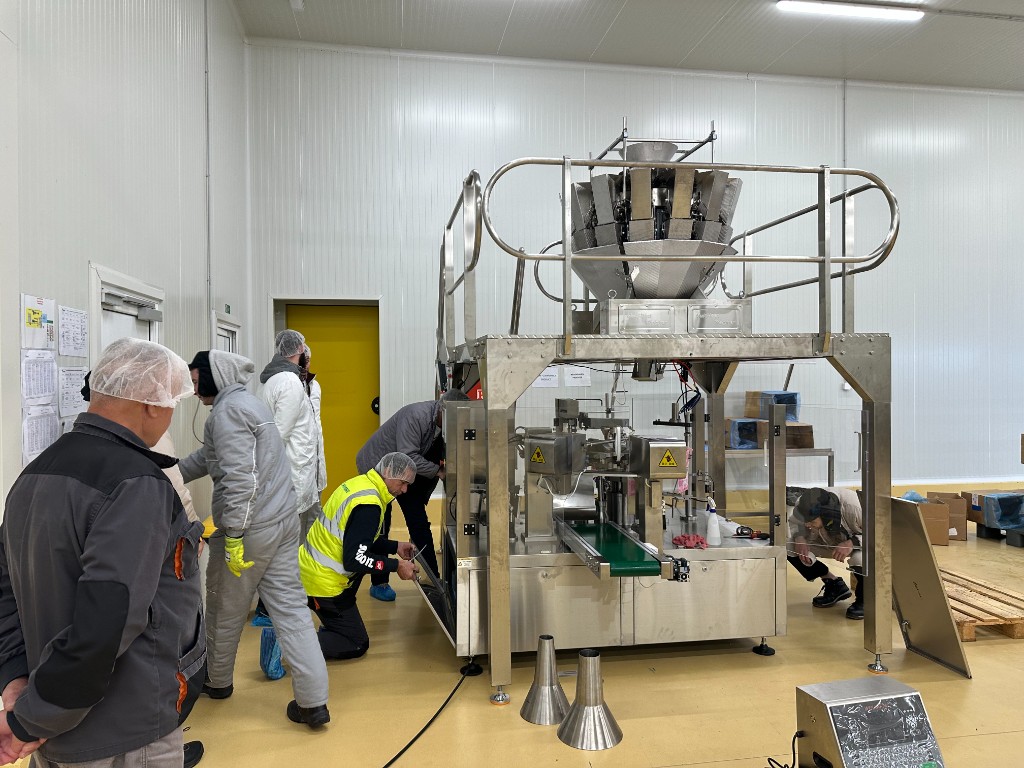
Installation & commissioning
On-site commissioning is arranged when your project requires it. The service fee, round-trip airfare and accommodation are the buyer's responsibility; exact scope is confirmed in the quotation.
-
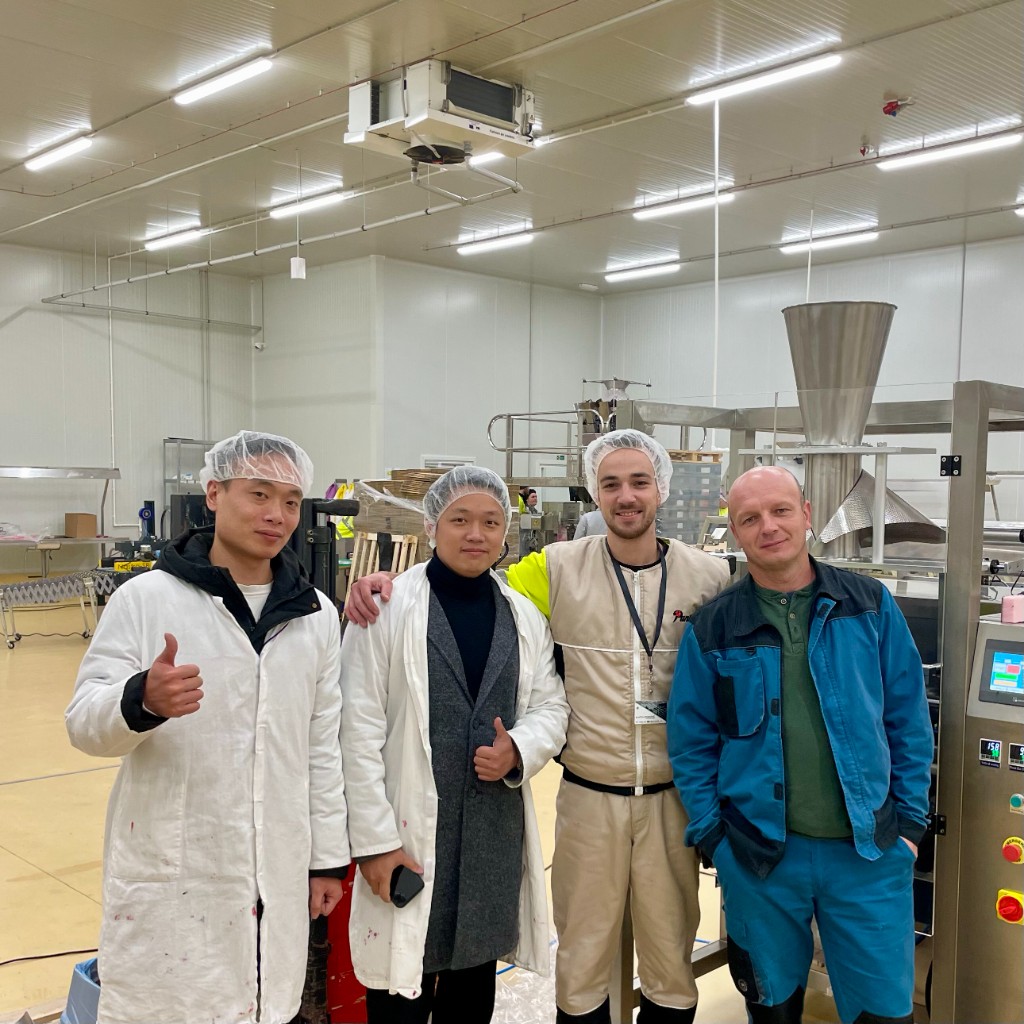
Operator training
Operator training is part of project handover. Format and duration are confirmed for your configuration and region in the quotation.
-
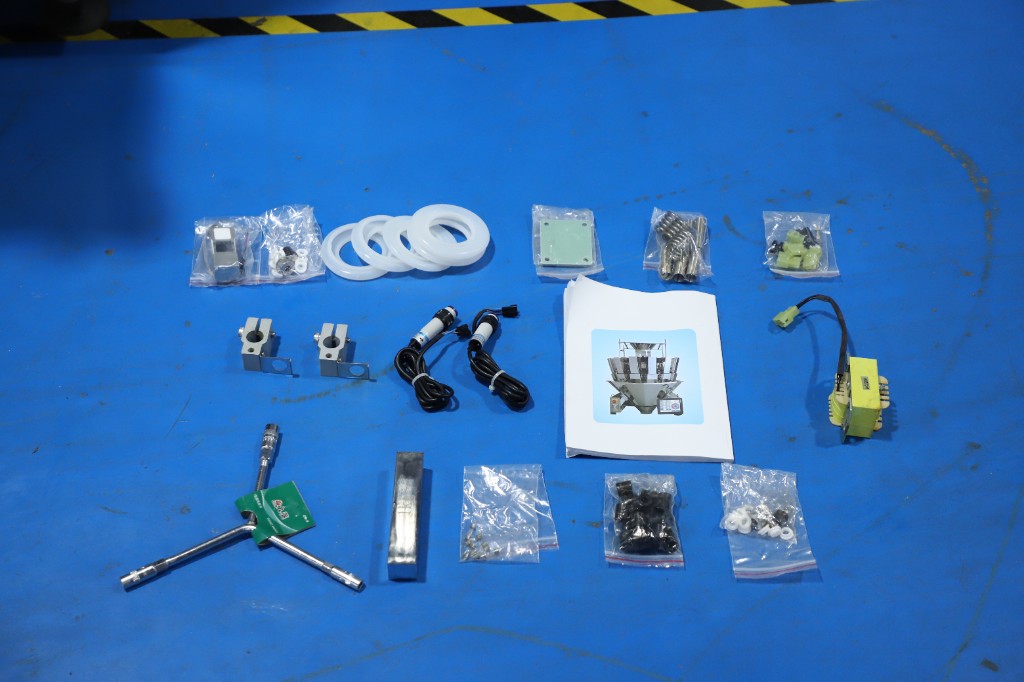
Warranty & spare parts
Warranty covers 12 months from the date of machine receipt. During that period, defects or malfunctions are covered by technical support and complimentary spare parts for replacement; freight on those parts is borne by the buyer.
-

Remote support
From dispatch onward, support is available by phone, Skype or FaceTime. Most issues can be resolved remotely. When an onsite visit is required, a technician is arranged; the service fee, round-trip airfare and accommodation are the buyer's responsibility.
Frequently Asked Questions
Filter Tea Bag with Envelope Packing Machine FAQs
These questions cover the decisions that lock a configuration: product fit, pack format, speed, quotation scope and after-shipment support.
Can a filter tea bag with envelope packing machine run my tea and bag format?
Yes — if the tea, the flat filter-bag drawing and the outer envelope (if any) are confirmed together. Cut grade, dose, filter paper and string/tag decide the filling and sealing route; a name such as tea bag is not enough. Send representative tea, finished-pack references and material samples so the configuration can be locked. See Product Fit.
Is the listed speed of a filter tea bag packing machine guaranteed?
No. Two current Spack Machine pages disagree: the dedicated page lists 80 bags/min and the Tea & Coffee hub lists about 50 bags/min. Neither figure is a guaranteed output. Actual rate depends on tea, dose, bag size, string/tag and whether the envelope is in the line. A target speed for your tea is stated under agreed test conditions in the project proposal. See Models.
Can one filter tea bag packing machine attach string and tag and pack an outer envelope?
Yes as a published one-machine route on the current dedicated page — inner filter bag, then an individual envelope. String and tag are named on that page, and the hub also names a filter tea bag without string. The proposal must mark string/tag and the envelope as included, optional or out of scope. See line configuration.
Is a filter tea bag packing machine the same as a pyramid tea bag or drip coffee bag machine?
No. A classic heat-seal filter bag with envelope, a pyramid or nylon-mesh tea bag, and a hanging-ear drip coffee bag are formed on different machines. Do not assume this SPM-T100 platform produces a double-chamber staple bag either — send the finished-bag drawing. Compare the three Spack Machine routes on the Tea & Coffee hub.
Are heat-seal filter paper, string, tag and the outer envelope standard on a filter tea bag packing machine?
No. Filter paper, tag stock, thread and envelope film or paper are different materials and different scope lines. State each layer so the proposal can mark it included, optional, externally sourced or buyer-supplied. The format section shows inner bags with and without string, plus envelope options.
Can feeding and downstream equipment be part of a filter tea bag packing machine quotation?
Yes. Tea feeding, dosing, discharge conveying and compatible inspection equipment can be reviewed together with the SPM-T100 host. The current dedicated page lists date printer, tear notch, infeed and collator conveyors, metal detector and checkweigher as options. In the final proposal each item is identified as standard, optional or project-dependent. Review the line configuration before you compare host-only prices.
What should I send for a filter tea bag packing machine proposal?
Send what you have — an incomplete list still starts the review. Most useful: representative tea, target dose, inner-bag drawing and filter paper, string/tag yes or no, envelope drawing and material, target output, utilities and site constraints. The reply covers a possible route and a short list of what is still open. Use the inquiry list on this page.
Is the filter tea bag with envelope packing machine CE marked?
Yes. SPM-T100 is CE-marked under Machinery Directive 2006/42/EC (EN ISO 12100, EN 60204-1, EN 415-1). The technical file was reviewed by UDEM, certificate M.2024.206.C100050, valid to 2029-04-25. Ask us for the certificate and declaration of conformity.
How is a filter tea bag packing machine supported after it ships — and what is the warranty?
Warranty covers 12 months from the date of machine receipt. During that period, defects or malfunctions are covered by technical support and complimentary spare parts for replacement; freight on those parts is borne by the buyer. From dispatch onward, support is available by phone, Skype or FaceTime. Most issues can be resolved remotely. When an onsite visit is required, a technician is arranged; the service fee, round-trip airfare and accommodation are the buyer's responsibility. See Service & Support.
Customers & Installations
Where Spack Machine equipment runs
Customer-site and client-visit footage from Spack Machine projects, published with the customer's permission. Each clip is one installation with its own configuration — read it as context for how we work, not as a speed, output or accuracy claim for your product.
Customer site · United Kingdom
Testimonial from a UK customer
Filmed at the customer's own site after installation.
Client visit · Oregon, USA
Catching up with long-time clients
From our visit to long-time Spack Machine clients in Oregon, USA.
Customer site · Indonesia
Testimonial from an Indonesian customer
Filmed at the customer's own site after installation.
Get a Configuration Proposal
Send tea and bag details
First time buying? Fill the short fields, then tell us more in your own words.