01 / REVIEW
Understand the application
Product behaviour, fill range, finished bag, target output, coding, utilities, and site constraints come first.

About Spack Machine
We help B2B buyers define pouch and flexible-packaging equipment around the product, finished pack, output target, factory utilities, and the real scope of the project.
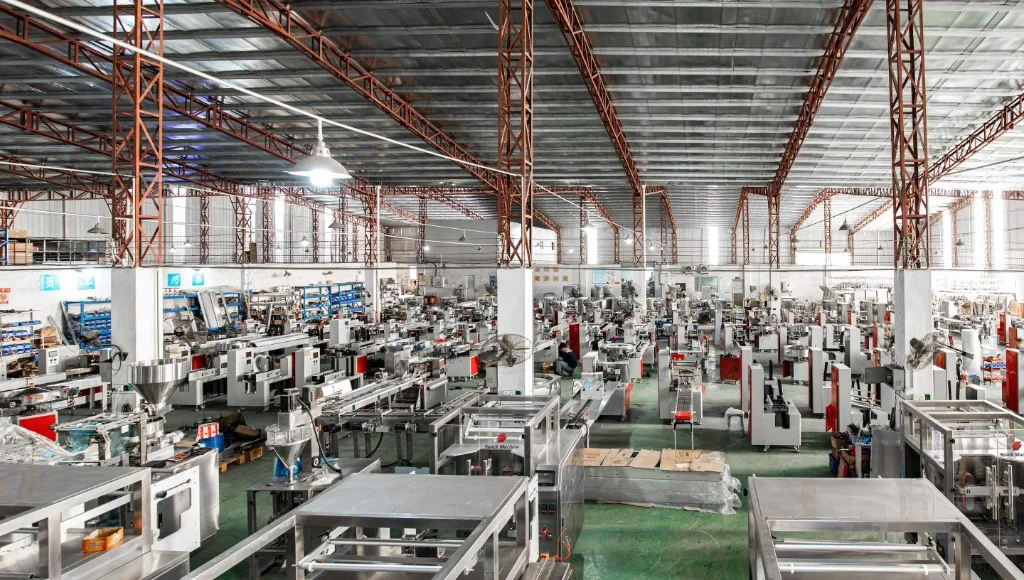
What we actually do
A useful machine discussion is not a catalogue exercise. It starts with what must be packed, what the finished pack must look like, and what the factory can support.
Spack Machine works directly with packaging machinery—from application review and configuration through assembly, setup, and project-specific testing.
The same machine family can behave very differently with a different powder, pouch film, fill weight, zipper, coding method, or upstream feed. We use those details to narrow the route before discussing a final configuration.
Project boundary: final interfaces, test conditions, included equipment, responsibilities, and acceptance criteria should be confirmed in writing for the specific order.
01 / REVIEW
Product behaviour, fill range, finished bag, target output, coding, utilities, and site constraints come first.
02 / DEFINE
Main machine, dosing, feeding, discharge, inspection, and optional modules are identified as separate parts of the line.
03 / VERIFY
Where testing is part of the project, the product, pack, conditions, observations, and acceptance points are defined for that project.
Visible evidence
These are workshop photographs already used on this site. They show the team working with packaging machinery and the equipment itself—not a stock-photo version of manufacturing.
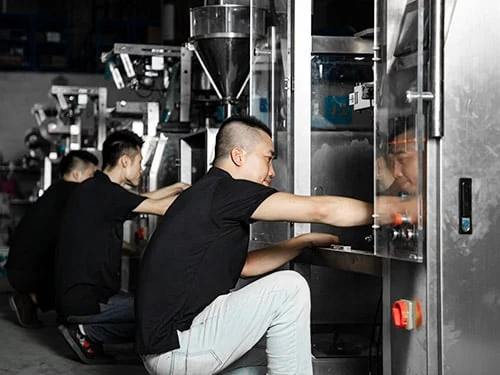
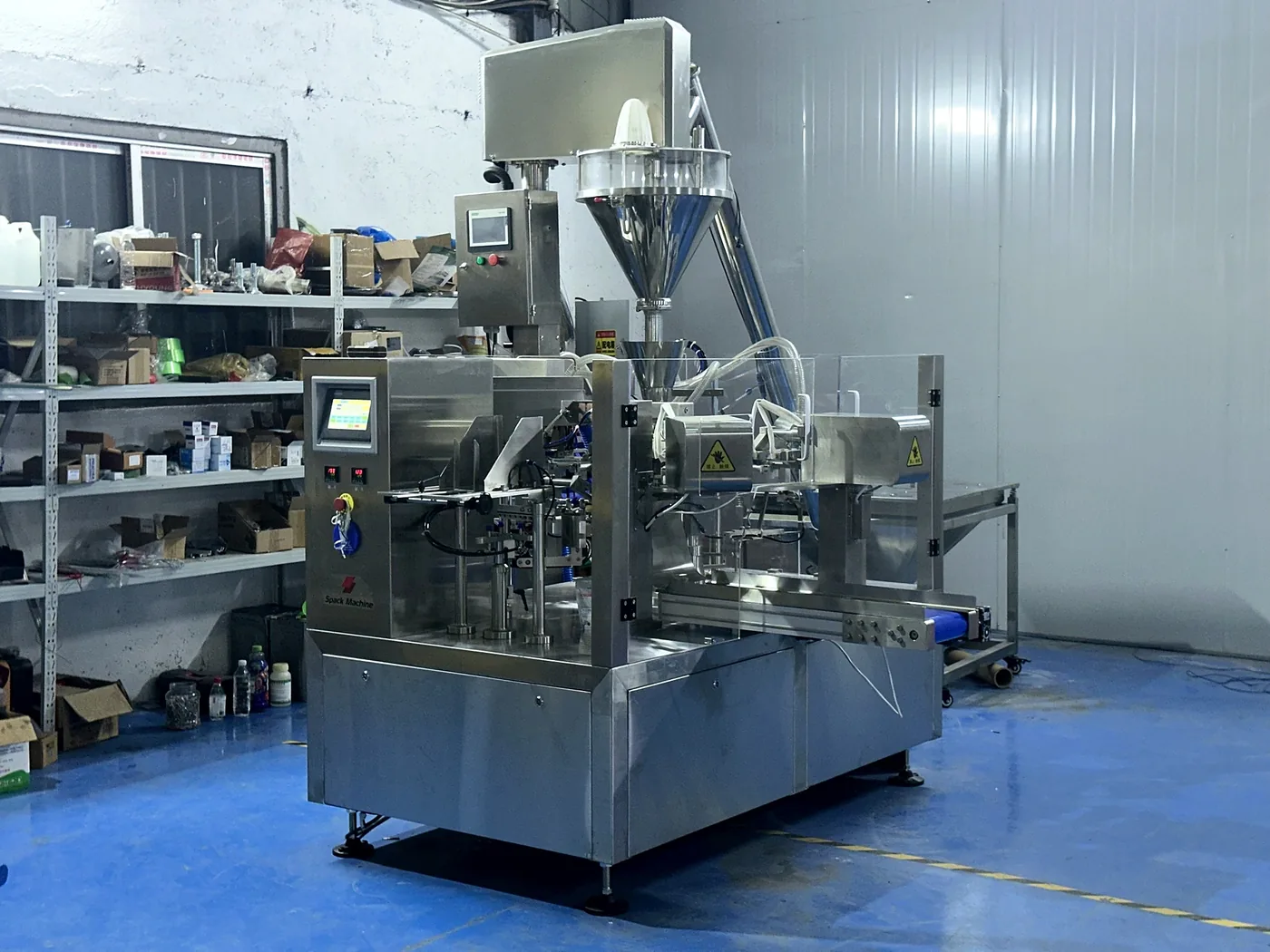
SINCE 2016
Spack Machine has assembled packaging machinery in Shantou, Guangdong, since 2016.
CAPACITY
Counted as complete machines, up to about 50 at peak, built by a team of 25 on a 1,200 m² assembly floor. The delivery time for a specific order is confirmed in its quotation.
CE / 2006/42/EC
VFFS, flow wrap and rotary premade-pouch models are covered by UDEM Cert. M.2024.206.C100050 (EN ISO 12100, EN 60204-1, EN 415-1), valid to 2029-04-25. View the certificate
Trade shows: ProPak Indonesia 2025 and ALLPACK Indonesia 2026. Customers on video: testimonials filmed at customer sites in the UK and Indonesia, and a visit to long-time clients in Oregon, USA — see Case studies. The photographs show people, equipment and workshop conditions; a project’s result is confirmed for that order.
How we reduce ambiguity
The goal is not to make every machine sound suitable. It is to make the conditions, options, and limits visible before the project is fixed.
Product, dose, bag size, material, sealing method, and connected equipment matter. A dry-cycle maximum is not presented as your production rate.
Sample testing can be available on request. The useful result is tied to the actual product, pack, setup, and agreed observations.
Main machine, dosing, feeding, coding, inspection, conveying, discharge, options, and buyer-supplied items are separated.
If another machine route is a better fit, the proposal should say so. A useful recommendation includes what is not yet confirmed.
Machine routes
The right route depends on the finished pack and product—not on which machine has the strongest headline.
A useful first conversation
You do not need a finished specification. A few concrete details are enough to replace a generic catalogue reply with a useful first review.
We can usually narrow the machine family, but not a dependable final configuration. Product flow, pack dimensions, dose, output, sealing material, and factory conditions can change the answer.
Yes. Sample review or testing can be available on request. The exact scope, sample quantity, test setup, and acceptance points should be agreed for the project.
The quotation should separate the main machine, dosing, feeding, coding, inspection, conveying, discharge, optional items, and anything the buyer must provide.
Spack Machine is based in Shantou, Guangdong, China. The workshop photographs on this page show real people and packaging machinery, while the written project scope remains the basis for technical and commercial decisions.
Send the product, bag, fill range, target output, and factory details. We will use them to narrow the machine route and the questions that still need an answer.
