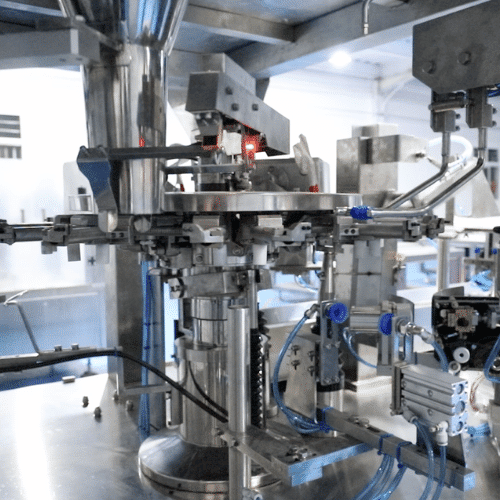
Rotary Premade Pouch Platform

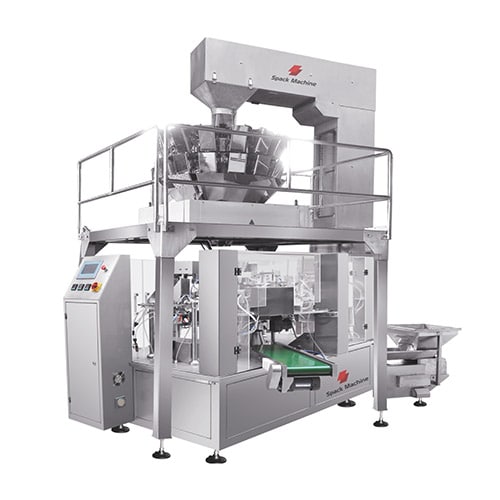
Rotary Premade Bag Packing Machine

Automate the filling and sealing of premade pouches, with a filling system matched to your product.

Tell us what you pack, the fill weight and the pouch you plan to use. A photo or drawing is enough to start; samples help confirm handling and sealing.

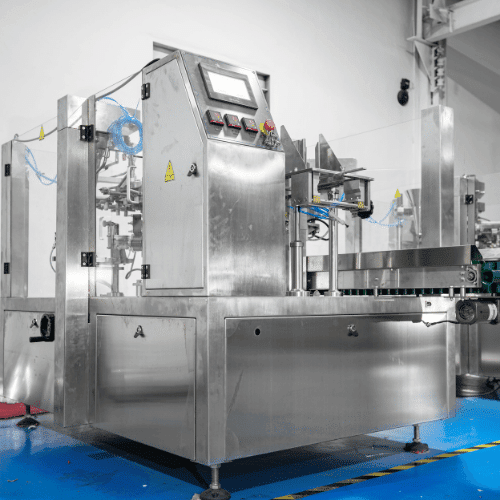
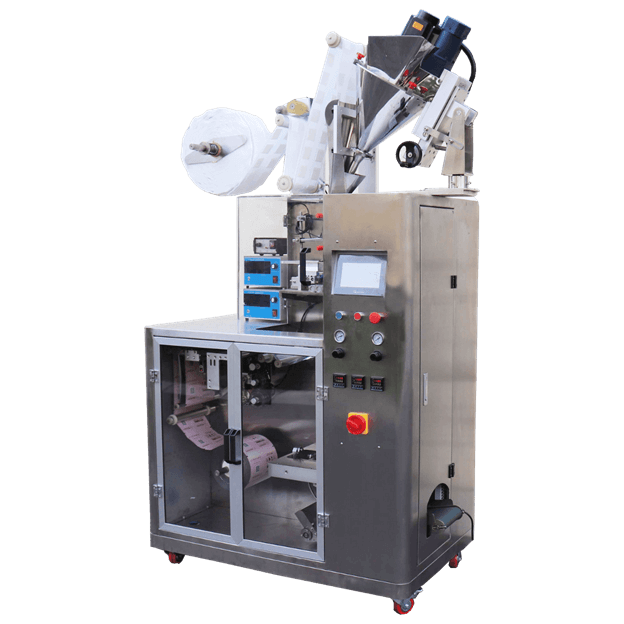
Rotary premade pouch packing system with auger filler and screw conveyor on a clean white background.
Best fit
Packing several products or pouch sizes on one rotary machine, with the filler and change parts selected for each application.
Filling routes
Auger filler; Multihead weigher; Linear weigher; Liquid pump; Electronic scale; Custom / to be confirmed
Confirm before selection
Representative product, pouch samples or drawing, target dose and required output.

Start with three project facts

  1. 01

    What are you packing?

    Flow, dust, viscosity, particle size and target dose.

  2. 02

    Which real pouch will run?

    Drawing, dimensions, material, zipper and opening behavior.

  3. 03

    What result is required?

    Target speed, coding, gas, inspection and downstream needs.

Browsing example

Explore a starting point

The options shown are examples to explore, not an approved machine configuration. Change them below or add them to your inquiry for review.

Application
Powder
Pouch format
Flat 3-side Seal Pouch
Model range
200 Reference Frame
Line
Configured to product

Product Fit

What product do you need to pack?

Choose your product below to see a starting point for the filling system. Flow, dust, viscosity, particle size and fill weight determine what needs checking with samples.

Reference footage: combined granule and powder filling

Powder Packaging

Typical dosing

Auger or electronic scale, selected from how the powder flows

Key checks

  • Flowability
  • Fineness
  • Dust
  • Bulk density
  • Target dose

The rotary host handles the premade pouch. The powder dosing system is specified separately from flowability, dust, bulk density and target dose.

Sample validation. Final compatibility and machine configuration are confirmed using representative product and pouch samples.

Pouch Fit

A pouch name is not enough to confirm compatibility

Will your pouch open reliably and seal cleanly? The zipper position, base, stiffness and seal layer all matter. Browse the formats below, then share the drawing or a sample of the pouch you plan to buy.

All 10 pouch formats — select a format to review its applications and compatibility check.

Printed flat 3-side-seal pouch for beef jerky

Flat 3-side Seal Pouch

Typical applications

Flat premade pouch reference for powders, snacks, coffee or tea when the pouch is presented as a flat pack.

Compatibility check

Confirm the pouch opening, seal layers and whether a stand-up base is needed before the rotary handling route is selected.

Real sample confirmation

A pouch drawing helps check dimensions and tooling. Physical samples let us check pickup, opening and sealing with the actual material.

  1. 01 Sample
  2. 02 Drawing
  3. 03 Running test
  • Seal strength and integrity
  • Pouch opening and gripper function
  • Filling accuracy and product handling
  • Machine speed and stability

Compatibility boundary. These are visual format references, not a universal compatibility list. Final selection requires the real pouch drawing and samples.

Proof You Can Rely On

See the machine work, then look closer

Watch the pouch handling and filling routes below. Each video shows a particular setup; use the product, pouch and run conditions when comparing output.

Main evidence · rotary sequence

Rotary Premade Pouch Machine in Operation

Follow one complete cycle: pouch pickup, opening, filling, sealing and discharge.

What to check in a sample run

  • Product & pouch: Use the product, fill weight and pouch you plan to buy.
  • Output & fill weight: Review the run conditions, accepted pouch count and fill-weight results.
  • Pouch handling & seals: Check opening, product at the seal and the finished seal.

Machine in operation

Each clip shows a specific setup. Use the product, pouch and test conditions when comparing performance.

Support evidence · liquid route

Liquid Pump Filling Configuration

See how a liquid filling route connects to the rotary pouch-handling platform.

Support evidence · weighing route

Multihead Weighing Configuration

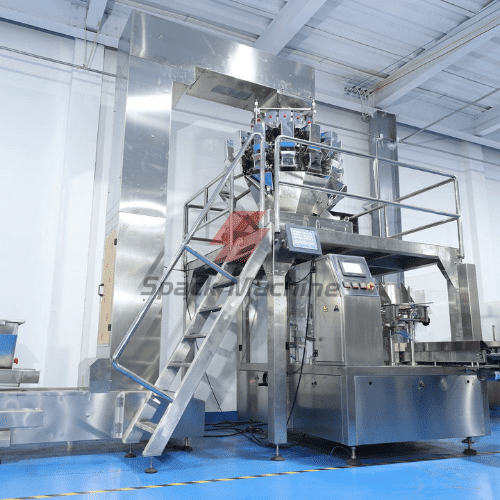
See a weighing route dosing irregular solids before the pouch moves to sealing and discharge.

A closer look at the system — 8 reference photographs

Photographs of the current reference machine. Final station tooling, filling system, options and component brands are confirmed against the product, pouch samples and project requirements.

Configure Complete Line

Build the system around your product

A complete line may include feeding, filling, pouch packing and downstream inspection. Review these items together so you can compare quotations with the same scope.

  1. 01 · Feeding Screw Conveyor for a rotary premade pouch packaging line.

    Screw Conveyor

    Maintains a steady supply to the powder dosing station.

  2. 02 · Dosing Standalone powder screw discharger with conical hopper and lower screw outlet.

    Powder Dosing

    The dosing method is selected from flowability, dust level, bulk density and the target dose.

  3. 03 · Rotary packing Rotary premade pouch packing system with auger filler and screw conveyor on a clean white background.

    Rotary Premade Pouch Packing Machine

    Covers pouch pickup, opening, presentation at the filling station and sealing.

  4. 04 · Convey & inspect Standalone finished product conveyor with side guides and elevated discharge section.

    Finished Product Conveyor

    Moves sealed pouches downstream. Metal detection or checkweighing is added only when the project requires it.

What to send us

Partial information is enough to start. These five points decide the dosing route and line layout.

  1. Product + bulk density or viscosity

    Decides the dosing route — the main driver of accuracy, speed and cost.

  2. Target dose / fill weight

    Sets the dosing hardware and the realistic cycle time for your pouch.

  3. Pouch drawing + physical samples

    The pouch determines grippers and tooling; real samples prevent rework later.

  4. Target output

    Allows a target speed to be stated for your product under agreed test conditions.

  5. Utilities + upstream/downstream constraints

    Defines the scope boundary between the line and your site, so nothing is missed.

Final configuration is confirmed after representative product and pouch sample review.

Send product details

Models & Parameters

Compare the frame, then confirm the complete system

Start with pouch width and length, then check the opening, gussets and fill volume. These frame ranges help narrow the choice before reviewing samples and the complete line layout.

Metric values are primary. US customary equivalents appear in parentheses. These are screening references, not a quotation sheet.

Reference frame comparison. Finished length, film, filler and output are confirmed against the pouch drawing, product and project test.
Specification 200 Reference Frame 250 Reference Frame 320 Reference Frame 350 Reference Frame
Pouch width 80–200 mm (3.15–7.87 in) 120–250 mm (4.72–9.84 in) 180–320 mm (7.09–12.60 in) 200–350 mm (7.87–13.78 in)
Pouch length 100–320 mm (3.94–12.60 in) 100–360 mm (3.94–14.17 in) 100–420 mm (3.94–16.54 in) 100–420 mm (3.94–16.54 in)
Reference speed 10–60 bags/min 10–60 bags/min 10–50 bags/min 10–50 bags/min
Reference dimensions L2100 × W1650 × H1500 mm (82.68 × 64.96 × 59.06 in) L2100 × W1650 × H1500 mm (82.68 × 64.96 × 59.06 in) L2340 × W1850 × H1600 mm (92.13 × 72.83 × 62.99 in) L2340 × W1850 × H1600 mm (92.13 × 72.83 × 62.99 in)
Reference weight 1500 kg (3,307 lb) 1500 kg (3,307 lb) 1800 kg (3,968 lb) 1800 kg (3,968 lb)

Reference values only. These are reference ranges. Final output, dimensions and weight depend on the pouch, product, filling system and selected options; confirm them in the project proposal and sample test.

Shared platform & utilities

These values apply across the reference frames unless the final project configuration states otherwise.

Shared system requirements across the reference frames.
Parameter Reference value Project note
Machine platform Rotary premade pouch handling The final station sequence and included functions are confirmed in the project configuration.
Reference power supply 380 V / 50 Hz Phase, local voltage and the total power requirement of the complete line are confirmed per project.
Compressed air Pressure and consumption confirmed per project Working air pressure and air consumption are confirmed separately for the selected host machine and the complete line.
Filling range and accuracy Defined by the selected dosing system and the product test A single reference range or accuracy value cannot be applied across granules, powders, liquids and pastes; each product is evaluated on test results.

Technical Reference

Stations, controls and equipment options

Review the station sequence, controls and equipment options with your engineer. The selected parts and functions belong in the quotation, together with utilities and maintenance access.

Manufacturer layout drawing of a rotary premade pouch packing machine — top view showing pouch magazine, pickup, bag feeding, coding, pouch opening, product filling, reserved modular stations, heat sealing, shaping and finished-product conveyor.
Manufacturer layout drawing. Labels follow one pouch around the carousel — from magazine and pickup through filling, sealing and discharge. RESERVED positions are modular and confirmed per project; they are not included on every machine.

This diagram explains a typical rotary premade-pouch sequence. It is not a final engineering drawing or a promise that every optional process is included. Final station allocation is confirmed from the pouch, product, dosing route, options and sample testing.

  1. Station 01 Station 01 — Pouch loading & pickup Project-configured
  2. Station 02 Station 02 — Coding / marking Project-configured
  3. Station 03 Station 03 — Pouch opening & detection
  4. Station 04 Station 04 — Product filling
  5. Station 05 Station 05 — Settling / dust control / gas flush Project-configured
  6. Station 06 Station 06 — Reserved secondary process Project-configured
  7. Station 07 Station 07 — Heat sealing
  8. Station 08 Station 08 — Cooling, shaping & discharge
Detailed station configuration notes
  1. 01 · Station 01 — Pouch loading & pickup. A pouch magazine, pickup mechanism, and transfer arm present one premade pouch to the first carousel gripper. Configuration check: magazine capacity, pickup geometry, pouch material, pouch size, and gripper settings are project-specific.
  2. 02 · Station 02 — Coding / marking. An optional coding head can apply a production date, lot code, or other required mark. Configuration check: coder technology, print position, content, consumables, and verification requirements are optional and project-specific.
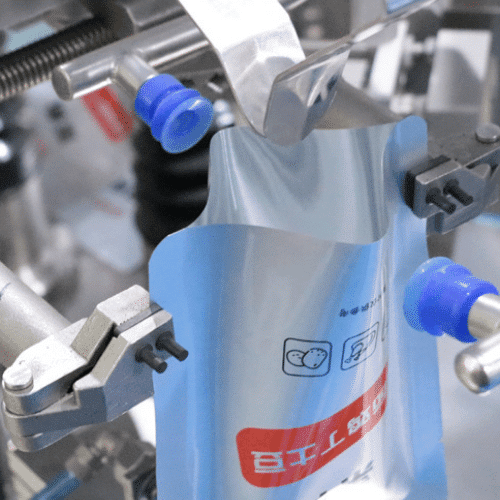
  3. 03 · Station 03 — Pouch opening & detection. Vacuum cups and opening jaws separate the pouch mouth while sensors confirm that the pouch is present and opened. Configuration check: vacuum, jaw, zipper-opening, air-assist, and detection methods vary with the pouch; downstream filling depends on validated open-pouch detection.
  4. 04 · Station 04 — Product filling. A clean interface connects the rotary machine to the selected weighing, auger, liquid, volumetric, or other dosing system. Configuration check: the filler must be selected from the product properties, target dose, accuracy, speed, and sample-test results.
  5. 05 · Station 05 — Settling / dust control / gas flush. This configurable position can support product settling, dust management, gas flushing, load support, or another validated process step. Configuration check: the station function and hardware are defined per project and may be omitted when the packaged product does not require them.
  6. 06 · Station 06 — Reserved secondary process. A modular position is reserved for a second fill, spout insertion, inspection, or another engineered secondary operation. Configuration check: this position is intentionally generic and may remain unused; no specific optional process is promised by the illustration.
  7. 07 · Station 07 — Heat sealing. Engineered heat-seal jaws close the filled pouch, with deflation or pre-seal functions added where the application requires them. Configuration check: jaw profile, sealing stages, temperature, pressure, dwell time, and deflation method depend on the laminate, product, and validated samples.
  8. 08 · Station 08 — Cooling, shaping & discharge. Cooling and shaping bars stabilize the seal before the finished pouch is released to the discharge conveyor. Configuration check: cooling, shaping, discharge orientation, and downstream conveyor or inspection equipment are configured for the actual pouch and line layout.

Configuration boundary. This diagram explains a typical rotary premade-pouch sequence. It is not a final engineering drawing or a promise that every optional process is included.

Service & Support

What happens after the machine ships

Warranty runs for 12 months from machine receipt. Review installation, training, spare parts and remote support in the quotation so the responsibilities and costs are clear before ordering.

  • On-site commissioning of a rotary premade bag packing line

    Installation & commissioning

    On-site commissioning is arranged when your project requires it. The service fee, round-trip airfare and accommodation are the buyer's responsibility; exact scope is confirmed in the quotation.

  • Project handover and operator training at the customer site

    Operator training

    Operator training is part of project handover. Format and duration are confirmed for your configuration and region in the quotation.

  • Spare parts, seals, sensors and tools prepared with the machine documentation

    Warranty & spare parts

    Warranty covers 12 months from the date of machine receipt. During that period, defects or malfunctions are covered by technical support and complimentary spare parts for replacement; freight on those parts is borne by the buyer.

  • Remote support

    From dispatch onward, support is available by phone or FaceTime. Most issues can be resolved remotely. When an onsite visit is required, a technician is arranged; the service fee, round-trip airfare and accommodation are the buyer's responsibility.

Frequently Asked Questions

Rotary Premade Bag Packing Machine FAQs

These questions cover the decisions that lock a configuration: product fit, pack format, speed, quotation scope and after-shipment support.

Will this machine run my product and pouch?

The rotary machine opens, fills and seals premade pouches. Product behavior determines the filling system; pouch dimensions, material and opening determine the handling setup. Start with product fit and pouch formats, then use samples to check them together. For a wider comparison of machine layouts, see our premade pouch machine range. Packs made from rollstock film follow a form-fill-seal route.

What output can I expect with my product?

The speeds in the frame comparison are reference ranges. Actual output depends on fill weight, product flow, pouch opening, sealing and the rest of the line. Agree on the product, pouch, run duration and acceptance checks for a sample test, then compare filled, sealed and acceptable pouches under those conditions.

How do I choose between the 200, 250, 320 and 350 frames?

Start with the pouch width and length, then check its opening, gussets and filled volume. Compare these with the frame ranges. The final frame and grippers need checking against the drawing and physical pouch samples; a frame name alone does not confirm fit.

What changes when I switch pouch sizes or products?

Changing pouch size may require gripper, opening and sealing adjustments or different tooling. Changing products also means reviewing the feeder and filler, product-contact parts and cleaning needs. Include your planned products and pouch sizes in the review, and check the complete changeover during sample testing. Zipper and stand-up pouches need their own opening and sealing checks.

Which filling system does my product need?

Granules and solid pieces generally start with a multihead weigher or linear weigher. For our initial powder packaging assessment, cohesive powders generally start with an auger filler, while free-flowing powders start with electronic weighing. Bulk density, dust, discharge control and the required fill cycle also affect the choice. Liquids and pastes use a pump or piston route selected for viscosity, particles and cleaning. Samples help check dosing and product buildup around the pouch opening.

What is included in the quotation?

A quotation can cover the rotary machine alone or a complete line. Ask for feeding, filling, platforms, dust control, conveyors and inspection equipment to be itemized, with standard and optional items identified. Confirm local voltage, phase, frequency, compressed air, layout and installation responsibilities too. The line examples show the equipment to discuss.

What do you need to start a proposal?

Start with your product, fill weight and a pouch photo or drawing. Add required output, available utilities and any coding, gas flushing or downstream equipment you need. Partial details are fine; samples can follow. Use the project inquiry to share what you have and the questions you want answered.

What support and warranty are available?

Warranty covers 12 months from the date of machine receipt. During that period, defects or malfunctions are covered by technical support and complimentary spare parts for replacement; freight on those parts is borne by the buyer. Remote support is available by phone or FaceTime. When an onsite visit is required, the service fee, round-trip airfare and accommodation are the buyer's responsibility. Review the installation and training arrangements under Service & Support.

Customers & Installations

Where Spack Machine equipment runs

Customer-site and client-visit footage from Spack Machine projects, published with the customer's permission. Each clip is one installation with its own configuration — read it as context for how we work, not as a speed, output or accuracy claim for your product.

Customer site · United Kingdom

UK customer site

Filmed at the customer's own site after installation. One installation with its own product, pouch and configuration.

Client visit · Oregon, USA

Long-term client visit

Filmed during a client visit to Spack Machine. Shown as relationship context, not as a performance record.

Customer site · Indonesia

Indonesian customer site

Filmed at the customer's own site after installation. One installation with its own product, pouch and configuration.

Get a Configuration Proposal

Discuss My Application

First time buying? Fill the short fields, then tell us more in your own words.

Write how many grams (or ml) and what product — one line is enough.

This is your main inquiry box. Include required output, pack style, timeline, utilities, or any questions.

Complete the verification below, then send. Optional: one PDF, JPG, PNG or WEBP file, up to 5 MB. Additional files can follow by reply or WhatsApp.

We use your details only to reply to this inquiry and discuss a possible project. We do not sell your information.


    Back to top
    Got a packing idea? Say hi — no need to have everything ready.