
Hardware pouch packaging routes
Hardware and Electronic Pouch Packaging Machines
These lines put hardware pieces into a pouch and seal it. The live choice is whether you count pieces or weigh a dose, then whether the pouch is premade or formed from film. ESD-sensitive electronics are not a published application on this page.
Two pouch hosts on this page: premade pouches on a rotary machine · pouches formed from roll film on a VFFS machine. Count versus weigh is decided with the project, not by a third host name.
- The machines
- How they work
- Line scope
- Watch them run
- Compare
- What you can pack
- Output scale
- Project inputs
- Before you order
- Material route
- FAQs
- Read next
Start with the pack label: define a piece count or a net weight, then the pouch and feeding needs. Counter configuration and static-sensitive requirements need project review. For food products, use the granule route.
- Best fit
- Fastener, fittings and similar non-food piece packers specifying a first automatic pouch line.
- Not this page
- ESD/PCB as a listed application. Food granules — the granule & solid page. Chemical liquids or powders — the chemical page, the powder page or the liquid page by form. Infusion bags — the tea & coffee bag page. A single toothbrush-like piece on a belt may belong on the flow-wrap machine page.
- Start with
- Part, count vs weight, pouch, film, bags per shift, kit mix if any.
The machines
Which machine makes which pack?
The pouch decides the host: a rotary machine handles premade pouches; VFFS forms bags from roll film. Specify counting or weighing separately using the part and pack label.
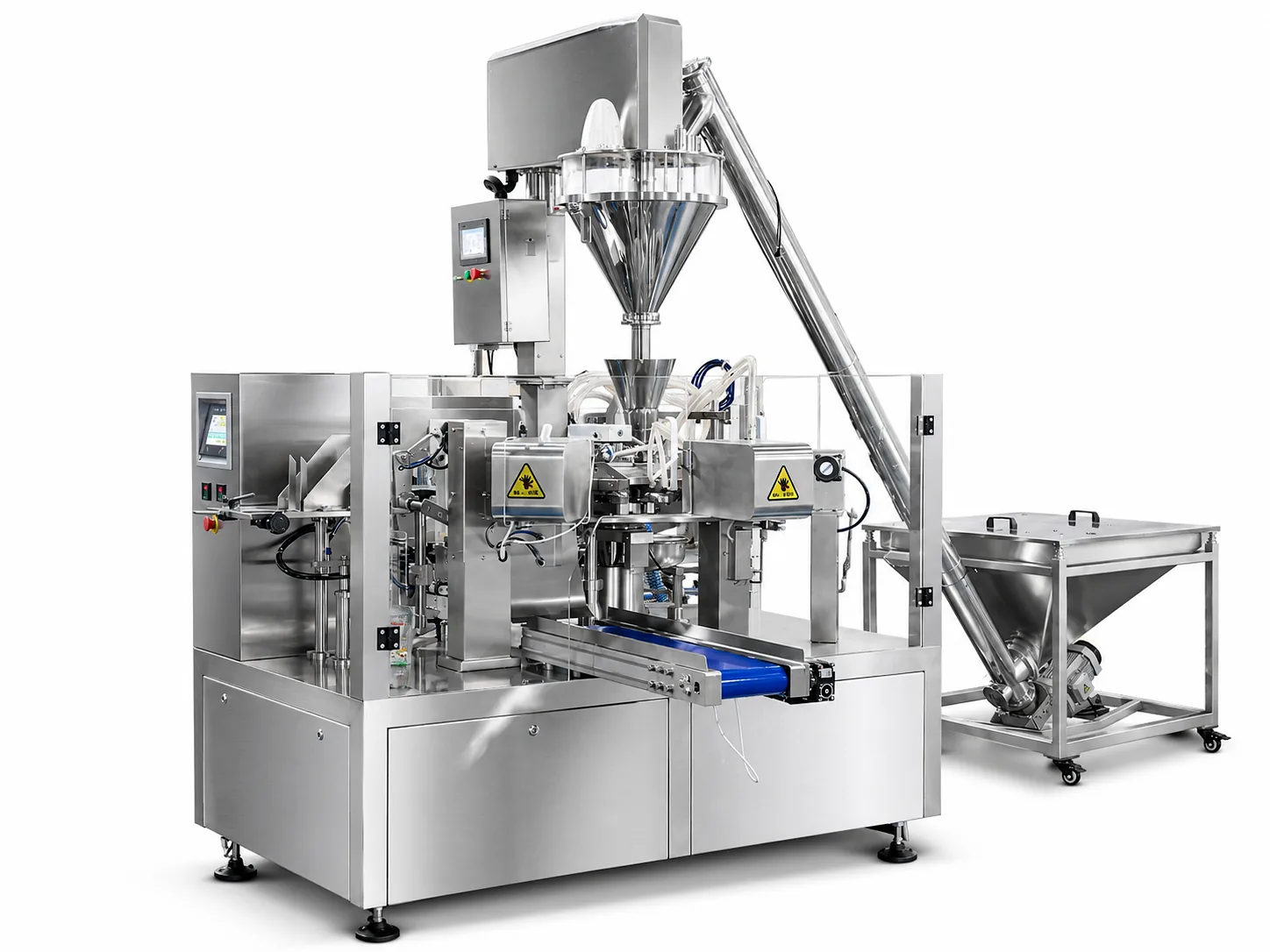
Rotary Premade Bag Packing Machine
Picks up a pouch that is already made, opens it, presents it at the fill point and seals it. The host does not form the bag from film.
What the machine has to do
Hold and open the premade pouch, accept the dose, then seal and discharge. A net-weight pack can start with a multihead or linear weigher. Piece-count packs require a separately confirmed counting configuration.
Published screening figures
- Dosing route
- Weigh: multihead or linear. Count: project-confirmed, not a published counter spec
- Pouch
- Premade pouch, picked up on the rotary host
- Reference speed
- 10–60 bags/min on the 200 and 250 frames; 10–50 bags/min on the 320 and 350 frames
- Reference power
- 380 V / 50 Hz (phase and total line load confirmed per project)
Not for: forming pouches from roll film, or ESD-certified electronics / PCB packing as a listed application.
Model Vertical Form Fill Seal Machine
Vertical Form Fill Seal Machine
Forms the pouch from roll film, fills it and seals it in one pass. The bag does not arrive premade.
What the machine has to do
Form the bag from the web, accept the counted or weighed dose at the fill tube, then seal. Sharp or heavy parts are confirmed on samples. A zipper doypack you already buy ready-made belongs on the rotary host. PCB chips are not a listed SKU.
Published screening figures
- Bag size and speed
- Confirmed on the model page against your bag drawing
- Fill range
- Confirmed on the model page against your product sample
Not for: a premade zipper doypack as the default, or PCB / ESD-sensitive electronics as a listed SKU.
Screening figures. Rotary numbers above are published on the rotary model page as reference values. They are not quoted output for your parts. Sharp or heavy parts are confirmed on samples. No counting-accuracy number is published here. No VFFS number is shown.
How it works
How the machine actually works
Four stages. Count and weigh are different jobs — do not blur them. The host still has to present a pouch and seal it without oil or puncture wrecking the seal area.
Stage 01
Feed the parts
Review part orientation, tangling, oil and burrs using representative samples. Confirm the infeed and whether a bowl feeder is required.
Stage 02
Count or weigh
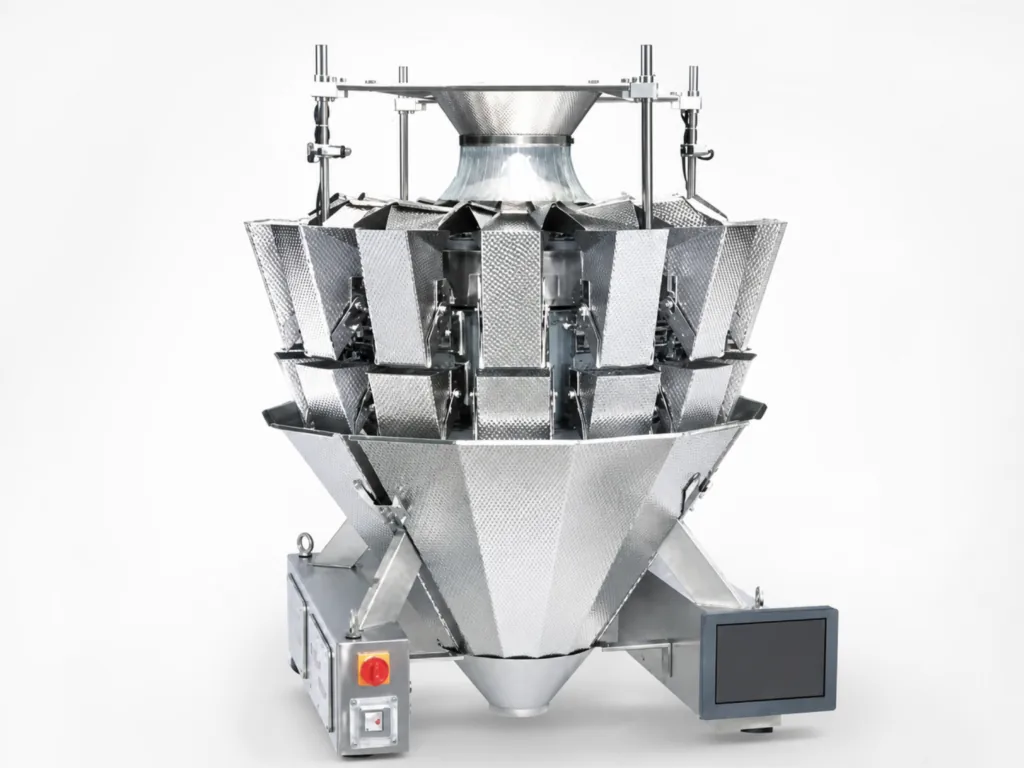
A count label is not a net-weight job. Weighing, when used, follows the irregular-solids multihead or linear route. A dedicated counter is confirmed per project — not a published Spack model spec.
Stage 03
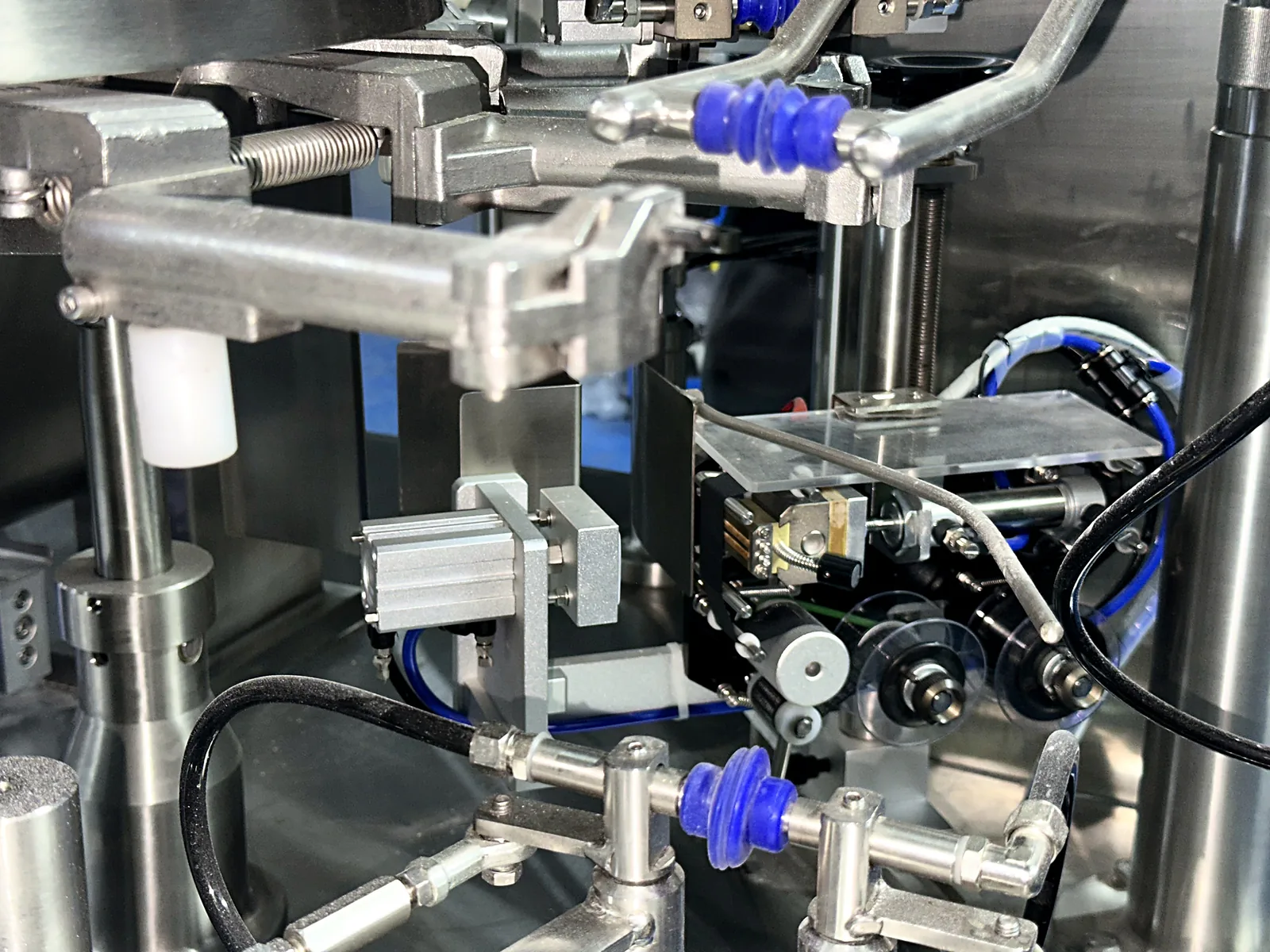
Present the pouch and fill
On the rotary route the host opens a premade pouch at the fill point. On the VFFS route the bag is formed from film around the fill tube.
Stage 04
Seal and send downstream
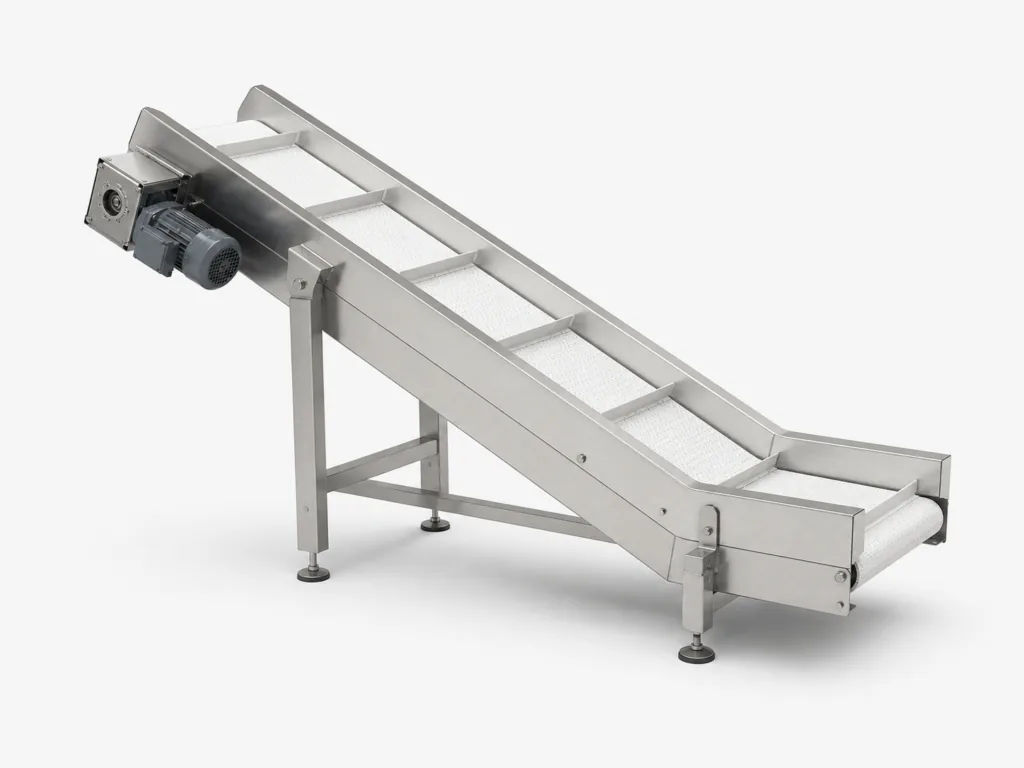
The pouch is sealed and discharged. Residual oil on the seal area and puncture from sharp parts are the checks. Coding is project-configured, not assumed.
Roll film or premade pouches? A rotary host opens, fills and seals ready-made pouches. VFFS forms the bag from roll film before filling and sealing. For a single uniform piece on a belt, review the flow-wrap route.
Photo scope. Station photographs show rotary pouch handling, outfeed and a multihead weigher. The weigher image is a weighing example, not evidence of bolt counting.
Line scope
What sits upstream and downstream
A host quote is not a hardware line. Count versus weigh is confirmed with the project; a counter is not marked standard. Coding is added when the project requires it.
-
01 · Feed
Part infeed
Orientation and tangling are confirmed on samples. A bowl feeder is not a published standard module.
Standard
-
02 · Dose
Count or weigh module
Weighing, when used, follows the irregular-solids weigher route. A dedicated counter is not published as a Spack model spec and is not assumed in the host quote.
Optional
-
03 · Packing
Rotary or VFFS host
Premade pickup and seal, or form-fill-seal from roll film.
Standard
-
04 · Code
Date / lot coding
Added only when the project requires it.
Optional
-
05 · Outfeed
Finished product conveyor
Moves sealed pouches downstream.
Standard
See them run
Watch the machines in operation
Clips are on the official Spack Machine channel and are already published on the rotary machine page. Each one is one running setup — not a hardware count and not an accuracy claim.


Configuration examples. The clips show rotary pouch handling and multihead weighing. They do not demonstrate bolt counting. Confirm the feed, count or weight, bag size and output using your actual parts.
Side by side
Compare the machines
Compare pouch handling first, then specify the count or weight requirement and matched feed. Model speeds are preliminary references, not counting performance for your parts.
| Machine | Fits when | Does not fit when | Published speed |
|---|---|---|---|
| Rotary Premade Bag Packing Machine | You buy premade pouches and need the host to pick, open, fill and seal hardware pieces. Count versus weigh is specified next to the host. | Forming the pouch from roll film, or ESD/PCB as a listed application. | 10–60 bags/min (200 / 250 frames); 10–50 bags/min (320 / 350 frames) |
| Vertical Form Fill Seal Machine | The pouch should be formed from roll film on the line, then filled and sealed in the same pass. | A premade zipper doypack, or PCB chips as a listed SKU. | Confirmed on the model page |
Reading the speed column. Rotary ranges are preliminary selection references on that model page. Actual output depends on feed, count versus weigh, pouch opening and sealing, and downstream handling. Compare quotations on the same basis, and on bags per shift rather than a peak figure. No counting-accuracy ppm is published here.
What you can pack
Which products run on these machines
Use the pack label to decide counting or net weighing, then select the pouch route. The examples below identify feeding and handling questions for your parts. Static-sensitive electronics need a separate requirements review.
Bolts / screws
Often a count if the label is a piece quantity. A weigher is only the starting idea if the pack is net weight. Do not assume a weigher can replace a counter.
Nails
Count versus weigh from the label. Tangling and feed are why samples matter. Not a published counting-accuracy figure.
Bulk gravel-like pieces
Net-weigh, closer to a granule weigh job than to electronics. If the SKU is actually a food granule, leave for the granule page.
Mixed fastener kits
Driven by the real bill of materials, not by a format name and not by a standard option list. Mixed SKUs in one pouch are confirmed per project.
Uniform long piece on a belt
A single uniform piece may suit flow wrapping. Review its dimensions, feed orientation and surface before selecting the machine.
Product examples. Confirm feeding, counting or weighing, and sealing using your own parts. ESD-sensitive electronics are not a confirmed application here.
Output scale
Starting small, or scaling an existing line?
Buyers looking for a small hardware pouch packing machine usually mean one of three different things. No entry-level output range is published here, and no accuracy ppm.
A first automatic line
You are moving off bowl-feed plus a sealer and need one lane that fills a consistent pouch. The variables that decide the machine are count versus weigh, the pouch route, and how many shifts you will run.
A small footprint, not a small output
Floor area, ceiling height and utilities can constrain the layout. The rotary page gives reference frame dimensions and a 380 V / 50 Hz supply; phase and total line load are project-specific. Send your pouch drawing and target pack weight so handling requirements can be checked.
A smaller budget
Price follows host, count versus weigh, and kit complexity. A host alone and a host plus a confirmed counter or weigher are different quotations. Fix the pack before comparing prices.
Automatic lines. The two machines on this page are automatic pouch hosts. Whether a semi-automatic option exists for your format is confirmed case by case. Rotary reference speeds are on the model page; they are not an entry-level promise and not a counting-accuracy figure.
Project inputs
What to define before asking for a configuration
Seven inputs settle most of the questions that follow. Send what you already have; gaps are normal on a first project.
01
Part
What the piece is, including oil, burrs, magnetism and whether pieces tangle. Photos alone do not confirm feeding.
02
Count vs weight
Piece count or net weight, plus the target. A weigher does not replace a counter by default.
03
Pouch format
Premade pouch or roll-film bag, width and length, and a drawing if you have one. Kit pouches follow the real bill of materials.
04
Packaging material
The laminate or film, including puncture and seal layer. Anti-static claims belong to the film certificate.
05
Target output
Bags per shift and how many shifts, rather than a single peak figure.
06
Kit mix
Whether mixed SKUs share one pouch. Mixed kits are confirmed from the BOM, not from a format name.
07
Site conditions
Floor area, ceiling height, power supply and compressed air.
Sample validation. Feeding, counting or weighing, and sealing are confirmed with production-representative parts and your intended pouch. A product name or a photograph alone does not confirm the line.
Before you order
What to confirm when you import the machine
Most first-time problems are not mechanical — they are things that were never confirmed in writing before the order.
Power and utilities at your site
The rotary page publishes a 380 V / 50 Hz reference supply and states that phase, local voltage and the total power of the complete line are confirmed per project. Match that to what your building actually provides, including compressed air.
Documentation for your market
Decide which certificates you need on arrival, and who issues them. Ask for the documents; do not read a website as a certificate. This page does not state a UL, CE or ESD result.
Shipping, duty and clearance
Crated dimensions and weight drive freight, and the HS classification drives duty. The customs clearance walkthrough lists what your broker will ask for.
Acceptance before dispatch
Agree what the machine has to demonstrate before it ships — which parts, which pouch, count or weight, what tolerance — and that it runs your parts, not a generic set.
Wear parts and format parts
Feed tooling, weigher pans or count tooling if quoted, and pouch or forming-set parts. Ask for the list against your two SKUs, not a generic kit name.
Not a commitment. Nothing on this page states lead time, warranty period, installation scope, UL, CE or ESD classification. Warranty wording lives on the rotary machine page. First-time buyers can start from the packaging machine buying guide.
Material route
Material comes before sealing method
Puncture and seal are properties of the film, so the material belongs in the first conversation. This page does not rank pouch films. Anti-static claims belong to the film certificate, not to the machine.
Related guidePrepare your product, pouch and project scope before comparing machine quotations.
First-machine buying guideClaim boundary. Anti-static, ESD and puncture performance are properties of the material and its certification, not of the packaging machine. Ask your material supplier for the certificate valid in your market. This page does not claim an ESD line.
Common questions
Frequently asked questions
Which machine should I use to pack hardware in pouches?
Start from piece count or net weight, then the pouch. Premade pouches use a rotary host; roll-film pouches use VFFS. A net-weight pack can start with a multihead or linear weigher. A piece-count pack needs a separately confirmed counting configuration.
How much does a hardware pouch packing machine cost?
No figure on this page would be meaningful. Price follows the host, count versus weigh, and kit complexity. Fix those three things and the quotations become comparable.
What is the smallest automatic setup for hardware pouches?
An automatic single-lane pouch line for one part and one bag. No entry-level bags-per-minute range is published here; it is confirmed per configuration.
Manual, semi-automatic or fully automatic — which do I need?
These two hosts are automatic. Bowl-feed plus a sealer is a different quotation — describe the current method in the enquiry so the comparison is honest. Whether a semi-automatic option exists for your pouch is confirmed case by case.
Which bag formats are most common for hardware?
Premade pouches and VFFS pillow or sachet bags. Kit pouches with mixed parts are confirmed from the real bill of materials, not from a format name.
Rollstock film or premade pouches for hardware?
Premade pouches go to the rotary host. Roll film that must be formed on the line goes to VFFS. Heavy or sharp parts can change film choice — that is a material and test question, not a ranking on this page.
How long does a changeover take between hardware SKUs?
No confirmed minutes are published for these routes, so none are stated here. Time follows bag size, count versus weigh tooling, and whether mixed kits change. Ask against two SKUs, not a brochure minute count.
Which packaging material works for hardware?
Puncture and seal are film properties. This page does not rank films. Anti-static claims belong to the film certificate, not the machine.
What do I need to confirm before importing a hardware pouch line into the US?
Site voltage, phase, frequency and compressed air; which documents you need on arrival and who issues them; crated dimensions, weight and HS classification; what the machine must demonstrate on your own parts before dispatch; and wear parts plus format change parts. This page does not state UL, CE or ESD certification, lead time or warranty period.
How do I get my hardware product tested before ordering?
Send production-representative parts — same oil, burrs and mix — the target count or weight, the pouch you will actually run, and bags per shift. Photographs alone do not confirm feeding.
Do you pack PCB chips or ESD-sensitive electronics?
ESD-sensitive electronic parts require a separate review of handling, static control and packaging material. The hardware routes shown here do not establish an ESD or PCB packing capability.
Count or weigh?
If the label is “10 screws”, you are counting. If the label is a net weight of bulk pieces, you are weighing. Do not assume a weigher can replace a counter. A dedicated counter is not published as a Spack model spec; it is confirmed per project.
Read next
Background reading before you specify
Next step
Send your project details
Tell us the part, whether you count or weigh, the pouch you will run and the output you need. That is enough to put you on the right host.
Project confirmation. Confirm the host, count or weight, material compatibility and output using your parts and site conditions before finalising a quotation. Static-sensitive requirements need a separate review.
Include if you have it
- The part, including oil, burrs and whether pieces tangle
- Count or net weight, plus the target
- Premade pouch or roll film, plus a drawing if you have one
- Kit mix if more than one SKU shares a pouch
- Target output per shift and site utilities