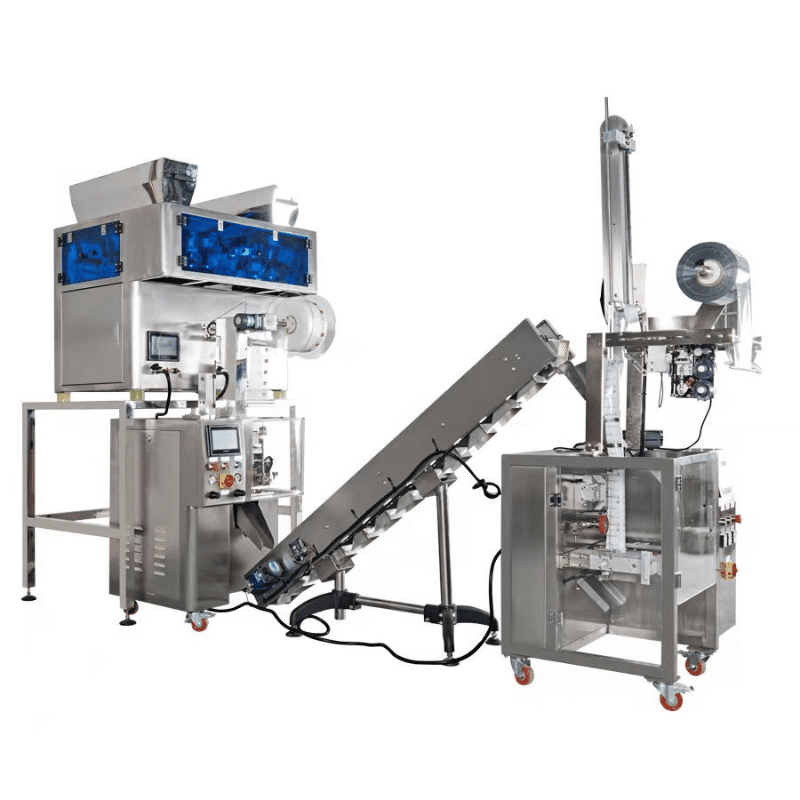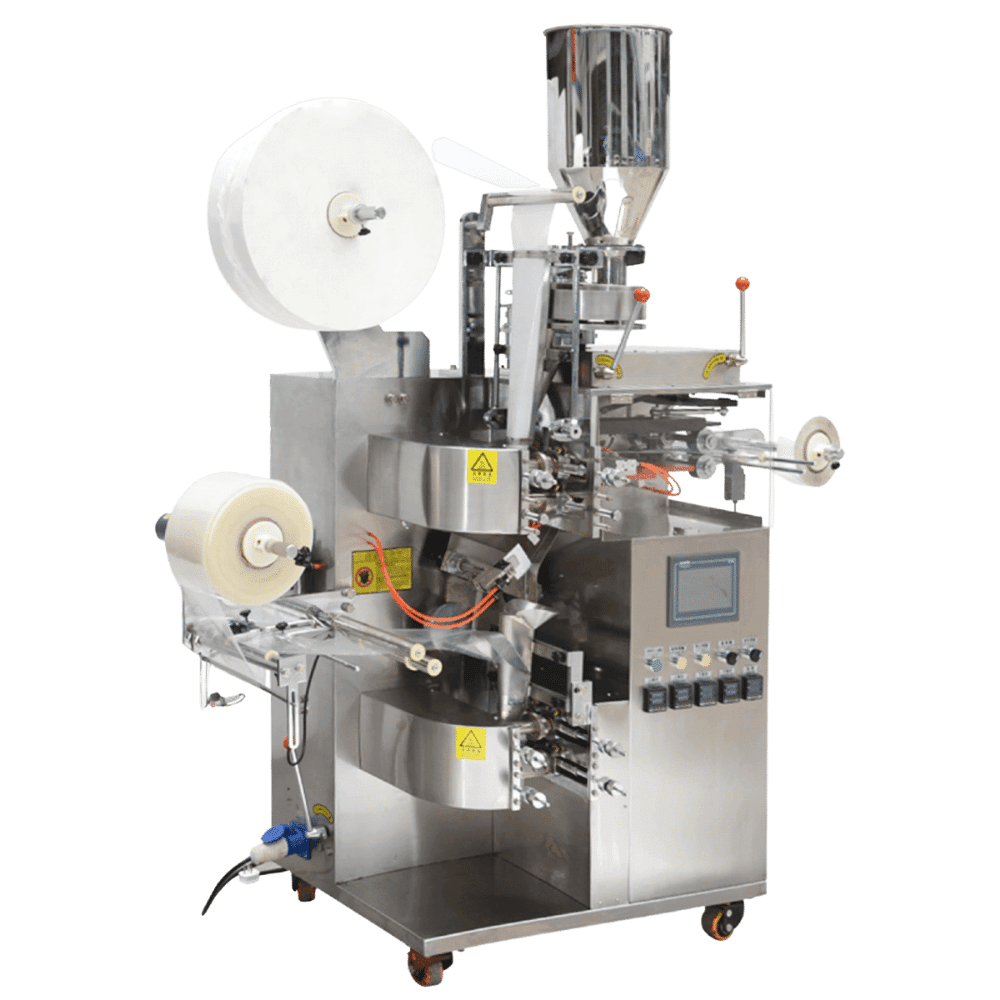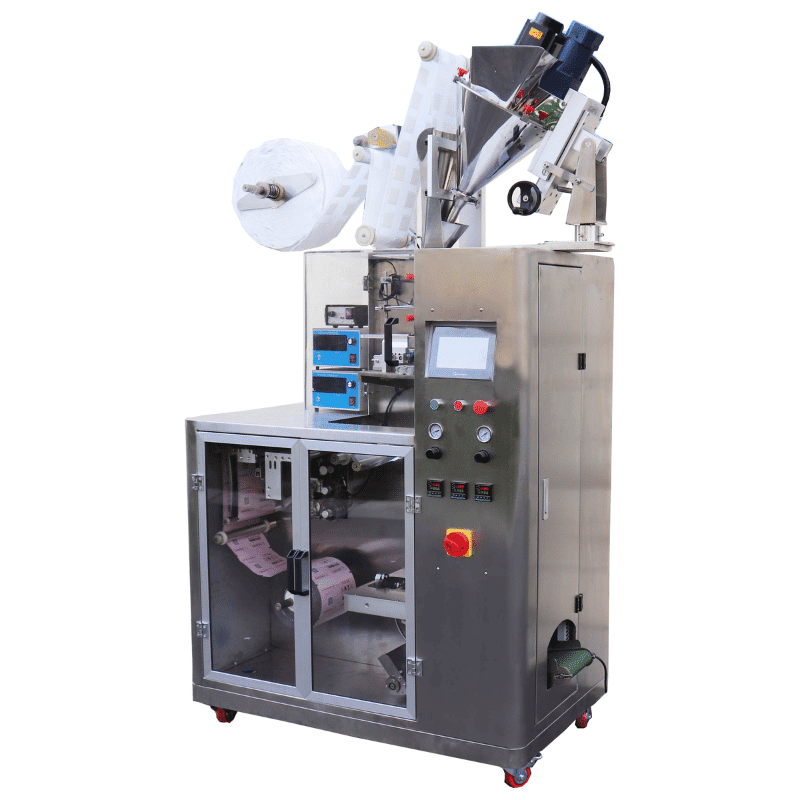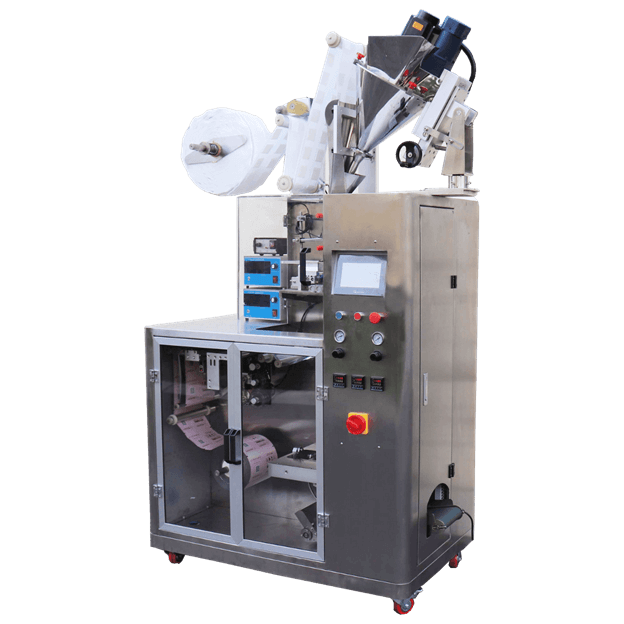
Tea & coffee bag packaging machines

Tea & Coffee Bag Packaging Machines

Three machine routes: pyramid tea bags, flat filter tea bags with envelopes, and drip or steeped coffee bags.

These lines dose the tea or coffee and form and seal the inner bag. String, tag, hanging ears and an outer envelope depend on the finished format and configuration. Start with the bag you want to sell, then review the forming, sealing and packing stages it needs.

Confirm first: these are automatic bag-forming lines for single-serve tea and coffee bags. Rollstock pouches, premade pouch rotary packing, stick packs and sachets are separate machine families.

Pyramid tea bag alongside printed single-serve envelopes, shown as a finished bag format reference
Finished bag format reference, not a production sample.
Best fit
Tea and coffee brands, co-packers and importers selecting a first or second automatic bag line.
Not this page
Tea bag material ranking and brewing comparisons, which belong to the tea bag material guide
Start with
Product, target fill weight, finished bag format, packaging material and target output per shift.

01

The three machines

Which machine makes which bag?

The finished pack decides the machine, not the other way round. Pick the bag your brand actually sells, then open that model page for the full specification.

Pyramid tea bag filled with a botanical blend, shown with thread and blank tag
Finished bag format reference.

Model SPM-600MH

Pyramid tea bag machine

Forms a three-dimensional mesh or non-woven bag for whole-leaf and botanical tea. The platform also supports a flat tea bag; an outer-envelope stage depends on the selected configuration.

What the machine has to do

Dose the tea, form the pyramid geometry and seal the web using the method matched to the material. Confirm whether the project needs thread, tag and an outer-envelope stage.

Published screening figures

Inner bag
Pyramid or flat, switchable
Inner bag size
L 40–80 × W 60–80 mm
(1.6–3.1 × 2.4–3.1 in)
Speed
Inner bag only up to 65 bags/min;
inner + outer linked 40 bags/min
Fill range
1–10 g, ±0.2 g per bag
Power
Single-phase 220 V, 50/60 Hz
Flat rectangular filter tea bags with tags and threads
Finished bag format reference.

Model SPM-T100

Filter tea bag machine with envelope

Produces the classic flat filter-paper bag with string and tag, then overwraps each bag in its own envelope for hotel, cafe and retail distribution — inner and outer bag on one machine.

What the machine has to do

Dose fine-cut tea, form and seal the flat inner bag, attach string and tag, then feed, fill and seal the outer envelope.

Published screening figures

Inner bag
Flat filter bag, with or without string and tag
Outer bag
Pillow bag or three-side-seal envelope
Frame
304 stainless steel
Bag size and speed
Confirmed on the model page against your bag drawing
Hanging-ear drip coffee filter bag in front of a printed three-side-seal outer envelope
Finished bag format reference.

Model SPM-T300

Drip & steeped coffee bag machine

Fills ground coffee into a hanging-ear filter bag that rests on the cup rim, or a steeped bag that brews submerged on a string, and seals the printed envelope around it.

What the machine has to do

Dose ground coffee to weight, form and seal the inner filter bag, attach the ears or string, then form, fill and seal the outer envelope.

Published screening figures

Inner bag
Hanging-ear drip bag or steeped bag
Inner bag size
Min 50 × 50 mm to max 75 × 75 mm
(2.0 × 2.0 to 3.0 × 3.0 in)
Envelope size
L 85–120 × W 75–95 mm
(3.3–4.7 × 3.0–3.7 in)
Speed
Up to 45 bags/min published for this model

Screening figures. The values above are published on the model pages for orientation, not quoted output for your product. Fill weight, bag size and achievable rate are confirmed together, against a production-representative sample and your intended web.

02

How it works

How a tea or coffee bag machine actually works

The stages below show how an inner bag and outer envelope can be combined. The finished bag determines which stages and tooling the project needs.

Multihead electronic weigher dosing tea above a bag-forming station

Stage 1

Dose to weight

An electronic weigher or volumetric doser drops each charge of tea or ground coffee. Bulk density, particle size and how freely the product flows decide which dosing system holds your weight tolerance, which is why a sample matters more than a product name.

Inner bag forming and sealing station on a pyramid tea bag line

Stage 2

Form and seal the inner bag

Roll film is drawn off, formed to the bag geometry, filled and sealed. Heat sealing suits filter paper and coated webs; nylon and PLA mesh normally need ultrasonic sealing. The web you choose therefore decides the sealing route, not the other way round.

Sealed tea bags moving along the transfer conveyor between stations

Stage 3

Transfer, string and tag

Sealed inner bags are carried to the next station. A flat filter bag can take a string and printed tag here, a drip coffee bag gets its fold-out ears, and a pyramid bag runs with or without thread. Each of those is a station, so decide now — adding one later means changing the line.

Outer envelope and date coding section of a tea bag packing machine

Stage 4

Wrap, code and discharge

When an outer envelope is required, the inner bag passes to an overwrapping stage for filling and sealing. Coding and downstream cartoning are included according to the project scope.

Photo scope. These photographs show a pyramid tea bag line. Filter tea and drip coffee use different forming, sealing and tag or ear tooling; the outer-envelope stage depends on the configuration.

Roll film

Flat filter paper, PLA or nylon mesh arrives wound on a core. The machine feeds it into the bag former, so the bag is created, filled and cut on the line at serving size.

Rollstock supplies the inner bag material for these routes. Compare material price, order quantity, waste and handling costs using the same finished-pack specification.

Premade bags

The bag arrives already made and the machine fills and seals it. Compare material price, tooling, changeover work and production requirements for the actual pouch; the costs and handling time depend on the project.

If premade pouches are what you actually buy, the right family is rotary premade bag packing rather than a tea bag former. Say so in your enquiry and you will be pointed there.

03

See them run

Watch by bag type

Three finished bags, three machines. Open a card, switch the clip if there is more than one, then play. Each clip is one running setup — not a guaranteed speed or option list.

Pyramid tea bag filled with a botanical blend

SPM-600MH

Pyramid tea bag

Three-dimensional mesh or non-woven bag for whole-leaf tea.

How to package tea in a pyramid tea bag

Hanging-ear drip coffee bag next to its outer envelope

SPM-T300

Drip / steeped coffee

Hanging-ear drip bag or steeped filter bag with string.

Hanging-ear drip coffee bag running

Footage, not a specification. Bag size, speed and sealing method are confirmed against your product sample, not taken from a video.

04

Side by side

Compare the three machines

Use this to shortlist, then open the model page for the full specification and to check it against your own bag drawing.

Screening comparison. Figures are published values from the model pages, confirmed per configuration against your product sample.
MachineModelFits whenDoes not fit whenPublished speed
Pyramid tea bag SPM-600MH You sell whole-leaf, botanical or large-cut blends that need volume to infuse, and pack presentation is part of the brand. Your tea is fine dust better suited to a flat bag, or the web you want cannot take the sealing method the geometry needs. Up to 65 bags/min inner only; 40 bags/min inner + outer linked
Filter tea bag + envelope SPM-T100 You sell classic fine-cut tea in flat bags with string and tag, and every bag needs its own envelope for distribution. You want pyramid presentation, or bags without string, tag and envelope. Confirmed on the model page
Drip / steeped coffee SPM-T300 You sell single-serve ground coffee brewed over or in the cup, and the inner filter bag plus printed envelope should come off one line. You pack whole beans, retail bags or capsules, or you only need an outer pouch filled with bags made elsewhere. Up to 45 bags/min

Reading the speed column. Adding an outer-envelope stage can change line output. Compare rates for the same finished pack and included stages, using bags per shift as well as the stated running rate.

05

What you can pack

Which teas and coffees run on these machines

Dosing is decided by how the product behaves, not by what it is called. These are the product types these lines are normally specified for, and what each one changes.

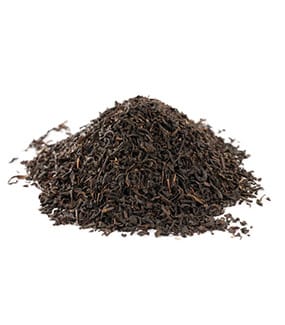
Whole-leaf black tea leaves photographed on a plain surface

Whole-leaf tea

Large, light and prone to bridging in a small hopper. Usually points to a pyramid bag, because a flat bag leaves the leaf no room to open.

Fine-cut black tea photographed close up

Fine-cut tea

Flows well and doses accurately at low weights, which suits the flat filter bag. Fine dust needs a web that will not let it through.

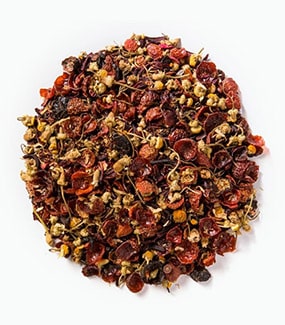
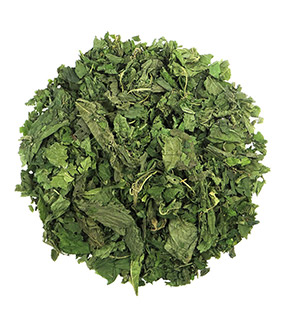
Loose herbal tea leaves photographed on a plain surface

Herbal & botanical blends

Mixed particle sizes segregate as they feed, so weight tolerance per bag matters more than average weight.

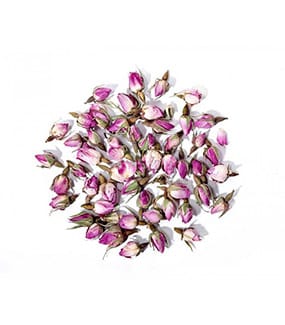
Dried flower petals photographed on a plain surface

Flower tea

Bulky and fragile. The dosing system has to fill by volume without crushing the petals, and the bag has to be visually clean.

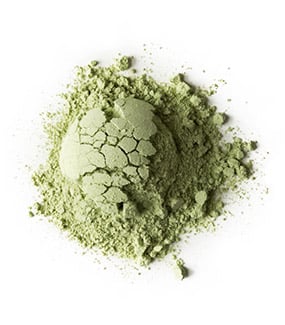
Fine green tea powder photographed on a plain surface

Powdered tea

Dust escapes at the fill point and settles on the seal area. Sealing and dust extraction get specified together.

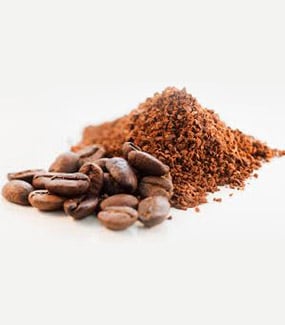
Medium ground coffee in a portafilter

Ground coffee

The standard drip coffee input. Grind and dose interact, and freshly ground coffee also releases gas, which affects the envelope.

Coarse ground coffee in a metal pot

Coarse grind

Feeds more freely than a fine grind but changes extraction. Confirm the grind you actually sell, not a nominal one.

Instant soluble coffee granules photographed close up

Soluble powders & granules

Hygroscopic and fast-flowing. Often better in a sealed sachet than a filter bag, so the format gets confirmed first.

Screening images. The photographs above are visual examples of product type, not measured particle-size or grind specifications. Compatibility is confirmed by running your own sample.

06

Output scale

Starting small, or scaling an existing line?

Buyers looking for a small tea packaging machine usually mean one of three different things, and each one needs a different answer.

A first automatic line

You are moving off hand-filling and need one lane that produces a consistent, sellable bag. The variables that decide the machine are the finished bag format, the fill-weight tolerance your market accepts and how many shifts you will run.

A small footprint, not a small output

Floor area, ceiling height and single-phase versus three-phase power are the real constraint. The pyramid platform, for example, is published as single-phase 220 V. Send site conditions early, because they can rule a configuration out before throughput is discussed.

A smaller budget

Price follows pack complexity. An inner bag alone, an inner bag plus envelope, and an inner bag plus envelope plus coding and gas flushing are three different machines. Fix the finished pack before comparing quotations.

Automatic lines. The three machines on this page are automatic bag-forming lines. Whether a semi-automatic option exists for your format is confirmed case by case, so say what you are comparing in your enquiry. Entry-level output ranges are not published here; they are confirmed per configuration.

07

Project inputs

What to define before asking for a configuration

Seven inputs settle most of the questions that follow. Send what you already have; gaps are normal on a first project.

01
ProductTea or coffee, cut or grind, bulk density, moisture and oil content, and whether it bridges or dusts when fed.
02
Fill weightTarget grams per bag and the tolerance your market and label accept.
03
Finished bag formatDrip, pyramid or flat filter bag, with or without thread, tag and outer envelope.
04
Packaging materialInner web and envelope laminate, including whether the web is heat-sealable or needs ultrasonic sealing.
05
Target outputBags per shift and how many shifts, rather than a single peak figure.
06
Downstream needsDate coding, gas flushing, checkweighing and outer cartoning, if they belong in the same line.
07
Site conditionsFloor area, ceiling height, power supply, compressed air and ambient humidity.

Sample validation. Compatibility is confirmed with a production-representative product sample and your intended packaging material. A product name or a photograph alone does not confirm dosing or sealing.

08

Before you order

What to confirm when you import the machine

These machines are built in Shantou, Guangdong, China. Most first-time problems are not mechanical — they are things that were never confirmed in writing before the order.

Power and utilities at your site

Confirm supply voltage, phase and frequency against the configuration, along with compressed air. A machine published as single-phase 220 V, 50/60 Hz still has to be matched to what your building actually provides.

Ambient humidity

Tea and ground coffee both change behaviour with moisture, and so does the seal. If your plant runs humid, raise it early — it affects sustained output more than peak rate.

Documentation for your market

Decide which certificates and food-contact declarations you need on arrival, and who issues them — the machine builder or the material supplier. Start from packaging standards for tea entering the US.

Shipping, duty and clearance

Crated dimensions and weight drive freight cost, and the HS classification drives duty. The customs clearance walkthrough lists what your broker will ask for.

Acceptance before dispatch

Agree what the machine has to demonstrate before it ships — which product, which material, which bag, what weight tolerance — and that it runs your sample, not a generic one.

Spares, tooling and format change

List the wear parts and the change parts for each bag size you plan to run. Compare the tooling, shipping and changeover costs before deciding which parts to order with the machine.

Not a commitment. Nothing on this page states lead time, warranty period, installation scope or after-sales terms. Those are confirmed per project in writing, never inferred from a website. First-time buyers can start from the packaging machine buying guide.

09

Material route

Material comes before sealing method

The web you choose decides which sealing routes remain available, so it belongs in the first conversation and not the last.

Filter paper, non-woven, PLA mesh and nylon mesh behave differently under heat and ultrasonic sealing, and they differ again on printability, food-contact approval and how the tea reads through the bag. That is why material is a project input rather than something settled after the machine is chosen.

This page does not rank materials. The comparison, including where each material is normally used, is maintained as a separate guide so the two pages do not contradict each other.

Claim boundary. Biodegradability, compostability and food-contact compliance are properties of the material and its certification, not of the packaging machine. Ask your material supplier for the certificate valid in your market.

10

Common questions

Tea and coffee bag packaging machine FAQs

Each answer opens with the answer itself, then the reasoning behind it.

Can one machine pack every tea and coffee bag format?

No. Drip coffee bags, pyramid tea bags and flat filter tea bags are formed on different machines, because the inner bag geometry and the sealing route are different.

One line normally covers a single inner-bag format together with its outer-envelope variants. If you sell two formats today, expect to compare two machines rather than look for one that does both.

What does a small tea packaging machine actually mean?

In practice it means an automatic single-lane line that forms, doses and seals one bag format, rather than a shrunken version of a multi-format plant.

Decide the finished bag first. A small pyramid line and a small flat-bag line with envelopes are different machines with different footprints, even at the same output.

Is a tea sachet packaging machine the same thing?

Usually not. A sachet machine seals a flat pouch that is opened and emptied; these tea and coffee routes form an infusion bag that is brewed in water. An outer envelope may be added where the finished pack requires it.

If you want a sealed sachet of instant or soluble powder rather than a brewing bag, say so — that is a different machine family and the envelope stage is the whole job.

Do you supply manual or semi-automatic tea bag machines?

The three machines described on this page are automatic bag-forming lines.

If you are pricing a hand-operated tea bag sealer, say so in your enquiry so the comparison is honest. Whether a semi-automatic option exists for your specific format is confirmed case by case.

How much does a tea or coffee bag packaging machine cost?

Price follows the finished pack, not the product, so no figure on this page would be meaningful.

An inner bag alone, an inner bag plus envelope, and an inner bag plus envelope plus coding and gas flushing sit at clearly different levels. Fix bag format, fill weight, material and target output and the quotations become comparable.

What speed can I expect?

Speed is only meaningful together with product, fill weight, bag format and material, and it depends on whether the outer envelope runs in the same pass.

On the pyramid platform, for example, the published figures are up to 65 bags per minute for the inner bag alone and 40 bags per minute with the outer bag linked. Compare quotations on the same basis, and confirm your own rate by sample testing.

Does the outer envelope have to run on the same machine?

Not always. Inner bag and envelope can run in one pass, or the envelope can be overwrapped on a separate stage.

The choice is driven by target output, floor space and how often you change envelope artwork. Raise it early, because it changes the line layout.

What is the difference between roll film and premade bags?

Roll film arrives wound on a core and the machine forms the bag on the line; a premade bag arrives already made and the machine only fills and seals it.

These routes use rollstock for the inner bag. Compare material and handling costs against the same finished-pack specification. For pouches supplied ready-made, review rotary premade bag packing instead.

Which tea bag material should I choose?

Material selection is covered by the tea bag material guide rather than this page.

Bring the material you intend to use into the machine conversation, because it decides whether heat or ultrasonic sealing is available.

Is a steeped coffee bag the same as a drip coffee bag?

They are different finished packs handled by the same coffee machine. A drip bag hangs on the cup rim by fold-out ears; a steeped bag brews submerged on a string with a tag.

Confirm which one you sell on the drip coffee machine page, because the ear or string station differs.

Can the machine date code and gas flush?

Date coding on the outer envelope is a normal option, and gas flushing can be specified where the pack and product justify it.

Both add stations, cost and footprint, so include them in the first specification rather than adding them after the layout is fixed.

What do you need from me to recommend a configuration?

A production-representative product sample, your target fill weight, the finished bag format and your target output per shift.

Packaging material specifications, site power and floor dimensions complete the picture. Anything still open can be marked as such.

11

Read next

Background reading before you specify

Six pages that answer the questions that come up most often around a first tea or coffee bag line.

12

Next step

Send your project details

Tell us the finished bag you sell, the product going into it and the output you need. That is enough to put you on the right machine.

Project confirmation. Machine, configuration, material compatibility and output are confirmed against your samples and site conditions before anything is quoted as final.

Back to top
Got a packing idea? Say hi — no need to have everything ready.