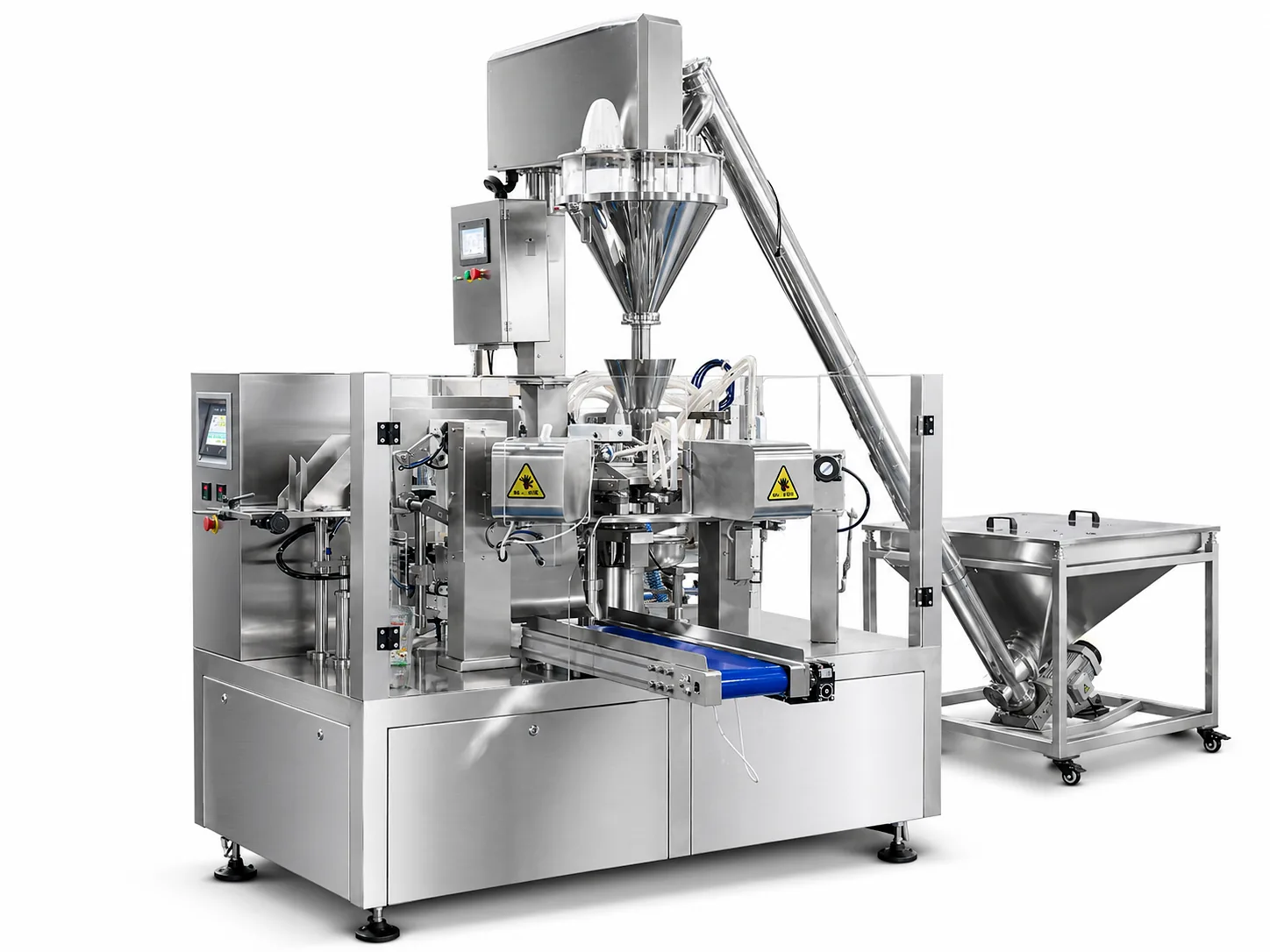
Premade pouch
Rotary host
For a pouch that is already made, review the rotary host and select the auger station from the powder behaviour and target fill.

Line component · powder dosing
Auger dosing for cohesive or non-free-flowing powders on rotary and VFFS pouch lines.
A rotating screw meters powder into the pouch. We match the station to how your powder flows, the target fill and the packaging machine that presents or forms the pouch.
For dosing principles and setup details, read the auger filling machine guide. For a complete pouch line, compare the powder, dosing station and packaging machine together.
01
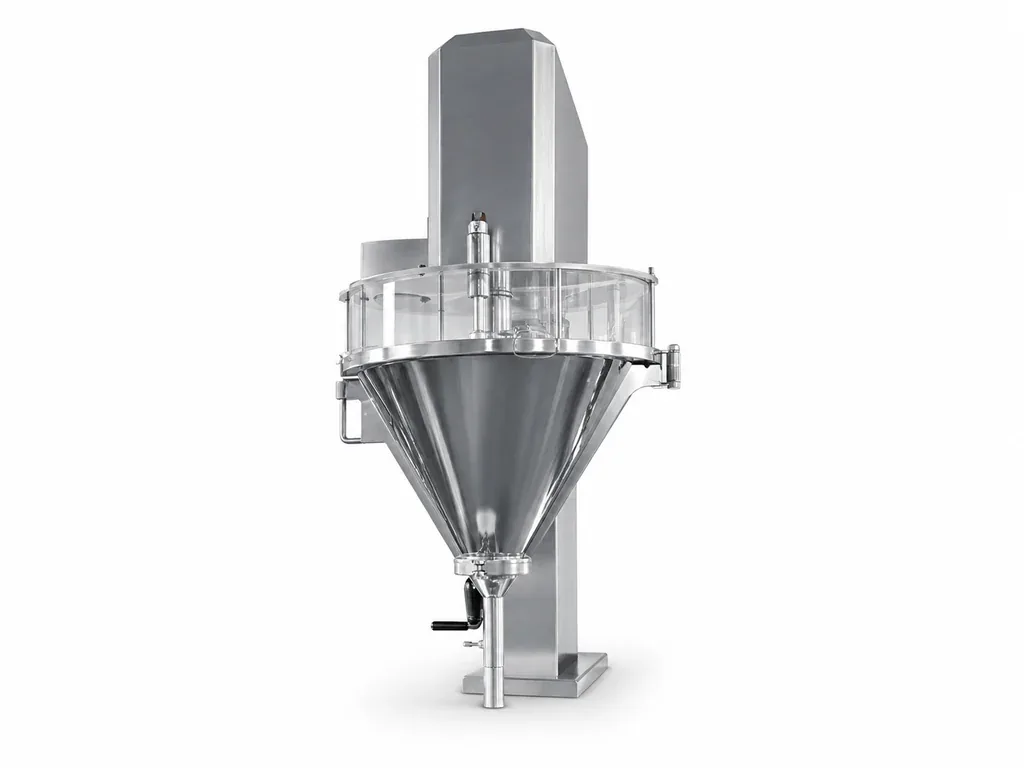
The station
It is a dosing station on a pouch line. The screw meters powder. The bag is formed or presented on a host.
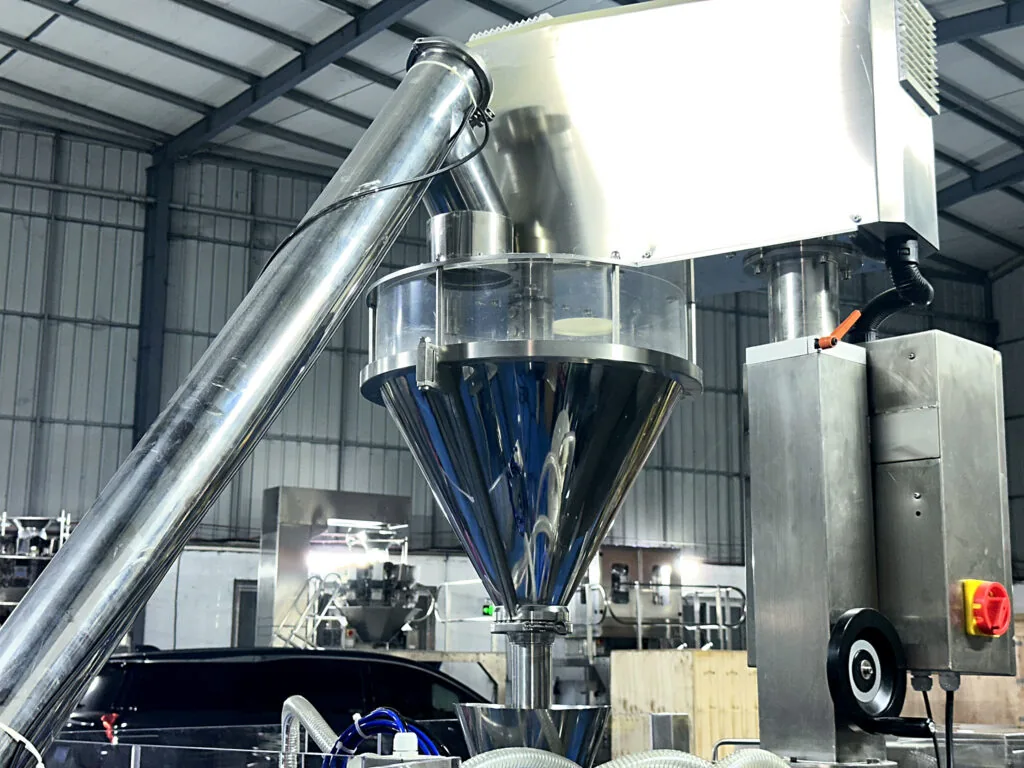
Start with powder flow. For Spack pouch-line selection, cohesive or non-free-flowing powders usually start with an auger. Free-flowing powders are first screened on a weigh-based route. A representative sample helps confirm the choice and whether the outlet can stop cleanly between doses.
02
Choose the dosing route
Start with whether the powder flows freely. Fineness, dust, bulk density and target fill are further checks when confirming the station and pouch line.
| Decision | Auger filler | Electronic scale | Cups | Weigher |
|---|---|---|---|---|
| What it measures | Powder via a screw | Weight of free-flowing powder | Volume in cups | Weight of pieces |
| Product state | Cohesive or non-free-flowing powder | Free-flowing powder (for example detergent type) | Free-flowing granules | Mixed, fragile, giveaway-critical pieces |
| Pouch machine | VFFS or rotary | VFFS or rotary | Usually VFFS | Rotary or VFFS |
| Open | Auger filler | Powder packaging | Volumetric cup filler | Granule and solid packaging |
Liquids are not this screw. Sauces and pastes: piston filling machine. Bottles, jars and tins are a different machine family.
03
The host
The rotary machine picks, opens and seals a pouch that is already made. A VFFS forms the pouch from film. Dust control is a line check on both.
Premade pouch
For a pouch that is already made, review the rotary host and select the auger station from the powder behaviour and target fill.
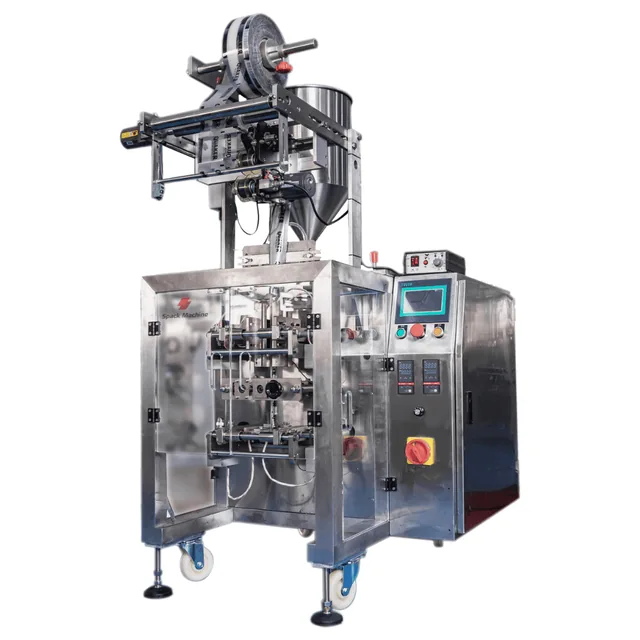
Roll film
Published filling systems on that page include an auger. Width screen: 100 / 150 / 200 mm 3.94 / 5.91 / 7.87 in on VFFS-220 / 320 / 420.
04
Product state
These examples assume cohesive or non-free-flowing powder. Fineness, dust and bulk density are further checks during engineering review.
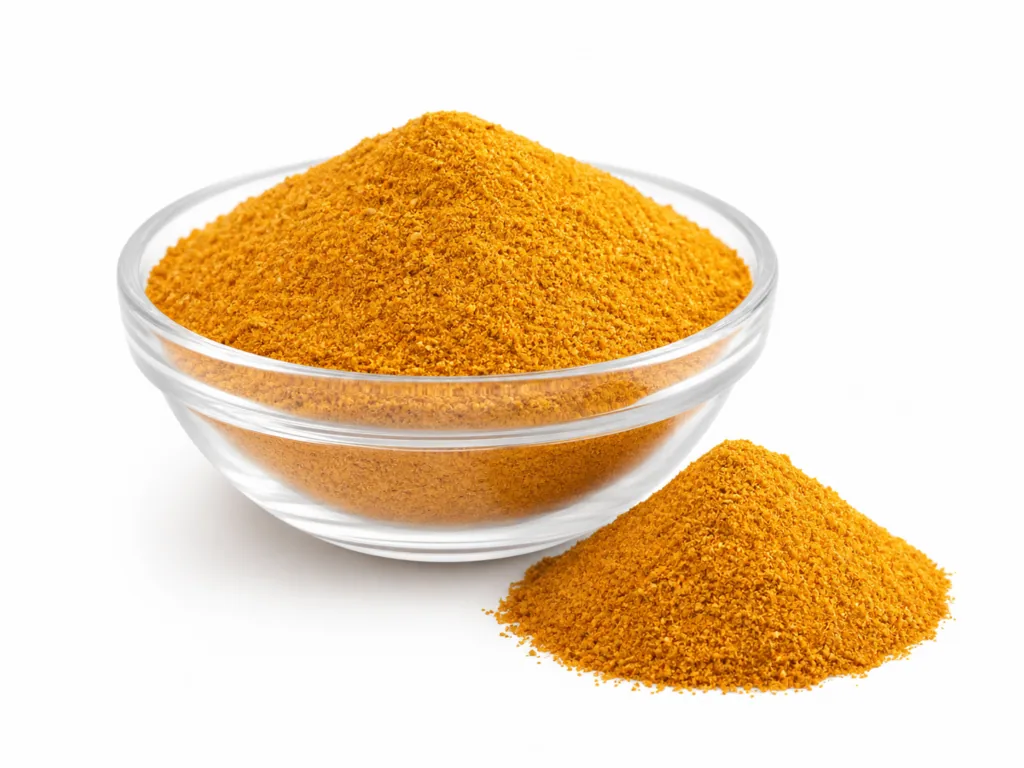
Cohesive or non-free-flowing seasoning, flour, milk powder, chili and ground coffee often start on an auger. These are product examples; a sample confirms the dosing choice.
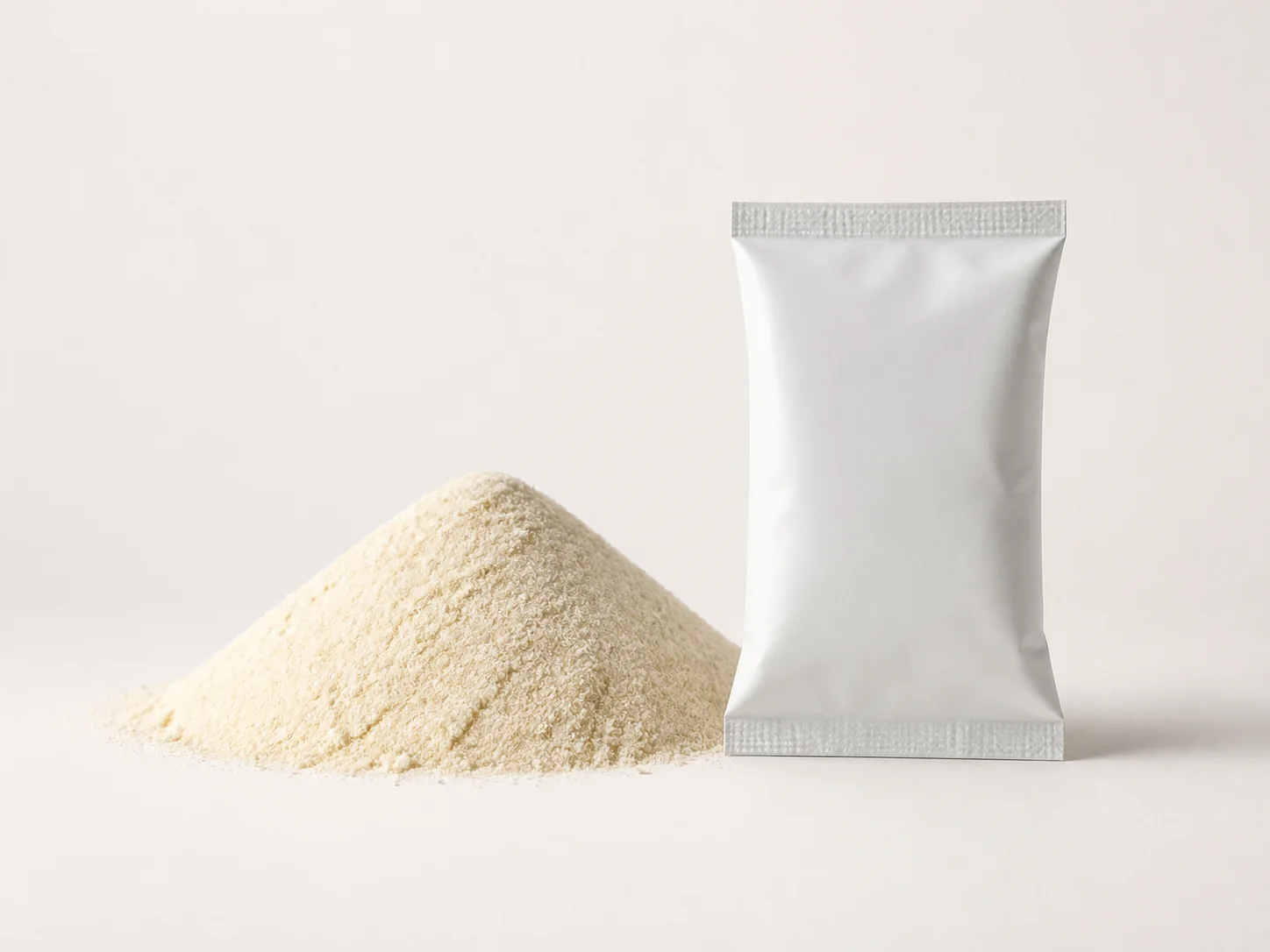
Screw dosing can release dust. Review extraction at the fill point and inspect the pouch seal area with the actual powder.
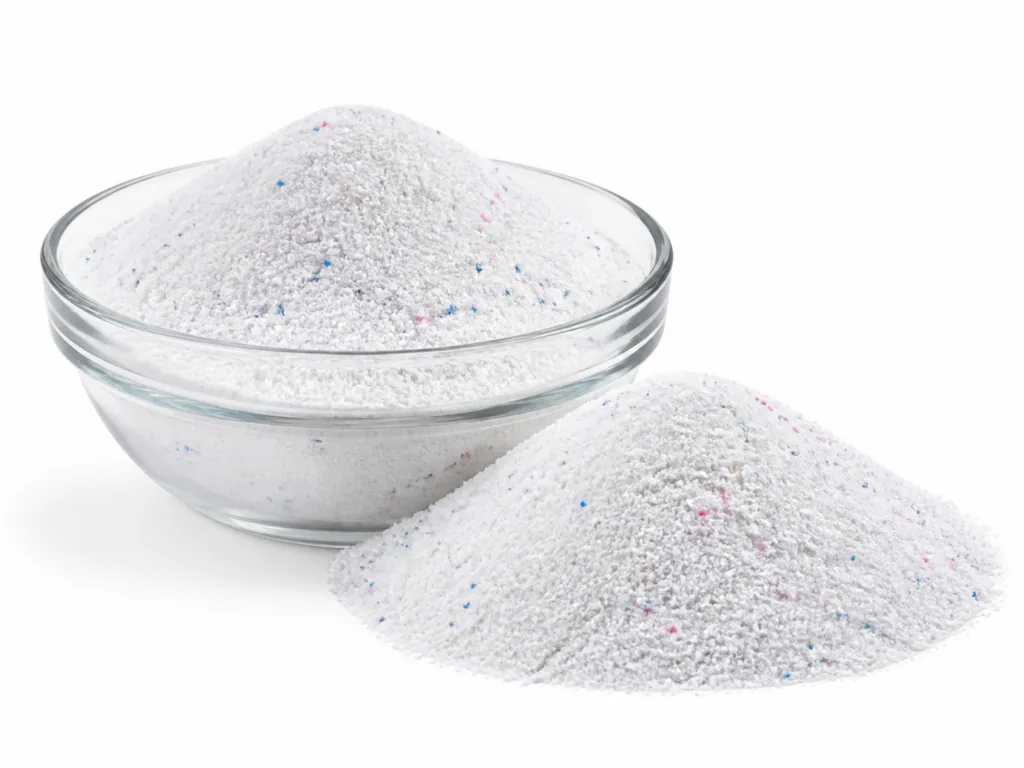
For Spack pouch-line selection, free-flowing detergent powder starts with an electronic-scale review. Check flow and leakage between doses with the actual product. Compare the powder dosing routes.
05
Project inputs
A product photo or short flow video, target fill, pouch size and required output are enough to begin. Send the details below when available; measurements and drawings can follow during engineering review.
For the detailed review. Confirm bulk density, a representative sample, host interfaces and cleaning or dust-control needs. Hopper size, screw selection and utilities follow the agreed configuration.
06
Common questions
Practical answers about powder suitability, pouch-line integration and the information needed to compare a configuration.
An auger filling machine is a dosing station that meters cohesive or non-free-flowing powder into a pouch with a rotating screw.
The station can feed a rotary premade-pouch machine or a VFFS machine that forms the pouch from film. See the auger filling guide for the dosing principle and setup background.
No. The auger doses product; a VFFS or rotary host presents and seals the pouch.
Choose the dosing station and the pouch machine together so the fill cycle, bag handling and sealing can work as one line.
For Spack initial screening, cohesive or non-free-flowing powder usually starts with an auger and free-flowing powder with a weigh-based route. Cups dose granules by volume; weighers suit pieces where weight, fragility or giveaway matters.
Use the comparison table to start, then confirm the route with the actual product and target fill.
Spack first screens free-flowing detergent powders on an electronic-scale route. This is an initial selection rule for our pouch lines; the actual powder and outlet behaviour need review before choosing the station.
Open powder packaging.
No. This page is pouch filling. Bottle and tin lines are a different machine family.
Confirm the container and handling requirements before comparing a pouch-line configuration with a bottle or jar line.
Yes as a host option: the rotary machine picks, opens and seals the pouch; the auger is selected from how the powder flows.
Dust extraction still belongs in the line conversation.
Expected fill-weight performance and output depend on the powder, target dose, auger configuration and pouch machine.
Compare sample results under the same product, target fill and run conditions; the agreed quotation defines the configuration and acceptance requirements.
The auger station is selected as part of the pouch-line configuration. Start by matching the powder and target fill to the rotary or VFFS host.
The quotation should identify the selected station, hopper, screw and line interfaces for your application.
The quotation depends on the dosing station, pouch machine and agreed line scope, including any specified dust-control equipment.
Share the target fill, pouch and required output so proposed configurations can be compared on the same basis.
A product photo or short flow video, target fill, pouch size and required output are enough for an initial review.
Samples, bulk-density data and drawings can follow when the application is clearer. Send the information you have via Contact.
07
Handoff
Compare the complete powder line or a pouch-machine host, then use the guides below to prepare a dosing and seal review.
Definition
How screw dosing works and what to check when comparing filling approaches.
Net-weight checks
Prepare target-fill, tare and net-weight records for comparing a powder dosing setup.
Dust and seals
Review dust-release points, filling conditions and powder at the pouch seal.
08
Next step
Send a product photo or short flow video, target fill, pouch size and the output you need. If you have a sample or line drawing, include it; the remaining details can follow.
Project confirmation. The final quotation identifies the agreed host, auger configuration and performance conditions. Warranty is 12 months from machine receipt; see the terms on Services.