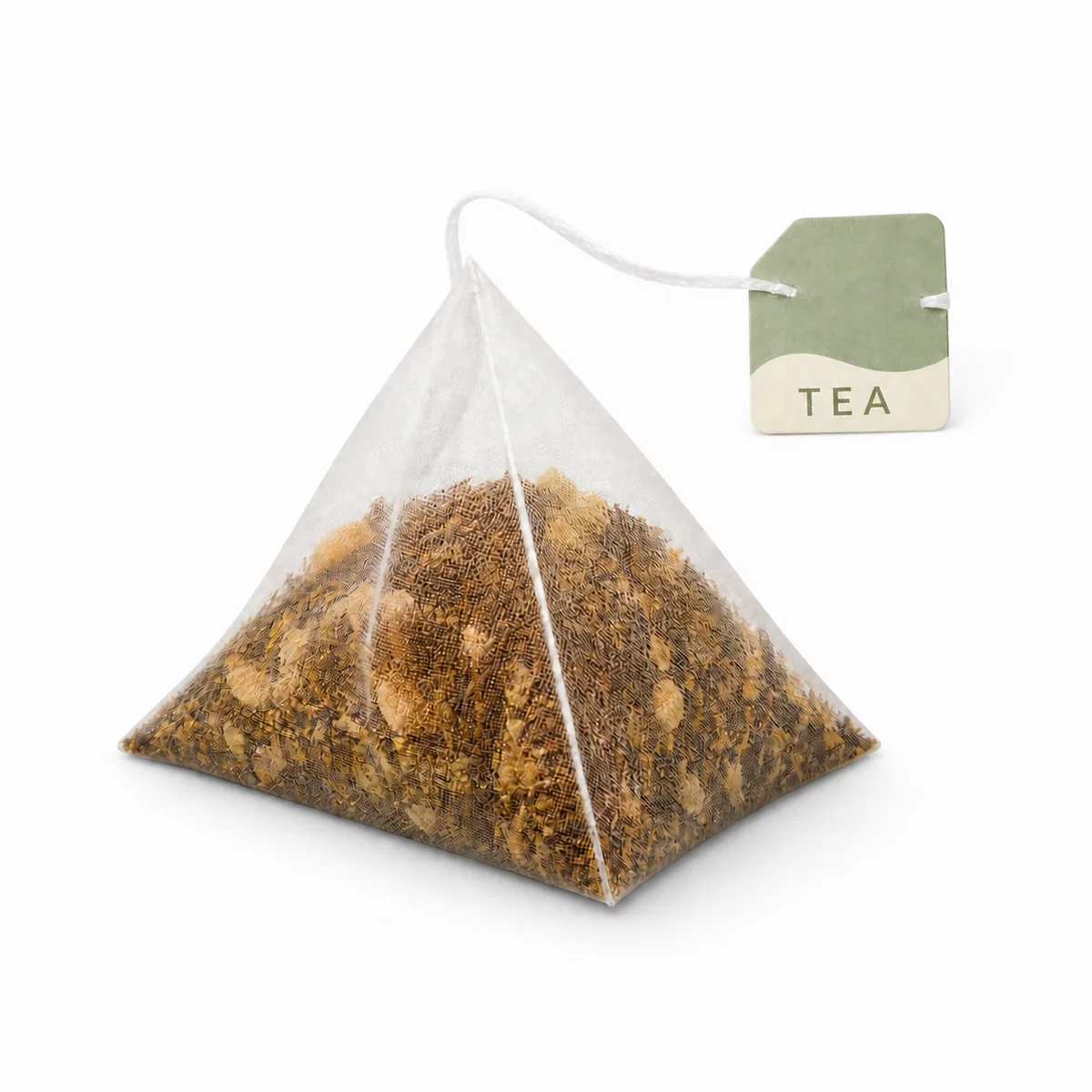
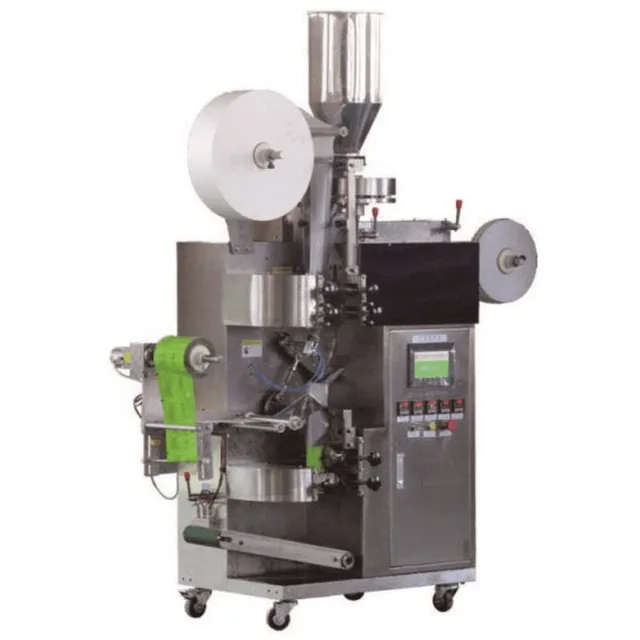
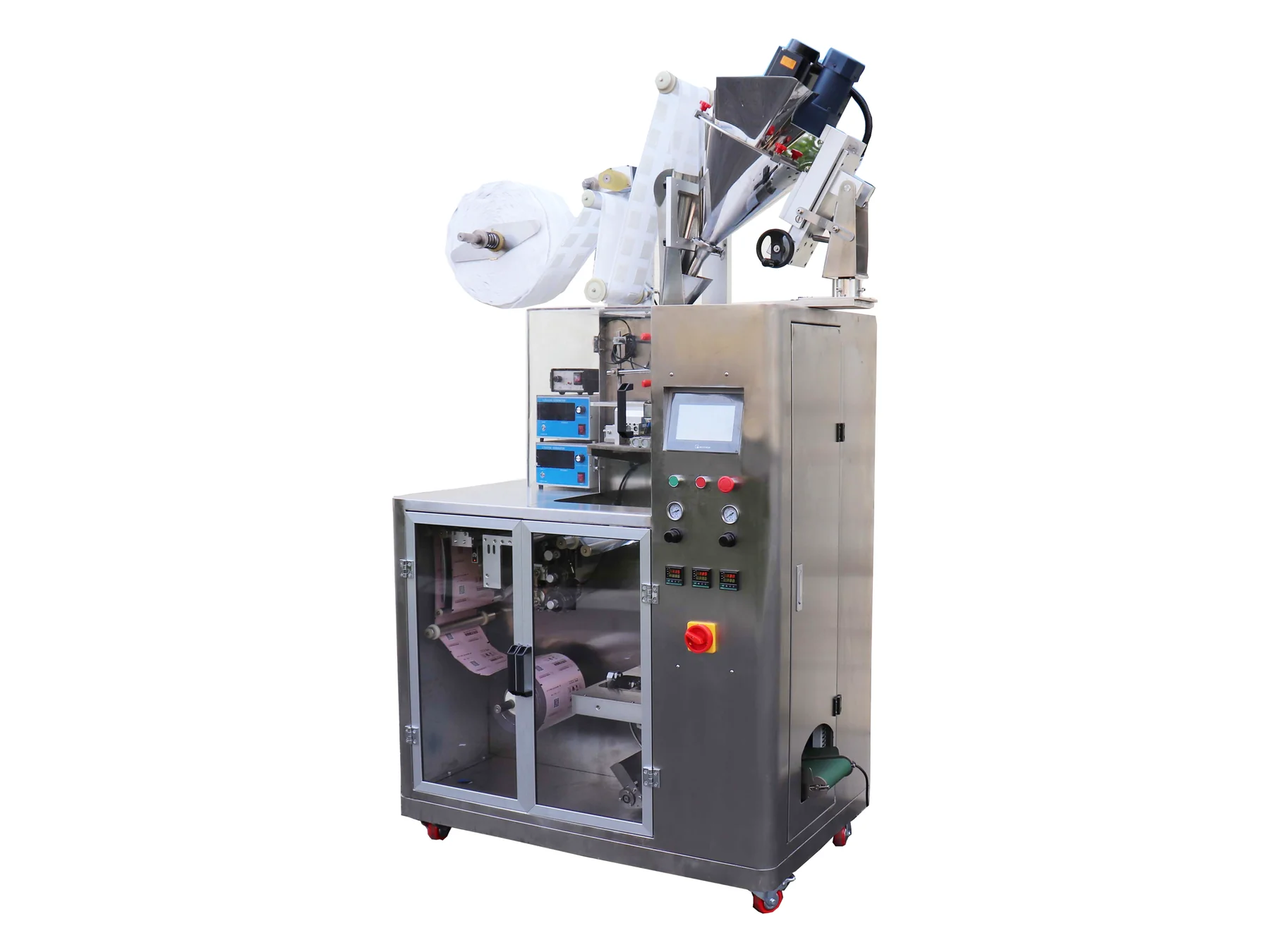
Tea bags are made on automatic machines that unwind a filter web, dose a measured amount of tea, seal the web around it, add a string and tag if needed, and cut each bag free. Flat paper tea bags are usually heat-sealed; pyramid mesh bags are usually sealed ultrasonically. Many lines then pack each bag in an outer envelope.
This guide walks through each step, shows how flat and pyramid bags differ, and lists what to check before you choose a tea bag machine. Machine figures come from the Spack Machine pyramid tea bag packaging machine (SPM-600MH).
How a tea bag is made, step by step
1. Prepare and feed the tea
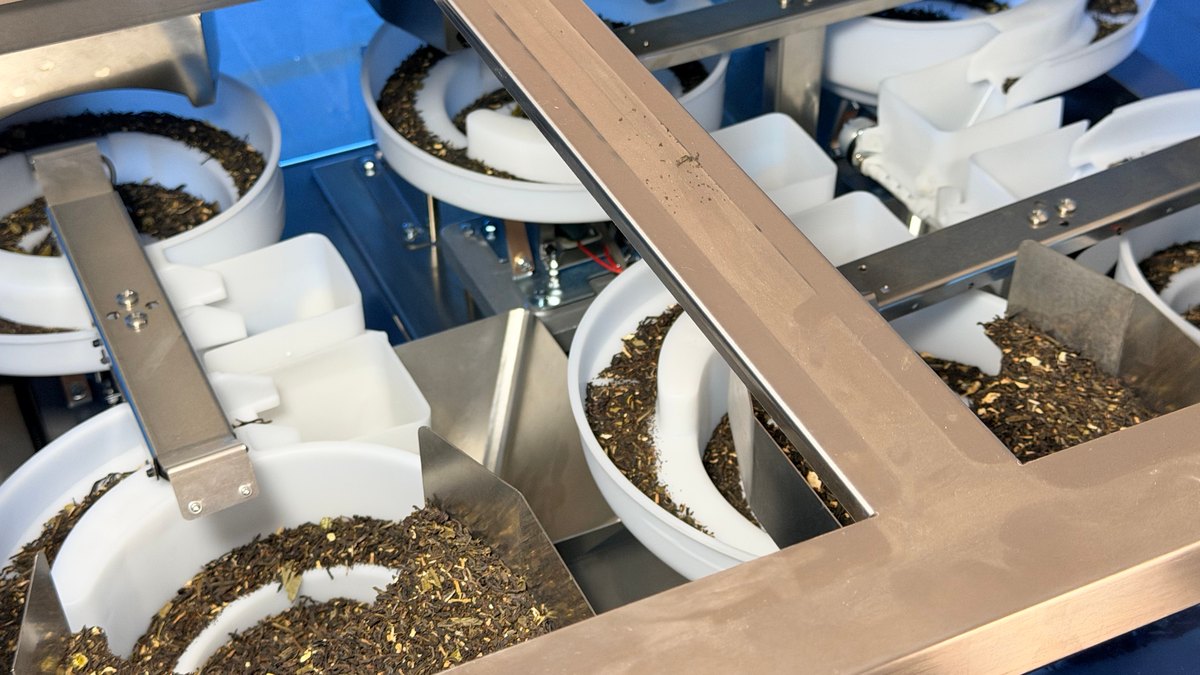
The tea is cut and screened to a grade that flows evenly: whole leaf, fine cut (such as CTC or fannings), herbal pieces, flowers or granules. It is conveyed into a hopper above the dosing unit. Very fine dust and long stems both cause dosing and sealing problems, so the grade matters as much as the machine.
2. Dose each bag
Fine, free-flowing tea is often dosed by volumetric cups. Whole-leaf, herbal and mixed blends are usually weighed by a multihead weigher. On SPM-600MH, a 6- or 8-head multihead weigher doses 1–10 g per bag to ±0.2 g.
3. Unwind and form the filter web
The filter material (heat-seal filter paper, nylon mesh, PLA mesh, PET mesh or nonwoven) unwinds from a roll and is folded or formed around the dose. Pyramid machines shape the web into a tetrahedron; flat machines fold it into a rectangle.
4. Seal the bag
Heat-seal filter paper contains a thermoplastic layer that bonds under heated jaws. Mesh webs are sealed by ultrasonic welding, which joins the fibres with high-frequency vibration instead of heat. SPM-600MH seals the inner bag ultrasonically.
5. Attach string and tag
A thread is cut to length and attached to the bag, and a printed tag is attached to the other end. On SPM-600MH tag and thread are standard.
6. Cut and discharge
The continuous chain of bags is cut into single bags and discharged. Rejected bags (missing dose or poor seal) are separated if an inspection system is fitted.
7. Pack in an outer envelope (optional)
Each tea bag can be packed in a pillow or three-side-seal envelope to protect aroma and hygiene. On SPM-600MH the outer bag packager is an option; envelopes are 70–120 mm wide and 80–140 mm long, and gas flush, tear notch and a date printer are available. Bags then go to cartoning.
Flat vs pyramid tea bags
| Feature | Flat (filter paper) tea bag | Pyramid (mesh) tea bag |
|---|---|---|
| Typical web | Heat-seal filter paper | Nylon, PLA or PET mesh; nonwoven |
| Sealing | Heat | Ultrasonic |
| Best tea grade | Fine cut, fannings, dust | Whole leaf, herbal, flowers, blends |
| Look on shelf | Economy and mainstream | Premium; leaves visible through mesh |
| Spack Machine route | Filter tea bag with envelope machine | Pyramid tea bag packaging machine |
SPM-600MH can switch between pyramid and flat mesh bags with one key. Its inner bags are 60–80 mm wide and 40–80 mm long, on 120, 140 or 160 mm web. Output is up to 65 bags/min for inner bags only, or 40 bags/min with the outer envelope linked.
Which material is the tea bag made of?
Most tea bags use one of four webs: heat-seal filter paper, nylon mesh, PLA mesh made from plant-based polylactic acid, or PET mesh. Nonwoven webs are also used. The web decides the sealing method and the look of the bag, so choose it before the machine. Our guide to 10 common tea bag materials compares them in detail, and pyramid tea bag materials covers mesh options.
What to check before you buy a tea bag machine
- Finished bag drawing: shape, inner bag size, string and tag, envelope size.
- Tea grade and dose: grams per bag and how the tea flows.
- Web specification: material, width and roll size; send a roll sample.
- Target output: bags per minute with and without the envelope.
- Options: gas flush, date printer, metal detector, checkweigher, cartoner.
- Sample test: ask for a video of your own tea on the machine. Spack Machine sends sample-test videos within 3 working days.
FAQ
What are tea bags made of?
Heat-seal filter paper, nylon mesh, PLA mesh, PET mesh or nonwoven. Flat bags are mostly paper; pyramid bags are mostly mesh.
Are tea bags sealed with glue?
Usually not. Filter paper is heat-sealed through its thermoplastic layer, and mesh bags are ultrasonically welded. Some machines attach the string with a knot or a small seal instead of a staple.
How many tea bags can a machine make per minute?
It depends on the bag and machine. SPM-600MH makes up to 65 pyramid bags/min, or 40 bags/min when it also packs each bag in an envelope.
How much tea goes in a tea bag?
Commonly about 2 g for a standard black tea bag and more for whole-leaf and herbal blends. SPM-600MH doses 1–10 g per bag.
Making tea bags? Get a machine price for your tea
Tell us what you pack and how many grams. An engineer replies within 12 hours with a suitable model, configuration and an itemized quote. Partial details are fine.
Fields marked * are required. Everything else helps us answer faster.
- First reply within 12 hours
- Used only to reply to this inquiry. Never sold.
Prefer chat? WhatsApp +86-13226819993 or email sales@spackmachine.com