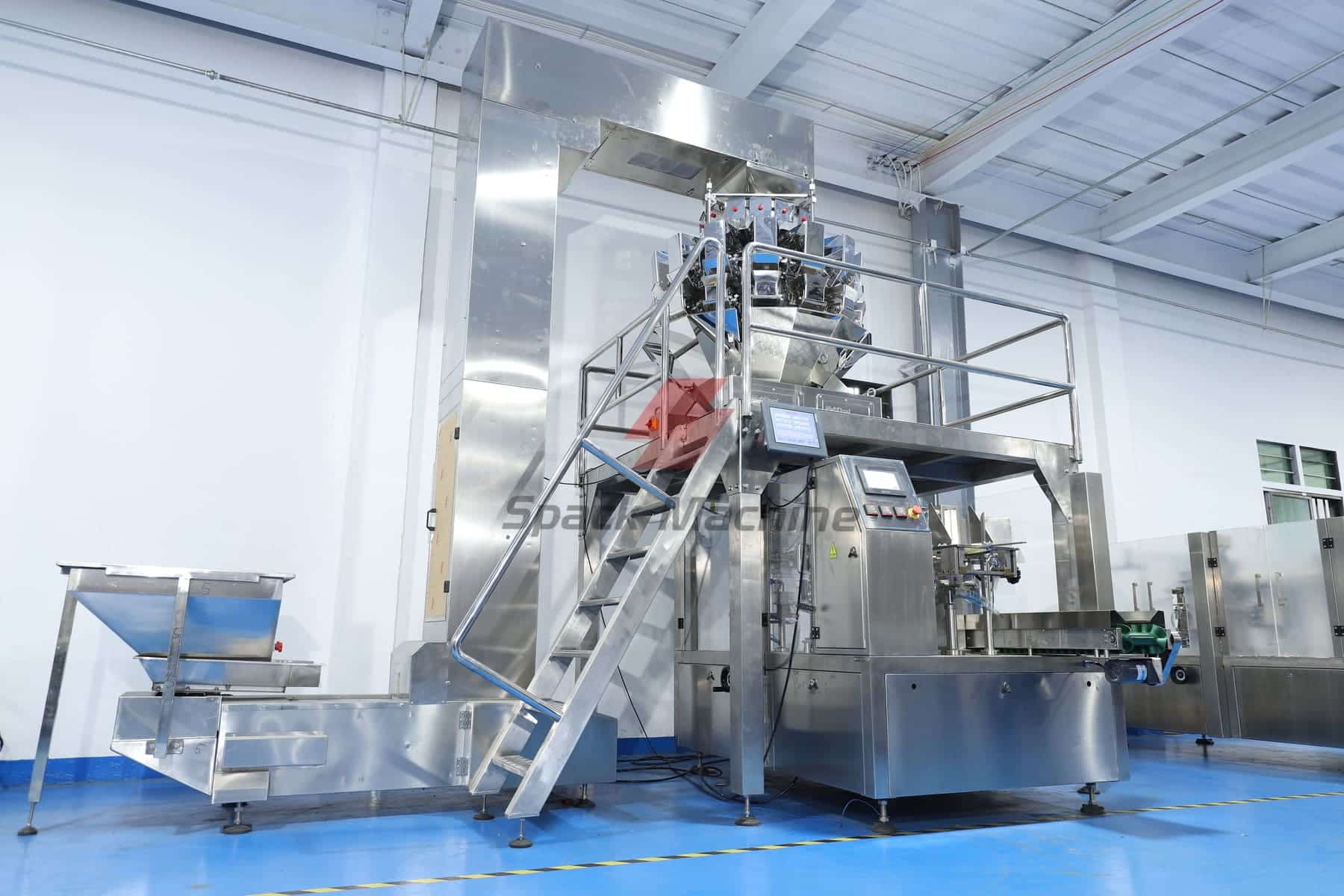
To check powder pouch dosing, first verify the weighing method, then record individual net weights in production order. Compare those results with the agreed target and limits before changing the filler. A consistent weight offset, a wide spread of results and a change after hopper refill call for different investigations.
Operators often call this work “auger calibration.” It includes separate tasks: checking the measuring instrument, verifying the powder delivered and adjusting the machine’s actual dosing settings. This guide explains how to keep those tasks distinct and collect evidence a supplier can review. For equipment selection, start with Spack Machine powder packaging configurations.
Powder Flow Properties Matter
Record the powder as it reaches the filler
A product name alone does not describe the material being dosed. Record the formulation and batch, any available bulk-density or particle-size information, storage conditions and how the powder reaches the hopper. Note whether it flows freely, forms lumps, settles after transfer or releases visible dust.

With volumetric dosing, the weight delivered depends on how much product occupies the metered volume. A change in the powder’s condition or its supply to the screw can change the result even when the recipe setting stays the same. Treat flow measurements as useful material information, then confirm behavior with the intended feeding and dosing arrangement.
In Spack Machine’s current selection approach, cohesive powders that do not flow on their own start with an auger; free-flowing powders start with an electronic scale. The actual sample and outlet arrangement determine the proposal. This is a starting point for a Spack project, not a rule that every supplier’s dosing design follows.
Keep feeding conditions visible in the weight record
Record hopper replenishment, a normal stop and restart, a product-batch change and any change to agitation or extraction. Mark when these events happen rather than combining all results into one average. If a problem appears only after a refill, a sample collected only during settled running may miss it.
Use the same representative product and packaging when comparing settings. If a condition must change, label the new run so its results can be interpreted separately. The powder packaging machine buying guide covers the broader choice of dosing system, pouch route and test scope.
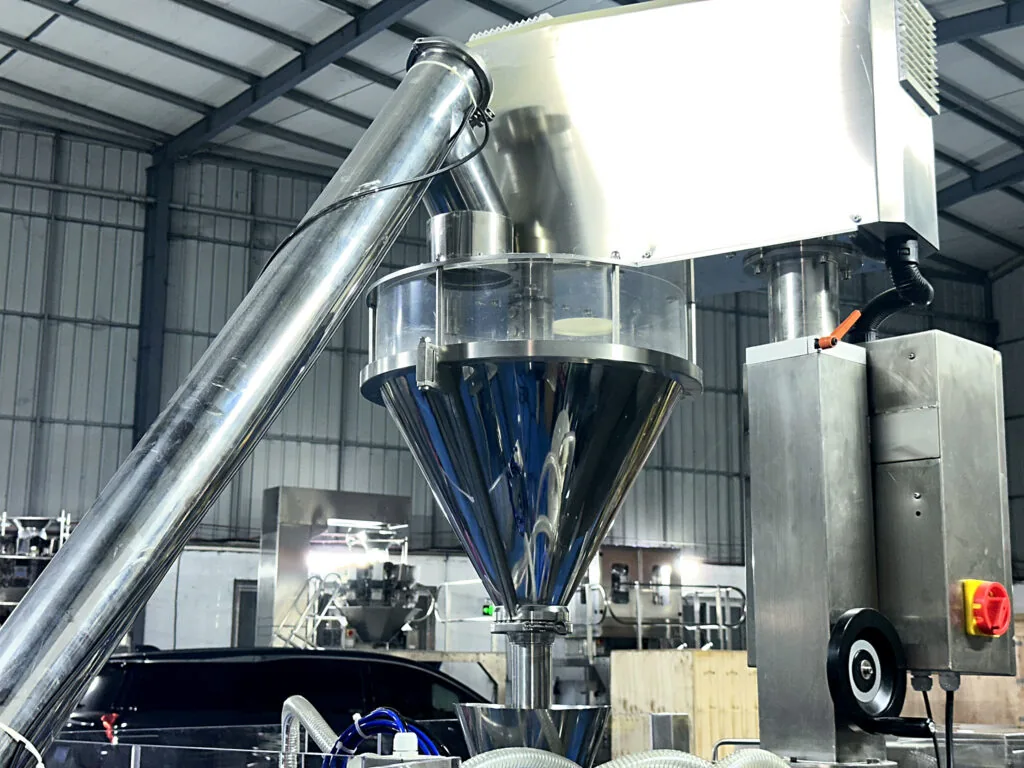
Step-by-Step Auger Calibration

1. Define the check before collecting bags
Write down the target net weight, lower and upper limits, sample plan and conditions being evaluated. Agree how startup bags, rejects, interruptions and any excluded samples will be recorded. Use the acceptance or production-control procedure established for your product; the number of blank rows in a worksheet is not a sampling requirement.
For a supplier demonstration, identify the machine, dosing unit, tooling and options used. For an installed line, retain the current recipe and settings before making changes. This gives both teams a baseline they can return to and compare.
2. Check the independent weighing method
Use a suitable balance or scale whose measurement capability supports the agreed limits. Confirm its identification, units and check status with the person responsible for weighing equipment. Follow its instructions for placement, zeroing, checks and calibration. Display resolution alone does not establish measurement accuracy.
Keep the weighing location stable and clear of product residue. If repeated readings of the same stable item are inconsistent, resolve the measurement issue before interpreting differences between bags. An independent check is useful because a number shown on the filler may be a target or calculated dose rather than a measured finished-pack weight.
3. Establish tare and calculate net weight
Net product weight = gross filled-pack weight − applicable packaging tare. Use the same unit throughout. Tare must cover the non-product items included in the gross weighing, such as the pouch and any label or closure present at that point.
If individual pouch tare is used, keep each empty pouch and its filled result paired by sample ID. If a representative tare is used, record how it was established and have the quality team assess packaging variation. Do not silently switch tare methods between runs. A packaging change can alter gross weight without changing the powder dose.
Prevent product loss or additions between sampling and weighing. If a pouch leaks, powder spills or the sample cannot be identified, record the event and its handling under the agreed procedure rather than replacing the result without explanation.
4. Use a net-weight record that preserves sequence
Copy the fields and table below into your production record or spreadsheet. All measurement cells are intentionally blank. Add rows to suit the agreed plan; these are not Spack test results.
- Run identity: date/time, operator, machine and dosing-unit identification, recipe revision and tooling.
- Material and packaging: product and batch, pouch/film and batch, storage or ambient conditions relevant to the run.
- Measurement: balance/scale ID, units, check result and reference, tare method and packaging items included.
- Acceptance basis: target, lower and upper limits, sampling plan, startup/reject handling and who reviews the result.
- Operating state: line setting or rate, hopper/feeding condition, installed extraction or inspection, and any active feedback mode.
On a narrow screen, scroll tables sideways to read every column. Keyboard users can focus a table and use the arrow keys.
Open the blank net-weight worksheet
| Sample / time | Gross | Tare | Net | Net − target | Within limits? | Event / action |
|---|---|---|---|---|---|---|
| ________ | ________ | ________ | ________ | ________ | ________ | ________ |
| ________ | ________ | ________ | ________ | ________ | ________ | ________ |
| ________ | ________ | ________ | ________ | ________ | ________ | ________ |
| ________ | ________ | ________ | ________ | ________ | ________ | ________ |
Run summary to complete: sample count ______; mean net weight ______; minimum ______; maximum ______; sample standard deviation, if used, ______; number below the lower limit ______; number above the upper limit ______. Record units, excluded sample IDs and reasons, any setting change, the retest reference and the review decision.
5. Separate the average, spread and individual limits
- Mean net weight: the sum of recorded net weights divided by the sample count. It shows the center of that sample. A mean near target can still include bags outside the agreed limits.
- Sample standard deviation: a measure of variation around the sample mean, expressed in the same unit as weight. It is not the largest error from the target and is not a per-bag tolerance.
- Individual result: compare each net weight with the agreed lower and upper limits. Keep the number and identity of results outside them, as well as the minimum and maximum.
The NIST explanation of the mean and NIST explanation of variation provide the underlying statistical definitions. None of these summaries, by itself, turns a short sample into a guarantee for all subsequent production.
Read the weights in time order as well. Separate a sustained offset from alternating light/heavy results, gradual drift and changes associated with replenishment. Do not delete an unusual value simply to improve the average or standard deviation; retain its investigation and disposition.
6. Adjust the documented dosing control, then retest
Confirm which setting actually controls dose on the supplied machine. Depending on its design, that may involve screw turns, a dosing-time setting or a weight target. A speed setting can affect delivery behavior without being the correct proportional control for total dose. Use the machine manual and the supplier’s instructions for the relevant operating mode.
Record the authorized setting change and keep other conditions comparable where practical. Collect a new sequence under the same agreed measurement method, including the operating states that exposed the problem. A better average with a wider spread, more rejects or poor seals is not enough to establish a successful adjustment.
Gravimetric Feedback Systems
A checkweigher, a feedback connection and a dosing system that uses weight during filling do different jobs. Ask where weight is measured, what the controller changes and which functions are actually installed. The presence of an electronic scale somewhere on the line does not answer all three questions.
| Arrangement | Measurement and control role | Evidence to request |
|---|---|---|
| Volumetric auger, independently checked | The screw meters volume; an external weight check verifies the delivered result. An operator may adjust the documented recipe. | The dosing setting used and the paired net-weight record for that run. |
| Auger plus reject checkweigher | A downstream unit weighs finished packs and rejects according to its configured limits. Rejection alone does not change the filler setting. | Pack identification, weight records, gross/tare basis and a demonstration of the reject function. |
| Auger plus checkweigher feedback | Downstream weight information is used to adjust a permitted filler setting through a configured control connection. | The data path, adjustment rules and limits, response delay and records showing when corrections occurred. |
| Dosing controlled by weight during the cycle | The system uses a weight measurement at the dosing stage. The weighing location and whether it measures a receiving vessel or a change in supply weight depend on the design. | The measured component, control sequence, tare or refill handling and verification against finished-pack net weights. |
Check the feedback claim against the actual line
For a proposed feedback system, have the supplier explain which weight records are valid inputs, how long a filled bag takes to reach the checkweigher, and how the controller avoids acting on the wrong bag or operating state. Ask what happens during restart, replenishment, a product change or a weighing fault. These are questions for the supplied design, not settings to invent from a general article.
Have the demonstration identify the active mode and retain both weight and adjustment records. If feedback is not supplied, record how manual checks and corrections will be handled. Checkweighing on Spack’s powder route is a project configuration; a quotation must confirm whether any feedback integration is included.
Compare excess product using your own operating data
Keep excess product in accepted packs separate from rejected product, spills and startup loss. For each measured accepted bag, the positive amount above the chosen comparison target is its excess; bags at or below that target contribute zero to this calculation. Average those excess values across the accepted sample.
To estimate excess product for a representative period, multiply average excess in grams per accepted bag by accepted bags in that period, then divide by 1,000 to obtain kilograms. State the sampling assumption and keep out-of-limit bags visible in the quality record. This calculation describes one material-loss category; it does not establish a return on investment for a feedback upgrade.
Troubleshooting Fill Inconsistencies
Begin with the observed pattern and the measurement check. The following table suggests investigations; a weight pattern alone does not prove a mechanical cause. Keep the relevant bags, settings and event times available for the responsible operator, quality or service team.
| Observed pattern | Record first | Next check |
|---|---|---|
| All readings move after a pouch or label change | Packaging identity, tare method and independent scale check | Quality team verifies whether packaging tare changed before changing the powder dose. |
| The mean is consistently offset, with similar spread | Individual net weights, recipe and actual dosing mode | Confirm measurement and feeding, then have the authorized operator review the documented dose setting. |
| Weights become erratic or alternate light and heavy | Sequence, feeding state, pauses, visible accumulation and bag condition | Investigate intermittent supply, incomplete discharge or bag presentation with the machine team; avoid repeated setting changes that hide the pattern. |
| Weights change after refill or restart | Event time, hopper condition and the bags immediately around the event | Check the feeding sequence, settling and any active control response; repeat the same event in the agreed test. |
| Powder is visible outside the pouch or at the seal | When and where it appears, pouch opening and any extraction state | Review product delivery, bag presentation and dust control together; a low pack weight may accompany product loss. |
| The checkweigher and independent balance disagree | The same identified packs, units, gross/tare basis and both instrument checks | Resolve the measurement difference before using those readings to tune feedback. |
| Drift remains after conditions and measurement are checked | Tooling identity, cleaning/part-change history and the weight sequence | Qualified service personnel inspect the relevant product path and equipment against the supplied manual and original part specifications. |
Mechanical inspection, cleaning and work inside guards follow the machine’s shutdown and isolation procedures. Pneumatic settings, tooling clearances and extraction requirements come from the supplied equipment and plant process. Do not use a generic air-pressure, airflow or screw-wear number as a repair instruction.
Where powder reaches the pouch mouth, continue with the powder dust-control guide. Keep collected dust handling and any possible material reuse within the product’s approved plant procedure; capturing dust does not by itself establish that it can return to the product.
Maintenance for Repeatable Accuracy
Build the maintenance plan from the supplied machine and weighing-equipment instructions, the product being packed and the operating record. A calendar interval from another line cannot establish the correct inspection or replacement point for your tooling.
- Product-contact path: inspect the hopper, dosing assembly and outlet for buildup and the condition specified by the manufacturer. Use the approved cleaning method and verify correct reassembly.
- Tooling: keep part identification and the original specification available. Have wear, damage and clearances assessed against that specification rather than a universal diameter-loss threshold.
- Weighing equipment: maintain the required instrument checks and calibration records. Investigate unstable readings, contamination, interference or damage before treating them as changes in powder delivery.
- Feeding and inspection: check the supplied level-control, agitation, extraction and reject functions according to their own instructions. Document which features are present.
- Recipes and changes: retain approved settings and revisions. Record a part replacement, product change or control adjustment with the corresponding verification run.
After work that may affect dosing or measurement, verify the result using the agreed net-weight method. Keep the before/after records, the work performed and the person who reviewed the restart. This connects a maintenance action to an observed result without assuming that replacing a part automatically restores the required performance.
Conclusion
A useful powder dosing check produces more than a new recipe number. It leaves a trustworthy measurement method, individual net weights, operating-state notes and a documented decision about the next action. That makes both supplier evaluation and an installed-line investigation easier to review.
Send Spack Machine the powder and batch description, target and limits, pouch details, machine/dosing identification, active control mode, weight sequence and the events associated with the problem. Include the relevant settings or manual page when available. For a new line, use the same information to define the demonstration you need.
Review powder packaging configurations and discuss your dosing requirements.
Frequently Asked Questions
How do I calibrate an auger filler for a powder pouch?
First verify the independent weighing method and packaging tare. Collect individual net weights under a documented sampling plan, compare them with the target and limits, and identify the actual dose-control setting. Follow the supplied machine procedure for adjustment, then repeat the weight check with comparable product and operating conditions.
How many bags should I weigh?
Use the sampling plan agreed for the acceptance test or your production-control procedure. Include the operating states relevant to the question, such as normal running, refill and restart. A short set of convenient bags can help an initial investigation but does not establish performance across a shift or batch.
Does a low standard deviation mean every bag is within tolerance?
No. Standard deviation describes spread around the sample mean. The mean may be off target, and individual results may still fall outside the agreed limits. Review each result and the observed extremes as well as the summary statistics.
Should I adjust auger RPM in proportion to the weight error?
Do not assume RPM is the dose setting. The supplied controller may use screw turns, time, weight or a combination of settings. Confirm the operating mode and adjustment procedure with the machine documentation before changing it, and verify the result by weighing.
Does a checkweigher automatically correct the filler?
Only if the required feedback connection and control function are supplied, configured and active. A reject-only checkweigher can identify and remove packs according to its settings without changing the filler. Request a demonstration of the actual measurement and correction sequence.
Why check again after changing powder or packaging?
A new powder batch can behave differently during feeding, while a packaging change can alter tare or bag presentation. Retain the earlier settings as a reference, identify the change and verify new net weights. Do not assume the same gross reading proves the same powder dose.
What should I send when the fill weight still drifts?
Send a time-ordered weight record, the target and limits, tare and instrument-check details, product and packaging identification, machine configuration and relevant refill, restart or setting-change times. Those records help distinguish measurement, supply, discharge and control questions before recommending parts or adjustments.