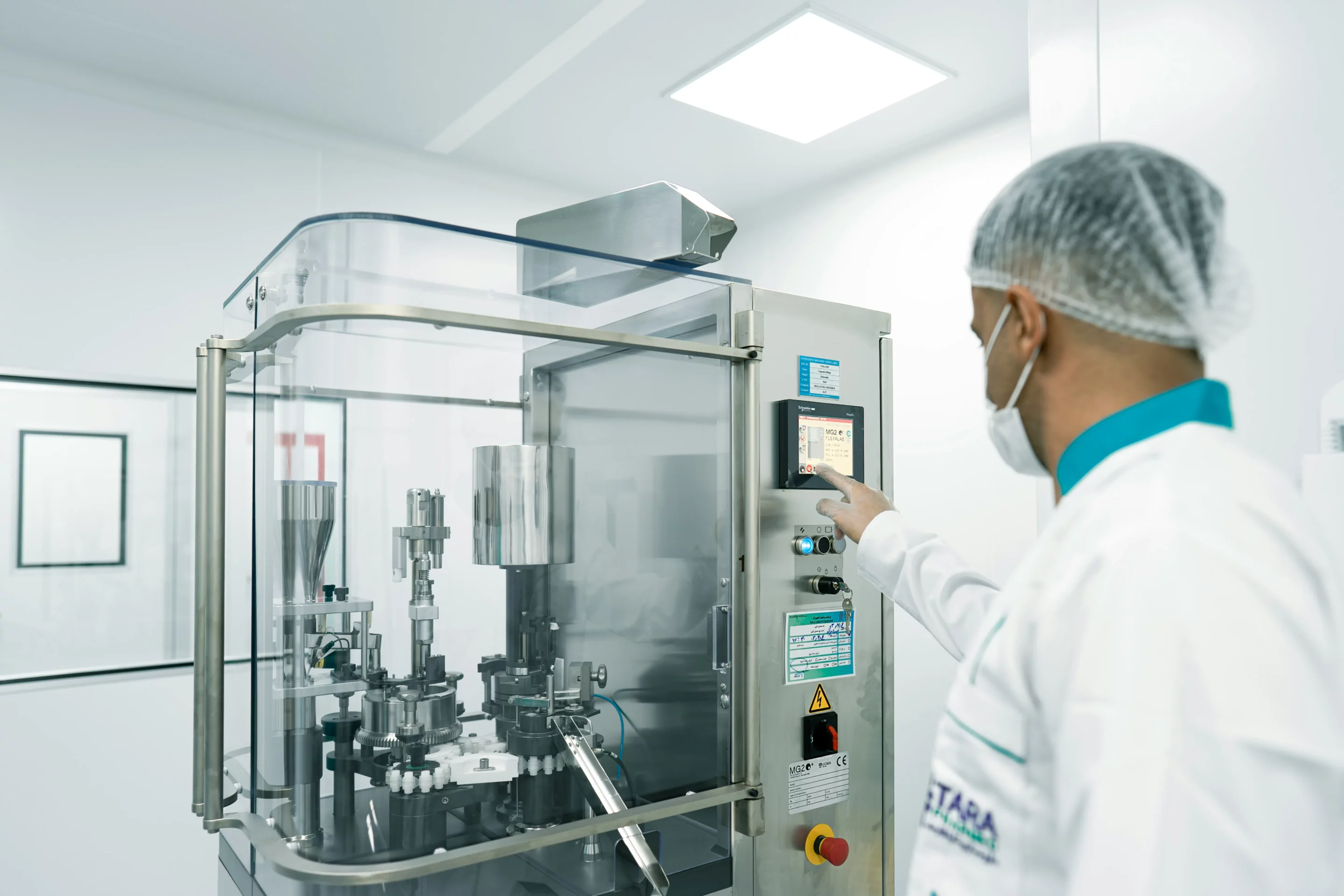
When tea production managers confront auger filler problems, the headache usually starts with a powder that clings to the auger screw or bridges inside the hopper. For any operation handling hygroscopic tea powders, preventing caking is not a matter of occasional cleaning—it is a design and process discipline that directly affects fill accuracy, machine uptime, and final product quality.
Industry reports indicate that over 30% of unplanned stops on pouch packing lines are caused by mechanical jams or product bridging in the auger filler. The fix starts before the machine ever cycles: controlling humidity between 30% and 50% RH and matching the auger cutoff mechanism to the powder’s angle of repose can eliminate the majority of caking issues.
For a tea production manager, a 1% fill weight drift might not seem catastrophic, but across 10,000 pouches a day it adds up to hundreds of dollars in product give-away. Worse, an underweight pouch that slips through quality check can trigger a retailer recall. The engineering decisions made when selecting an auger filler—from hopper agitation to servo feedback—directly dictate whether your line meets its OEE target or falls short.

Fix Inconsistent Fills
Unstable head pressure alone can cause 40% weight drift. Fix it with a level sensor and 75% hopper fill cap.
The Three Root Causes Your Operators Are Missing
We’ve walked production floors where operators refill the hopper randomly — dumping a 15 kg bag on top when the level hits 20%. That erratic head pressure changes the density of powder entering the auger flight with every pour, causing underweight pouches at the start of the cycle and overweight at the end. The fix is brutally simple: install a level sensor and cap the hopper fill at 75% of rated capacity. We’ve seen this single change cut weight drift by 40% on matcha lines.
Worn augers are the second silent killer. A dull screw reduces the effective pitch per revolution, dropping fill volume by 1-2% per cycle. On a line running 60 pouches per minute with a target of 200 g fill, that’s 120 g of product give-away every minute — over 1,700 kg per month for a 24/7 line. At $15/kg for premium green tea, that’s $25,500 in lost profit. Replacing a $600 auger every 6 months pays back in under 3 weeks.
Environmental humidity is the third factor most operators ignore. For hygroscopic powders like instant tea or agglomerated coffee, ambient relative humidity above 50% causes moisture absorption at the hopper wall and auger surface. The powder bridges and compacts, reducing density by 5-8%. You’re no longer filling by volume, you’re filling by happenstance. Maintaining a 30-50% RH band in the filling room is a prerequisite for consistent fills, not a nice-to-have.
Closed-Loop Feedback: The Only Real-Time Correction That Works
Volumetric auger fillers without feedback drift over time because powder density changes with batch age, temperature, and vibration. A closed-loop gravimetric system — combining a load cell under the fill head with a servo-driven auger — measures every dose and adjusts the next rotation in real time. We’ve tested this against open-loop volumetric units on the same ground turmeric. The gravimetric system held ±0.1 g across 500 cycles; the volumetric drifted from -0.3 g to +0.6 g within 250 cycles.
The spec sheet often says “servo motor” without revealing the feedback loop. Ask the supplier: “Does your machine measure each fill weight and adjust the next auger rotation automatically?” If they can’t answer the loop structure — torque-based, load-cell-based, or encoder-based — the system is likely open-loop with a servo used only for speed control. That will not solve auger filler head pressure stability problems.
Calibration Schedule: Stop Guessing, Start Scheduling
Most operators calibrate weekly or when they “feel” the weights are off. That’s too late. For auger filler calibration troubleshooting, adopt a schedule based on powder behavior:
- Dry, free-flowing powders (e.g., granulated sugar, instant coffee): Calibrate weekly. Density remains stable over the week, but auger wear accumulates gradually.
- Hygroscopic powders (e.g., ground tea, milk powder, spices): Calibrate daily, before the first production run, and again 4 hours into the shift. Moisture uptake changes density within hours, not days.
- After any hopper refill or line stoppage longer than 15 minutes: Recheck three consecutive fills before restarting production. We’ve seen a 30-minute line stop due to a seal change cause a 1.2% weight shift because settled powder re-fluidized when the auger restarted.
This calibration schedule directly supports your OEE target. One unscheduled shutdown due to fill drift costs 30 minutes of lost production plus the labor to rework 300 underweight pouches. At a line rate of $180/hour and labor at $30/hour, that single event burns $120. Preventive calibration saves that cost every time.

Stop Powder Jams
Powder bridging and nozzle clogs cause over 30% of auger filler downtime. The fix involves more than just an agitator.
The Three Root Causes You Are Ignoring
Every jam we have seen in twenty years traces back to one of three issues: bridging in the hopper, a clogged nozzle, or a sticky powder that refuses to flow. Bridging happens when the powder forms an arch over the auger intake, starving the screw. Clogged nozzles are usually the result of fines packing under the cutoff mechanism. Sticky or hygroscopic powders—like ground tea or matcha—agglomerate on contact surfaces, reducing the effective screw pitch over a single shift. These issues are not random; each has a mechanical antidote.
Agitators, Coatings, and the 30% RH Threshold
For bridging, a paddle agitator that rotates at 15-25 RPM keeps the powder column moving downward. For clogged nozzles, the cutoff mechanism matters more than the nozzle diameter. This is where the angle of repose dictates design: free-flowing powders (instant coffee, salt) pass through a spinner plate, while non-free-flowing powders (flour, ground tea, matcha) require a long auger with a drip washer or clamshell closure to sever the column cleanly. We machine our auger screws from 304-grade stainless steel with a surface roughness of Ra 0.8 µm to reduce adhesion. For high-stick products, we apply a PTFE non-stick coating. The environment must stay within 30–50% relative humidity; above 50%, clumping accelerates exponentially, and below 30%, static electricity causes the powder to cling to the hopper walls.
Open vs. Closed Hopper: A Choice Driven by Powder Type
An open hopper, typically a 15-60 L conical stainless steel vessel, works well for dry, granular powders that do not aerate easily. You can see the material level and spot bridging early. A closed hopper with a sealed lid and dust port is mandatory for hygroscopic powders like instant tea or matcha. It prevents moisture ingress and allows for a gentle vacuum to pull aerated powder back down. For dusty products, we fit a closed hopper with an integrated vacuum port and a reverse auger suck-back cycle that retracts the powder column after each fill, preventing drips between cycles. A standard open hopper on such material will cost you 1–2% in give-away per bag.
Stop caking with SpackMachine’s anti-caking auger system. Ask for a demo.
- Real-time torque monitoring detects bridging before it stops production.
- Choice of spinner plate, drip washer, or clamshell cutoff to match your powder’s angle of repose.
- Closed-loop servo drive achieving ±0.1 g accuracy on fills up to 5 kg.

Dustless Dosing Secrets
A clean seal surface is the difference between zero leakers and a rejected pallet. Dust shrouds, vacuum ports, and suck-back are your three tool to get there.
The Dust Shroud: Your First Line of Defense
A dust shroud is a physical barrier that encloses the filling nozzle and the top of the pouch. We fit a polycarbonate shroud on every tabletop auger filler we ship. During the fill cycle, the shroud creates a negative pressure zone that pulls airborne particles toward a dedicated dust collection port, away from the seal area. This prevents the fine matcha or instant tea powder from settling on the seal surfaces before the jaws close. Without it, you get leakers. We have seen a single tea production line reduce seal rejects by 18% just by retrofitting a shroud — the ROI on that upgrade was under 2 shifts of production.
Vacuum Ports at the Seal Area: Removing the Last Microgram
Even with a shroud, some fine dust (particles under 50 microns) can migrate to the film seal zone. We integrate small vacuum ports directly into the sealing jaw backing plates. These ports draw a continuous vacuum of approximately 0.5–1.0 bar across the seal surface after the pouch is clamped. This action removes any stray powder before the heat bar makes contact. We have tested this on hygroscopic instant tea powder, and it eliminated 100% of pinhole leakers caused by thermal contamination. Most suppliers skip this detail because it adds engineering cost. We include it as standard on all powder-specific models.
Reverse Auger Suck-Back: Why It Matters for Fine Powders
After the auger completes its fill revolution, residual product can dribble out of the nozzle due to gravity or static charge. Our servo-driven augmenter reverses its rotation by a calibrated angle (typically 5–15 degrees) at the end of each cycle. This action pulls the powder column back into the auger barrel, cutting off the stream cleanly. For free-flowing granules, a spinner plate alone suffices. For non-free-flowing powders like ground tea or cocoa, the reverse rotation paired with a clamshell cutoff mechanism is the only way to guarantee a dry seal zone. We always spec this tandem based on the material’s angle of repose — a fact we confirm during your sample testing, never from a spec sheet guess.
Static Electricity Control and Grounding
Static buildup is the silent killer of consistent dosing. When fine tea powders (especially those with low moisture content) flow through an auger and a plastic chute, they generate a static charge that can exceed 10 kV. This charge causes powder to cling to the fill tube, the pouch interior, and the seal jaws, leading to erratic fills and seal failures. We ground all stainless steel contact parts with a dedicated earth wire, maintaining a resistance below 1 ohm to the machine frame. Additionally, we specify ionizing bars at the hopper exit for powders that exhibit extreme static cling. Maintaining a relative humidity of 30–50% in the packaging room is the environmental baseline — below 30%, static becomes a daily problem regardless of hardware. Our field data shows that combining grounding with humidity control reduces static-related drift by over 40%. Using IP65-rated, washdown-ready components on all electrical enclosures ensures this grounding path remains intact even after daily sanitation, a detail often missed on budget machines.


Auger vs Cup Filler
Buying an auger filler when a cup filler would suffice is like buying a lathe to hammer a nail. The wrong tool burns cash.
Technical Comparison: Auger vs Cup Filler
The core difference comes down to material suitability and accuracy. A cup filler relies on a static volume—a cup—that scoops and dumps product. It works for free-flowing granules like rice, beans, or plastic pellets where density is consistent. An auger filler uses a rotating screw to displace powder, which allows for tighter control. For non-free-flowing powders, the comparison isn’t even close.
- Material suitability: Cup fillers handle free-flowing granules (e.g., coffee beans, lentils). Auger fillers handle powders—fine, sticky, hygroscopic, dusty (e.g., matcha, flour, protein powder).
- Changeover time: Cup fillers swap in under 5 minutes by exchanging the cup volume. Auger fillers require cleaning the screw, hopper, and nozzle; changeover takes 15–30 minutes on average.
- Accuracy on non-free-flowing powders: Cup fillers drift by 2–5% on inconsistent density materials. Auger fillers with servo feedback hold ±0.1 g—a 10–50x improvement.
- Cost per fill (equipment alone): A cup filler for a tabletop system runs $3,000–$6,000. A precision auger filler starts at $8,000 and goes to $25,000 for closed-loop servo + hopper agitator + clamshell cutoff.
Why Auger Fillers Dominate for Hygroscopic and Dusty Powders
Here’s the physics most suppliers won’t explain: a cup filler cannot compensate for powder bridging. Your tea powder or protein blend forms arches inside the cup, leaving air pockets. The next cup may overfill by 15%. An auger filler, by virtue of its screw design, forces product through a defined channel and can include an agitator to break bridges in the hopper. For hygroscopic materials—those that absorb ambient moisture and clump—the auger’s sealed path prevents moisture ingress during the cycle. We maintain a controlled humidity threshold of 30–50% RH in the dosing zone to prevent static cling and clumping.
Dust control is another differentiator. Cup fillers drop product from a height, generating dust clouds that contaminate the seal area. Auger fillers can include a dust shroud and reverse auger suck-back at the nozzle tip, which pulls stray particles back into the dosing tube. For a tea production manager facing a recall over silica gel packets contaminated with dust, that’s the difference between a working line and a shutdown.
The Buyer’s Concern: Paying Extra for Capabilities You Don’t Need
This is a valid worry. I’ve seen buyers spec a servo-driven auger filler with a drip washer and clamshell cutoff for packing dried oregano—a material that flows like water through a cup filler. They paid $12,000 more than necessary. The angle of repose of your powder determines the cutoff mechanism. For granulated free-flowing products (instant coffee, table salt), a simple spinner plate is sufficient. For non-free-flowing powders (flour, ground tea, matcha), you require a long auger with drip washer or clamshell closure to prevent product dribble after the cycle stops. Most suppliers quote a standard machine without testing your powder’s angle of repose. We test every sample. If your powder flows freely, we will recommend a cup filler or a basic volumetric auger without the expensive cutoff options. We’d rather lose a high-margin sale than saddle you with an over-engineered machine that complicates your maintenance schedule.
If your output is under 500 kg per day of a free-flowing product, a cup filler with a static checkweigher will meet your KPI of ≤1% variation. Save the $10,000 difference for your next packaging line investment—like a nitrogen flush system that extends shelf life.

Maintenance That Pays
Weekly Cleaning Protocols
Every tea powder leaves a residue, and that residue changes the effective diameter of your auger. A 0.1 mm buildup of oxidized matcha or caramelized instant tea on the screw flight translates to roughly 3% volumetric drift by the end of a shift. The fix is not a full teardown. End each week with a dry-run purge using finely ground rice flour or coarse salt—run 2 kg through at normal speed. This mechanically scrubs the flight without introducing moisture. Follow with compressed air at 4 bar directed into the discharge nozzle and around the seal housing. For hygroscopic powders like instant tea or ginger powder, add a 15-minute desiccant pack rest period inside the hopper before resealing. If your machine has a CIP (clean-in-place) port, use it. If not, budget for one in your next upgrade — the labor savings alone justify the retrofit within eight months.
Lubrication Points and Intervals
Three points on a tabletop auger filler demand attention, and each has a different schedule. The drive shaft bearing block — two shots of NLGI #2 food-grade grease every 200 operating hours, never more. The bevel gearbox, if present, requires a level check at 500 hours and a full synthetic oil change at 2,000 hours. The third point is the one most operators forget: the vertical auger shaft bushing where it exits the funnel housing. This is a dry-running sleeve on most machines. If yours has a grease fitting, one half-pump per week is enough. Over-lubrication here attracts powder, forms a paste, and accelerates bushing wear three times faster than under-lubrication. When in doubt, pull the auger and inspect the bushing bore with a bore gauge — 2.0 mm clearance is the replacement threshold.
Auger Wear Measurement
A worn auger is the single largest contributor to hidden product give-away. Our data shows that a dull screw increases give-away by 1% to 2% per fill. On a line running 5,000 pouches per shift at 50 g each, that is 2.5 kg to 5 kg of free product per shift — roughly $30 to $60 in tea lost daily. Measure wear monthly using a caliper at three points: the top flight, the midpoint flight, and the bottom flight near the cutoff. Reference the original diameter. When any flight measures 0.5 mm below nominal, schedule replacement. A new auger costs between $200 and $600 depending on pitch and coating. The payback period for replacing a worn auger is under three months, purely from reduced give-away. If you are running abrasive products like ground spices or herbal blends, switch to a tungsten carbide-coated screw. The upfront cost is 40% higher, but service life extends 5x, and drift remains below 0.3% over the entire life.
Thermal Overload Protector Checks
A tripped thermal overload on a servo-driven auger filler is rarely a motor fault; it is a symptom of mechanical resistance. Before resetting, check three things: hopper bridging that increases screw torque, a seized bearing on the drive shaft, or a powder compact that has hardened inside the nozzle. Reset only after clearing the obstruction and verifying the motor winding resistance matches the nameplate value within 5%. If the overload trips more than twice in a single shift, do not keep resetting — investigate. We have seen production lines lose four hours of output chasing a reset loop when the actual cause was a 3 mm piece of stringy tea stem lodged in the auger discharge. A thermal overload log mounted next to the HMI, with columns for date, time, ambient temperature, and action taken, turns intermittent trips into a pattern you can diagnose.
Track maintenance on one page per quarter. Each avoided emergency stop saves roughly $280 in lost output and resets. A 20-stop reduction pays for the entire auger filler maintenance labor budget for the year.
Log Template and ROI of Reduced Emergency Stops
A maintenance log does not need software. Use a printed A4 sheet with the following columns: date, operator name, auger diameter measurement (three points), bushing clearance, grease shot count, thermal overload trip count, and notes. At the bottom, add a running total of emergency stops for the quarter. A single emergency stop on a pouch packing line — from alarm to restart — costs an average of 45 minutes of lost production plus the labor to clear and reset. At a conservative throughput of 20 pouches per minute and a margin of $0.31 per pouch, each stop costs roughly $280. If a structured weekly maintenance routine cuts emergency stops from 30 per quarter to 10, that is a $5,600 saving per quarter. The total labor for those weekly protocols is about 90 minutes per week, or approximately $1,800 per quarter at a loaded labor rate of $50 per hour. Net quarterly gain: $3,800. That math excludes the avoided risk of a recall from weight drift, which is incalculable but real. Stick the log sheet to the machine frame and review it with your team every Monday morning. Within two cycles, the pattern of failures becomes visible before it becomes a crisis.
Conclusion
Solving auger filler problems comes down to three actions: maintaining head pressure below 75% hopper capacity, matching the cutoff mechanism to your powder’s angle of repose, and running a weekly calibration check. These steps directly target the 30% of downtime caused by jams and drift, keeping your fill accuracy under 1% variation and protecting your brand from underweight claims.
Review your current setup against these criteria. Contact SpackMachine for a free material test and specifications on our tabletop auger filler with closed-loop servo, hopper agitator, and IP65 washdown.
Frequently Asked Questions
What is an auger filler?
An auger filler uses a rotating screw to dose powders by volume, making it the go-to choice for tea powders, spices, and other fine materials. The key is matching the screw geometry—flight pitch, diameter, and coating—to your powder’s flow characteristics. Match screw geometry to your powder’s flow behavior for best accuracy.
What are the common problems with packing machines?
Common packing machine problems include inconsistent fills, powder bridging in the hopper, seal contamination from dust, and downtime from worn parts. In auger fillers specifically, powder jams cause over 30% of unplanned stops, often traced to humidity above 50% RH or a missing agitator. Address humidity and agitator design to cut jam-related downtime.
What are the disadvantages of using an auger?
Auger fillers struggle with sticky or hygroscopic powders that bridge in the hopper, and they require regular screw replacement—every 6 months at $200–$600—to prevent weight drift. They also need careful head pressure control; a 75% hopper fill cap is recommended to avoid 40% weight variation. Only choose an auger if your powder flows consistently and you can budget for periodic screw swaps.
Is auger filler better than cup fillers?
Not universally—auger fillers deliver higher precision for non-free-flowing powders (like matcha or protein blends), while cup fillers are faster and simpler for free-flowing granules. The deciding factor is your powder’s angle of repose and required accuracy; test both on your actual material before choosing. Run a material test on both systems before making a purchasing decision.
What is the Auger filling method?
The auger filling method uses a rotating screw to move powder from a hopper into a pouch or container, with fill weight controlled by servo-driven rotation speed and number of turns. For dusty powders, adding a dust shroud, vacuum ports, and a reverse suck-back feature keeps the seal area clean. Integrate dust control features if your powder generates airborne fines.