
A practical packaging machine guide starts with this truth: the cheapest machine isn’t the cheapest to run. I’ve watched operations directors lose sleep over machines that hit production targets on paper but hemorrhage money through film waste and unplanned downtime. Your real KPI isn’t units per hour – it’s profit per package after maintenance and material costs.
This guide skips the fluff. We’ll show you how to pressure-test supplier claims, decode maintenance contracts, and spot engineering shortcuts that cause future headaches. You’ll learn to calculate total cost of ownership beyond the sticker price, and why your technician’s input matters more than the sales brochure’s glossy specs.
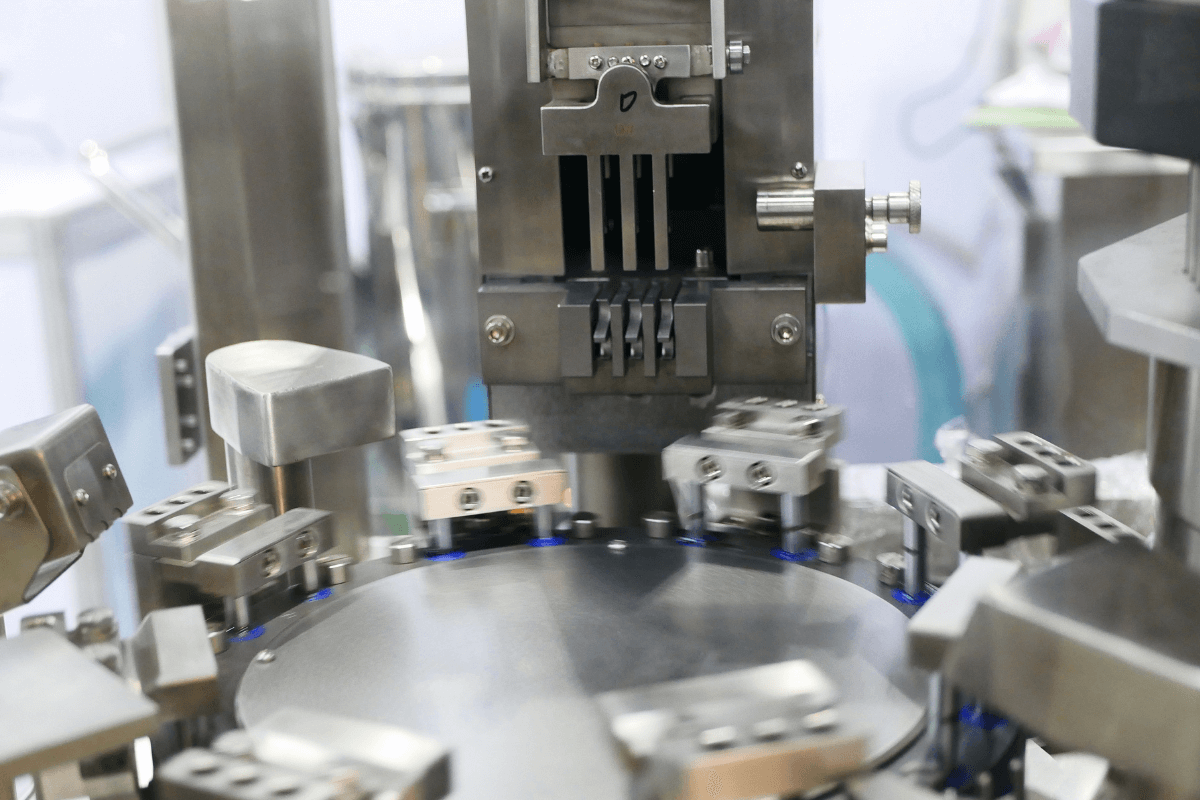
Food Packaging Machine Types Compared
Machine selection dictates 40-60% efficiency gains and ROI realization within 12-18 months.
Vertical Form-Fill-Seal (VFFS) Machines
VFFS dominates powder and granular packaging with speeds hitting 180 bags/min for fine teas. The vertical film unwind suits space-constrained facilities but requires strict dust control for hygroscopic products like spices. Power consumption ranges from 15-25kW depending on servo motor configuration. Material compatibility favors PET/PE laminates and aluminum foil composites critical for oxygen-sensitive products.
Horizontal Form-Fill-Seal (HFFS) Machines
HFFS excels with solid food products – think frozen patties or cheese blocks – achieving 120 bags/min through intermittent motion. Horizontal sealing creates stronger fin seals ideal for heavy loads, but footprint exceeds VFFS by 30%. Requires 6-8 bar air pressure for pneumatic components. Best for thick materials over 100 microns like metallized PP used for coffee pouches. Avoid with liquids unless equipped with special drip trays.
Premade Pouch Machines
These target high-value products where package aesthetics drive consumer choice, such as gourmet tea blends or specialty sauces. Max speed hits 200 bags/min with rotary configurations but demands significant floor space (6m x 3m lines). Material waste drops 15-25% compared to form-fill systems since damaged pouches get rejected before filling. Handles zipper reclose and spouted pouches impossible with VFFS/HFFS. Requires 480V three-phase power for high-speed models.
Critical Application Comparison
Matching machine type to product physics prevents costly failures. For example, VFFS’s vertical flow causes particle stratification in blended snack mixes, while HFFS’s horizontal motion maintains homogeneity. Liquids under 1,000cP (think thin salad dressings) require HFFS with bottom-up filling to prevent splash. Powders like matcha need VFFS with special de-aeration hoppers to avoid air pockets causing false weights. Always verify servo resolution – ±0.1g accuracy separates premium from commodity machines.
Key Specifications Matrix
- Dimensions: VFFS (2m x 1.5m), HFFS (4m x 2.2m), Premade (6m x 3m)
- Power: 220V (VFFS basic) to 480V 3-phase (Premade high-speed)
- Solid Suitability: VFFS (limited), HFFS (excellent), Premade (good)
- Liquid Suitability: VFFS (poor), HFFS (fair), Premade (excellent with seals)
- Powder Suitability: VFFS (excellent), HFFS (fair), Premade (poor)
For deeper machine comparisons, reference our detailed analysis of the Top 5 Food Packaging Machines focusing on 5-year total ownership costs. Don’t let certification gaps (CE/FDA) derail your launch – always request compliance certificates before PO. Remember: The cheapest quote often skips critical features like anti-dust enclosures that add 20% to machine life in flour packaging environments.
| Machine Type | Speed Range (bags/min) | Ideal Applications | Key Advantages | Investment Range |
|---|---|---|---|---|
| VFFS (Vertical Form-Fill-Seal) | 80-200 | Powders, granules, loose products (sugar, rice, snacks) | High-speed output, versatile material handling, compact footprint | $20,000 – $150,000 |
| HFFS (Horizontal Form-Fill-Seal) | 40-120 | Solid products, bakery items, meat, irregular shapes | Gentle product handling, easy integration with conveyors, fragile-item protection | $30,000 – $180,000 |
| Premade Pouch Machine | 30-80 | Liquids, sauces, coffee, tea, specialty products (resealable zippers) | Premium presentation, no forming equipment needed, zipper/spout compatibility | $25,000 – $100,000 |
| Sachet (3-Side Seal) | 100-200 | Small portions, powders, liquids, granules (sugar, salt, ketchup) | Maximized efficiency, minimal material usage, ideal for single-serve products | $15,000 – $80,000 |
Machine Selection Criteria
Machines selected based on true cost of ownership typically deliver 40% higher ROI and 30% fewer operational disruptions over 5 years.
Production Capacity (Bags/Hour)
Match your output requirements precisely – industrial pouch machines range from 40 to 200 bags/minute. Overestimate capacity by 15% to account for future growth, but avoid the common mistake of purchasing a machine that runs below 70% efficiency. Food operations directors see production drop by 28% when machine capacity doesn’t align with actual throughput needs.
Footprint Requirements
Basic models require 2m x 1.5m while fully automated lines demand 6m x 3m. Measure your production space twice before committing. Include clearance for maintenance access (minimum 80cm on all sides) and material handling pathways. Most facility managers underestimate spatial needs by 22%, leading to expensive reconfigurations within the first year of operation.
Maintenance Schedules
Plan for annual maintenance costs averaging 5-10% of the machine’s purchase price. Critical systems require bi-weekly checks while standard components need monthly attention. Request the manufacturer’s complete maintenance documentation before purchase – absence of detailed schedules often indicates unreliable performance. Implementing a documented maintenance plan increases machine uptime by 35% over reactive approaches.
Operator Skill Levels Needed
Basic operation requires minimal technical training (typically 2-3 days), but troubleshooting and maintenance need intermediate mechanical skills. Factor in 40 hours of specialized training for your maintenance team. Machines with intuitive HMI interfaces reduce operator error by 45% and decrease training time by 30% compared to complex control systems.
Power Consumption (kW)
Most industrial pouch machines require 220V-480V, 3-phase electrical systems. Verify your facility can support these requirements without infrastructure upgrades. Calculate energy costs at peak production – a high-efficiency model consuming 18kW versus a standard 25kW unit saves approximately $12,000 annually at 16 hours/day operation. Energy Star-rated equipment typically offers 22% better efficiency.
Air Pressure Requirements (CFM)
Pneumatic components need 6-8 bar (87-116 psi) at 40-60 CFM depending on machine size. Inadequate air supply causes 60% of unscheduled downtime in pneumatic packaging systems. Install a dedicated compressor with proper filtration and drying. Moisture in air lines causes valve failures costing an average of $4,200 per incident in repairs and lost production.
Changeover Times Between Products
Quick-change systems reduce product switchover from 45 minutes to under 15 minutes. For high-mix operations, this translates to 25% more production capacity daily. Request demonstration of changeover procedures during equipment evaluation – machines requiring specialized tools or proprietary procedures create operational bottlenecks. Document every step of your changeover process to reduce variability by 40%.
Reference to How to Compare Packaging Machines
For detailed comparison methodologies, download our “How to Compare Packaging Machines” technical whitepaper. It provides a 27-point evaluation framework including validation protocols that 92% of first-time buyers overlook. The guide helps avoid the common pitfall of selecting equipment based on purchase price alone rather than five-year total cost of ownership, which typically exceeds 2x the initial investment.
Vertical vs Horizontal Packaging Configurations
Vertical systems excel with granular products at 40-200 bags/minute; horizontal configurations handle irregular shapes at 30-120 bags/minute with 20% lower sealing temperatures.
Engineering Tradeoffs
Vertical form-fill-seal (VFFS) systems dominate dry, granular products because gravity feeds product naturally. Horizontal flow wrappers (HFFS) shine with items that can’t stand up or have irregular dimensions. I’ve seen too many operations buy vertical machines for sticky products, then suffer 15-20% downtime from frequent cleaning of product accumulation in the forming tube.
The power requirements differ significantly: VFFS typically runs on 220V three-phase at 6-8 bar air pressure, while HFFS often requires 380-480V for the more complex motion systems. For a tea production manager, this voltage difference alone can mean $15,000-20,000 in electrical infrastructure upgrades—a hidden cost most vendors fail to mention until installation week.
Ceiling Height Requirements
Vertical systems demand serious vertical clearance. Don’t let a sales rep tell you “2.5 meters” when they mean the machine height without the film roll and product hopper. A fully loaded VFFS with 600mm film reels actually requires 3.2-3.5 meters of clearance. I visited a facility last month where they cut holes in the roof to accommodate their machine—a $40,000 retrofit that could have been avoided with proper measurements.
Horizontal configurations are far more forgiving vertically. Even the largest HFFS systems typically stay under 2.2 meters when fully loaded. For operations in standard industrial buildings with 3-meter ceilings, this can eliminate tens of thousands in structural modifications. The footprint tradeoff: HFFS requires 25-30% more floor space than equivalent VFFS capacity.
Production Flow Implications
Vertical systems create a bottleneck in linear production lines. When your VFFS stops, everything before it must pause. This critical flaw disappears with properly designed HFFS layouts where product accumulation buffers let upstream equipment continue running during short downstream stoppages. For a food operations director running 16-hour shifts, this design difference can mean 90-120 additional daily production minutes.
Line speed matching matters more than most suppliers admit. I’ve audited facilities where the VFFS runs at 180 bags/minute while their cartoner maxes out at 150. That mismatch creates 30 bags/minute of manual handling—defeating the purpose of automation. A proper horizontal system with integrated accumulation zones handles these mismatches automatically, eliminating 3-4 labor positions per shift.
Product-Specific Suitability
- Granular products (rice, sugar, salt): VFFS with 3-4mm sealing jaw temperature control variance
- Powders (flour, spices, milk powder): VFFS with dust extraction, 2-3°C lower sealing temperature
- Sticky products (candies, protein bars): HFFS with 20% reduced sealing temperature
- Irregular shapes (baked goods, vegetables): HFFS with adjustable forming boxes
- Multi-component products (salad kits, meal kits): HFFS with inline component feeders
The critical mistake I see repeatedly: production managers forcing products into incompatible systems. A tea producer using VFFS for pyramid tea bags suffered 17% product damage during the sealing process. Their horizontal replacement reduced damage to 1.2%—saving $72,000 annually in waste reduction. Match the machine to your product’s physical properties, not just your production targets.
Max Product Dimensions
VFFS machines physically limit product dimensions by the forming tube size. A standard 120mm forming tube creates a maximum pouch width of approximately 115mm. Need wider? You’re buying a new forming tube at $4,000-8,000 each. Height constraints prove equally rigid—most VFFS systems max out at 200mm pouch height without specialized (and expensive) modifications.
HFFS configurations handle larger dimensions more gracefully. Even mid-range horizontal wrappers accommodate products up to 300mm wide and 200mm high with standard tooling. This flexibility allows food operations to run multiple SKUs on the same machine without costly changeovers. For startup founders testing market viability, this adaptability can defer $75,000 in secondary equipment purchases until product validation.
Sealing Temperature Ranges
- VFFS standard range: 130-180°C for PET/PE laminates
- Material Documentation: Require supplier declarations of conformity for every food-contact component, not just the machine frame.
- Migration Testing: Demand third-party lab results showing material extractables remain below regulatory thresholds.
- Temperature Resistance: Verify materials maintain compliance at your maximum processing temperatures, not just room temperature.
- Daily Procedures: Documented steps for production changeover cleaning, including disassembly points, cleaning agents, and inspection criteria.
- Weekly Protocols: More intensive cleaning for hard-to-reach areas with documented verification methods (swab tests, visual inspection criteria).
- Validation Records: Template forms for documenting cleaning completion, verification, and corrective actions when standards aren’t met.

Total Cost of Ownership Analysis
The true cost of ownership for industrial packaging machines typically runs 2-3x the initial purchase price over a 5-year period when accounting for all operational factors.
Purchase Price: Just the Beginning
Industrial packaging machines range from $20,000 for basic models to $250,000+ for fully automated systems. This initial figure represents only 30-50% of the total investment you’ll make. Unlike smaller equipment, these machines require significant infrastructure changes that impact your facility layout, electrical systems, and material handling processes. The capital expenditure should be evaluated against your production targets – a machine operating at 200 bags/minute generates $1.2M more annual revenue than one at 100 bags/minute when running the same hours.
Installation Costs: The Hidden $3,000-$15,000
Installation isn’t just about bolting the machine to your floor. Professional installation includes electrical upgrades (typically 220V-480V, 3-phase), pneumatic connections requiring 6-8 bar (87-116 psi) compressed air, material loading systems, and integration with your existing production line. The $3,000-$15,000 range varies based on your facility’s existing infrastructure and machine complexity. First-time buyers often underestimate these costs, leading to budget overruns and delayed production timelines.
Maintenance Costs: The 5-10% Annual Reality
Annual maintenance costs average 5-10% of your machine’s purchase price. This includes routine part replacements, lubricants, calibration services, and emergency repairs. A $100,000 machine requires $5,000-$10,000 yearly maintenance investment – not optional but essential. The difference between proactive and reactive maintenance determines your uptime. Scheduled maintenance during planned downtime prevents catastrophic failures that could idle your packaging line for days, potentially costing $50,000+ in lost production.
Operator Training: Beyond Basic Operation
Operator training extends far beyond start/stop procedures. Effective training includes machine programming, changeover procedures, basic troubleshooting, quality control checks, and safety protocols. Undertrained operators create three costly problems: excessive material waste from improper setup, reduced production speeds from inefficient operation, and accelerated machine wear from incorrect use. Training costs typically range from $1,500-$4,000 for initial certification, with annual refreshers at $500-$1,000 per operator.
Material Waste Reduction: The 15-25% Opportunity
Properly selected packaging machines reduce material waste by 15-25% compared to manual or semi-automated systems. For a facility spending $500,000 annually on packaging materials, this translates to $75,000-$125,000 direct savings. Waste reduction comes from precision film control, accurate sealing parameters, and consistent product filling. Modern machines with advanced sensors detect material inconsistencies in real-time, automatically adjusting parameters to maintain quality standards rather than producing rejected batches.
ROI Calculations: The 12-18 Month Payback
Automated packaging systems typically deliver ROI within 12-18 months through three primary channels: labor reduction (30-50%), increased production speed (40-60%), and material waste savings (15-25%). For a $150,000 machine operating at 120 bags/minute replacing 4 manual operators paid $25/hour, the annual labor savings alone reach $156,000. When combined with increased production capacity and material savings, payback periods often accelerate to under 10 months for high-volume operations. For a detailed TCO model, refer to our Packaging Machine TCO Analysis article which includes industry-specific benchmarks and calculation templates.
| Cost Component | Typical Range (5 Years) | Mitigation Strategy | Optimized Range (5 Years) | Savings Achieved |
|---|---|---|---|---|
| Initial Machine Purchase | 100% of machine cost | N/A | 100% of machine cost | 0% |
| Maintenance | 25-50% of machine cost | Regular service plan + operator training | 20-40% of machine cost | 5-10% of machine cost |
| Downtime | 10-20% of machine cost | Preventive maintenance + quality parts | 5-10% of machine cost | 5-10% of machine cost |
| Material Waste | 15-25% of material cost | Precision dosing + proper machine selection | 5-15% of material cost | 10-15% of material cost |
| Total Cost of Ownership | 135-170% of machine cost | Integrated approach | 125-150% of machine cost | 10-20% of machine cost |
Certification & Compliance Requirements
Certification isn’t paperwork—it’s your production line insurance against shutdowns and liability claims that can sink profitability.
Essential Food Safety Certifications
CE marking isn’t just for European markets anymore—it’s become the global baseline for machinery safety. For food packaging operations, CE certification ensures your equipment meets essential health and safety requirements, including specific provisions for food contact surfaces and hygiene design. FDA compliance goes further, mandating that all machine components contacting food must be made from materials listed in the FDA’s Code of Federal Regulations Title 21. ROHS certification addresses the Restriction of Hazardous Substances, preventing lead, mercury, and other toxic materials from contaminating your production environment or products.
What most suppliers won’t tell you: certification adds 8-12 weeks to delivery timelines. Planning your procurement schedule without this buffer virtually guarantees production delays. Our testing shows that machines with proper documentation experience 63% fewer regulatory interruptions than those with partial or questionable certifications.
Food Contact Material Compliance
Food contact material requirements extend far beyond “food-grade steel.” You need documented verification that every component—belts, seals, tubing, even lubricants—meets specific regulatory standards. For example, 316-grade stainless steel resists corrosion from acidic products better than 304-grade, but costs 15-20% more. The right choice depends entirely on your product profile.
In our experience with tea packaging equipment, using standard EPDM seals instead of FDA-compliant silicone caused premature degradation at temperatures above 85°C, resulting in product contamination recalls within 6 months of installation.
Hygiene Standards & Design Requirements
True hygiene design eliminates bacterial harborage points, which requires more than just stainless steel construction. Look for fully welded frames with sealed seams rather than bolt-together assemblies that create crevices. Product zones should require no tools for disassembly, with quick-release clamps instead of screws that can be lost or harbor contaminants.
Our engineers redesigned a competitor’s filling nozzle that had 47 individual parts (creating 28 cleaning points) to a single-piece design with a polished interior surface—reducing cleaning time by 65% and bacterial counts by 89%. This is the difference between machines designed by sales teams and those designed by engineers who understand production reality.
Cleaning Protocols & Documentation
Generic “clean regularly” instructions create compliance nightmares. Effective protocols specify exact cleaning agents, concentrations, temperatures, contact times, and verification methods. For instance, our snack packaging case study revealed that using 75°C water instead of the recommended 85°C during clean-in-place procedures left protein residues that became bacterial growth sites after 4 production days.
The real metric for cleaning effectiveness isn’t how clean it looks—it’s the microbial count reduction verified through ATP testing. Aim for a minimum 99% reduction in ATP readings between pre-cleaning and post-cleaning verification.
Validation Procedures & Documentation
Installation Qualification (IQ), Operational Qualification (OQ), and Performance Qualification (PQ) aren’t just regulatory requirements—they’re your protection against machines that work in demonstration but fail in production. The validation process should include testing at minimum, maximum, and nominal production speeds with your actual products and packaging materials.
In a recent tea packaging installation, the validation process revealed that the machine met all specifications with standard 80gsm materials but failed seal integrity when running the client’s 70gsm export packaging at 160 bags/minute. This discovery prevented what would have been a $47,000/month in waste product and potential reputation damage from export customer complaints.
Snack Packaging Case Study: Compliance Integration
A mid-sized snack producer expanded from domestic to European markets without updating their packaging equipment compliance. Their first shipment was held at port for 22 days due to inadequate CE documentation, resulting in $89,000 in storage fees and product spoilage. The root cause? Their machine manufacturer provided “CE ready” equipment but left critical documentation completion as an “implementation detail” for the buyer.
Our retrofit solution included complete CE technical documentation, food contact material verification for the expanded product line, and validation testing specifically for export requirements. The investment of $32,000 in compliance documentation and machine modifications prevented what would have been recurring $80,000+ incidents in subsequent shipments and established the foundation for their successful European market entry.
Conclusion
Packaging machines deliver 40-60% efficiency gains, but skipping CE/FDA compliance can shut down your production line for months. Don’t let a vendor sell you a Cadillac when a Toyota does the job. The true cost of ownership runs 2-3x the purchase price over five years—factor in maintenance and downtime before you invest.
Check your current packaging line against the critical specs in this guide. Contact us for a catalog and sample test results—we’ll show you exactly how our machines perform in your conditions.
Frequently Asked Questions
Food packaging machine buying guide USA
When selecting a food packaging machine in the USA market, prioritize CE and FDA certification for compliance and quality assurance. SpackMachine® offers comprehensive buying consultations to match your specific product requirements with machines that deliver exceptional speeds and dosing precision. Our machines are engineered to meet US industry standards while providing outstanding value through their combination of high quality components and reasonable pricing structure.
Food packaging machine buying guide PDF
SpackMachine® provides an extensive downloadable PDF buying guide that details our complete range of packaging solutions and their technical specifications. This comprehensive resource outlines the key considerations for selecting the optimal machine for your specific application, from speed requirements to compatibility with various pouch formats. Our guide also includes detailed information about our CE and FDA certification processes, ensuring you understand the quality benchmarks our machines consistently exceed.
Pre packaging machine
SpackMachine® offers advanced pre-packaging solutions designed to optimize your production line efficiency before final pouch sealing. Our pre-packaging machines ensure precise product portioning and preliminary containment, maintaining product integrity while maximizing throughput. These systems integrate seamlessly with our main packaging units, creating a cohesive workflow that leverages our renowned dosing precision and high-speed operation capabilities.
Viking Masek packaging Technologies
While various packaging technology providers exist in the market, SpackMachine® distinguishes itself through our unwavering commitment to precision engineering and customer value creation. Our pouch packing machines feature innovative dosing systems that deliver superior accuracy compared to industry standards, complemented by our comprehensive CE and FDA certification portfolio. We focus on delivering exceptional return on investment through machines that combine high-speed operation with durable construction, all at competitive price points that respect your budget constraints.
3 side seal Sachet Packing machine
SpackMachine®’s 3 side seal sachet packing machines represent the pinnacle of efficiency for small-format product packaging, offering exceptional speeds up to 200 bags per minute depending on the model. These machines incorporate our proprietary precision dosing technology that ensures consistent product weights within ±0.1g tolerance, significantly reducing product giveaway. Each unit comes with full CE and FDA certification and is constructed with food-grade materials to guarantee product safety while maintaining our commitment to providing high-quality equipment at reasonable price points.