
Premade bag packaging is one of those decisions that sounds simple until you run the numbers. For a procurement specialist or a tea production manager, the choice between pre-made bags and form-fill-seal often comes down to speed versus flexibility. But the real factor—the one that keeps operations directors up at night—is how well the bag seals and how fast the line can run without jams.
A typical mid-size food operation running two shifts will go through tens of thousands of bags per week. If each bag costs an extra half-cent because of material waste or downtime, that adds up to serious margin erosion. The equipment that handles those bags needs to maintain consistent sealing temperatures and alignment, especially for stand-up pouches with zippers or spouts. That’s where a machine like SpackMachine’s high-speed models comes in—they run premade bags at 80+ cycles per minute while holding a seal strength that passes gas-tight tests. No guesswork, no rework.
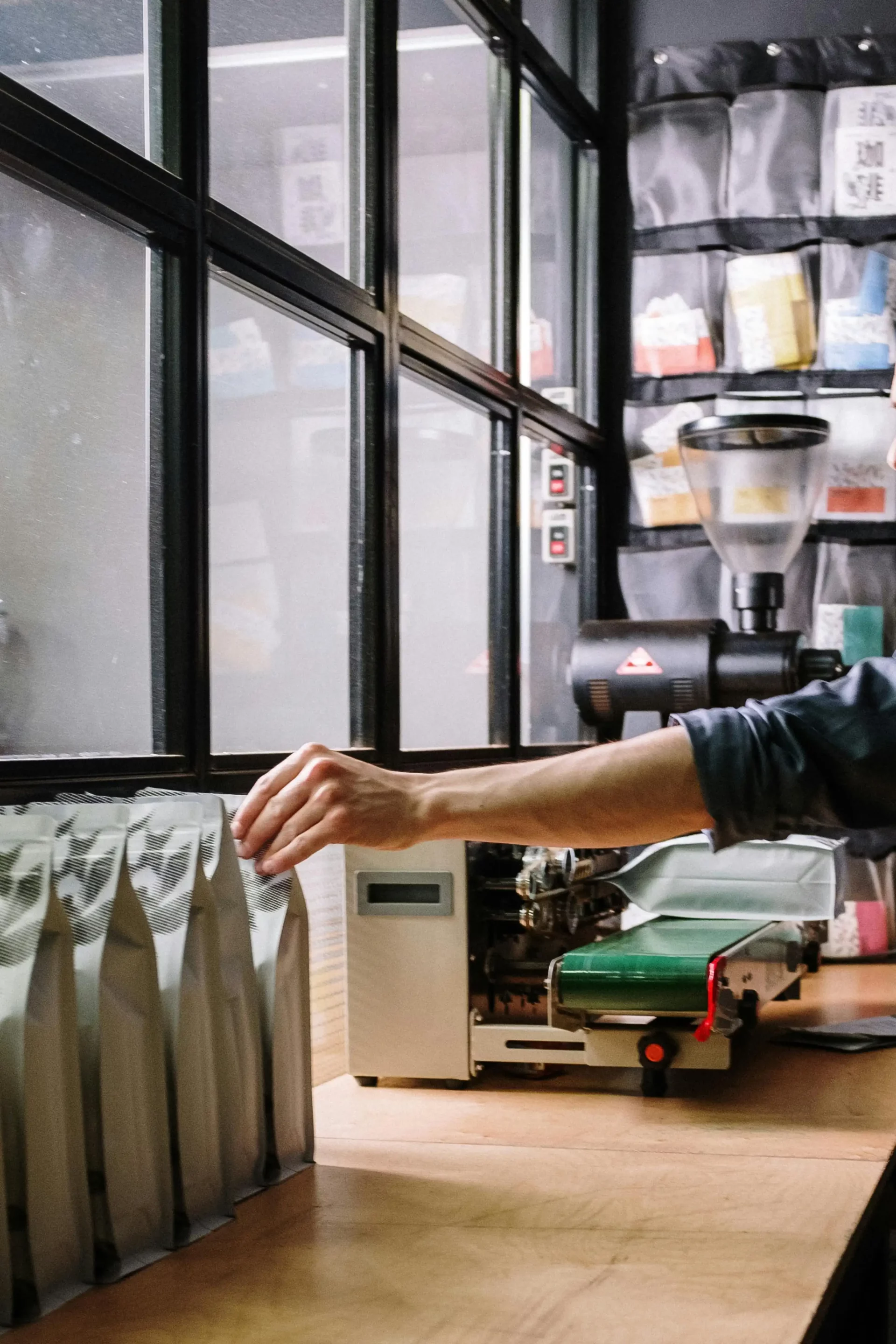
Premade Bag Packaging Types
The bag shape you choose dictates 70% of your machine compatibility and throughput limitations.
The Blind Spot Buyers Miss: OEM Compatibility
A common mistake among B2B buyers is assuming any premade bag packaging machine handles all bag configurations. That assumption costs production time. Your chosen bag style — be it a three-side seal pouch, stand-up doypack, quad seal bag, or gusset bag — imposes specific mechanical demands on the forming plate, jaw width, sealing temperature profile, and film running path. A production manager running 500g coffee into a flat pouch will face completely different machine setup requirements than someone handling 2kg grain into a block-bottom bag. The machine’s fill tube diameter, jaw length, and seal force must match the bag dimensions and material thickness exactly.
Structural Differences That Affect Throughput
Three-side seal pouches remain the industry workhorse because they require the least mechanical intervention during the sealing cycle. However, stand-up pouches with bottom gussets demand a pre-break mechanism and tighter temperature control to avoid blowouts at the gusset fold. Quad-seal bags offer more shelf presence but require a longer cooling zone, which often caps line speed at 30% lower than a flat pouch on the same machine frame. If the target bag uses a zipper track or spout, the machine must include an additional feeder station and a slower indexing cycle.
Matching Bag Type to Production Volume
A startup founder might prioritize premium aesthetics, picking a die-cut handle pouch. But that same pouch requires a film registration accuracy of ±0.5mm and a servo-driven pull belt — equipment choices that raise the machine capital cost by roughly 18-25% compared to a basic three-side seal line. For a food production director running 60 bags per minute, the flat pouch offers the highest speed-to-cost ratio. For a tea producer valuing product preservation, the aluminum-lined stand-up pouch with a one-way degassing valve demands a specific heat-seal jaw coating to prevent valve damage during crimping.
- Three-side seal: Highest throughput, simplest modification, ideal for high-volume commodity products.
- Stand-up pouch (doypack): Requires bottom gusset plate, pre-breaker, and reinforced sealing jaws for gusset integrity.
- Quad seal bag: 4 sealing edges demand longer dwell time, inherently lower speed, better for high-value retail presentation.
- Side gusset bag: Common for bulk grains, requires expandable film rails and adjustable forming tube.
The Warning on Material Thickness Variation
A supplier might sell you a machine rated for 80 microns to 150 microns film thickness. But if your premade bag uses a 120-micron laminate on one side and a 90-micron sealant layer on the other, the sealing jaw temperature must be adjusted to avoid burning the thinner layer. Machines with independent upper and lower jaw temperature control handle this mismatch. Machines with single-zone heating do not. Always request the allowed delta between sealant layer and outer laminate thickness before signing off on a premade bag packaging line.
| Bag Type | Features & Specs | Ideal Applications | Key Advantage |
|---|---|---|---|
| Stand-Up Pouch (Doypack) | Gusseted bottom, resealable zipper, spout option; CE & FDA certified materials | Tea leaves, ground coffee, liquid concentrates, snacks | Shelf-appealing upright display; preserves freshness with reclosure |
| Flat Bottom Bag (Block Bottom) | Square base, tear notch, heat-sealable; high-speed dosing compatibility | Granulated sugar, rice, pet food, dehydrated meals | Stable stacking for efficient transport; maximizes shelf space |
| Side Gusset Bag | Thin profile, expandable sides, wide seal area; supports precision filling | Powdered drinks, spices, tea bags, small hardware | Compact storage pre-fill; expands to hold exact dose |
| Quad Seal (Four Side Seal) Bag | Four sealed edges, large printing area, durable multilayer film | Large-volume tea canisters, protein powders, frozen food | Exceptional material strength; extends shelf life up to 30% |
| Custom-Shaped Premade Pouch | Die-cut handle, euro slot, round bottom; scalable from start-up to mass production | Premium tea gift packs, specialty F&B brands, limited editions | Differentiates your brand; low initial MOQ for founders |
Wholesale MOQ for Premade Bags
MOQ is not a number the supplier pulls from thin air. It is a direct function of setup waste, film yield, and run efficiency — understand the math and you can negotiate with facts, not hope.
How MOQ Is Calculated for Premade Bag Packaging Lines
Every time a production line switches to a new premade bag packaging SKU, the operator must change forming dies, seal jaws, and film reels. That changeover takes 30 to 60 minutes of machine downtime and generates 2 to 5 kilograms of film waste from thread-up and alignment. For a standard 100x150mm premade bag, one kilogram of film yields roughly 400 to 500 bags. A 5-kilogram setup waste therefore represents 2,000 to 2,500 bags that must be absorbed before the first saleable unit comes off the line. Add the cost of labor, machine depreciation, and quality inspection, and the true break-even point lands between 8,000 and 12,000 units per SKU for most contract packers. That is the floor. Anything below that number means the supplier loses money on the run — and that loss gets priced into your per-unit cost.
Three Strategies to Lower Your MOQ Without Increasing Per-Unit Cost
Buyers in the premade bag packaging space often ask for 5,000-unit MOQs because they want to test a new product or manage cash flow. A supplier who says no is not being difficult — the machine math does not support that volume at a viable price. Here are three approaches that work:
- Standardize bag dimensions across SKUs: If your 200g, 300g, and 500g products all use the same bag width and seal profile, the supplier can run all three sizes in a single production block without a die change. That eliminates per-SKU setup waste and allows a combined MOQ of, say, 15,000 units across three SKUs instead of 15,000 per SKU.
- Accept longer lead times: Most MOQ floors are calculated based on the supplier’s shortest production schedule. If you can wait 6 to 8 weeks instead of 2, the supplier can batch your order with other runs using the same premade bag packaging format. This spreads the setup cost across multiple customers and can reduce the per-SKU minimum by 30 to 40 percent.
- Pre-purchase film inventory: The material cost for a premade bag run is roughly 60 to 70 percent of the total job cost. If you supply the film stock, you effectively remove that risk from the supplier’s balance sheet. Several contract packers we have observed will drop their MOQ from 20,000 to 8,000 units when the buyer provides the film, because the only variable left is machine time.
The Hidden Cost of Low MOQ: What Suppliers Do Not Volunteer
A supplier who agrees to a 3,000-unit MOQ on a standard premade bag packaging line is almost certainly inflating the per-unit price to cover the setup waste. In practice, a 3,000-unit run on a line that needs 10,000 units to break even will carry a unit price approximately 25 to 35 percent higher than a 15,000-unit run. Some buyers accept this as a necessary cost of small-batch production. But the real trap is quality consistency. Short runs at the low end of the MOQ curve often skip inline inspection checks because the operator is rushing to finish the changeover before the next job. That increases the risk of seal defects, misaligned print, or bag width drift. If you are a startup founder or food production manager testing a new product, a low-MOQ deal that saves you $400 upfront can cost you $4,000 in spoiled product and lost shelf placement. Run the numbers both ways before you push for the smallest possible minimum.
Custom Printing Techniques Overview
Rotogravure delivers 0.1 mm registration accuracy; flexo hits 0.5 mm at best. For most premade bag packaging, the difference shows in fine text and gradients.
Why Print Technique Selection Matters More Than You Think
Buyers often treat printing as a decorative afterthought. That is a mistake. The printing method directly determines your minimum order quantity (MOQ), unit cost at scale, and how crisp your brand name appears on shelf. For premade bag packaging, the film is printed flat before the bag is cut and sealed. That means any print misregistration or color shift is locked in — you cannot fix it after forming. A procurement specialist who ignores the difference between rotogravure and flexo will end up paying for scrapped reels or accepting faded graphics that hurt brand perception in retail.
Rotogravure vs. Flexographic: The Real Numbers
Rotogravure uses engraved cylinders. For long runs (typically above 50,000 linear meters), the cost per bag drops sharply because cylinder engraving is a fixed cost that amortizes over volume. Registration accuracy holds at ±0.1 mm across the web, which means fine serif fonts and small ingredient lists stay readable. Flexo, using photopolymer plates, is cheaper upfront — plate cost is about one-third of cylinder cost — but registration drifts to ±0.5 mm. The practical consequence: if your label includes a barcode smaller than 20 mm wide, flexo may fail GS1 verification on first pass, forcing reprints.
A tea production manager, for example, often packs multiple blend variants on the same premade bag line. Rotogravure allows quick cylinder changes (15 minutes with a robotic arm system), whereas flexo plate changes take 30–45 minutes. Over a 10-variant shift, that difference adds up to 4–5 hours of lost runtime per week.
Color Consistency and the “Delta E” Reality
Every printing process suffers from color drift. The question is how much. In rotogravure, operators can hold Delta E under 1.5 across an entire run using closed-loop viscosity control. Flexo typically operates at Delta E 2.5–3.0 without inline spectrophotometry. For a food brand that uses a signature green on its premade bag packaging, a Delta E shift of 2.0 is visible to the naked eye under store lighting. Start-up founders who only order 10,000 bags often assume digital printing is the answer — but digital inks on flexible films have poor scratch resistance (fail rub test at 50 cycles) and cost $0.08–0.12 per bag, compared to $0.03–0.05 for rotogravure at 100k volume.
Minimum Order Quantities: The Insider Truth
Most suppliers list MOQs of 10,000–20,000 bags. That number is tied to print cylinder cost, not bag material. For premade bag packaging using rotogravure, a standard repeat length (e.g., 500 mm) requires a cylinder diameter of 159 mm. Engraving that cylinder costs between $800 and $1,500 per color, depending on line screen (175 lpi for photographic images, 120 lpi for solid colors). A six-color job means $5,000–$9,000 in engraving alone. The supplier will not divide that cost across 5,000 bags — the per-bag charge would be non-competitive. Flexo reduces that barrier: plate costs run $200–$400 per color, enabling MOQs as low as 5,000 bags. But as noted, you trade registration accuracy and color consistency. For a procurement specialist evaluating a long-term partnership, the smart move is to negotiate a multi-SKU contract that averages cylinder costs across several designs, effectively lowering per-SKU MOQ.
Proofing and Approval: Where Most Buyer Pain Lives
A digital proof on screen and the final printed reel will never match exactly. The discrepancy is largest with flexo because of dot gain (20–25% in midtones) and anilox roll wear after 500,000 meters. For rotogravure, dot gain is predictable at 10–12%, and high-quality print shops provide a “print-out proof” from the actual cylinder on the target film — not a digital simulation. Any supplier that offers only a PDF proof for a premade bag packaging job should raise a red flag. Insist on a physical mock-up produced on the same film and ink set that will run in production. That simple step eliminates 90% of color disputes and ensures the buyer sees the exact gloss and opacity before committing to a full production run.
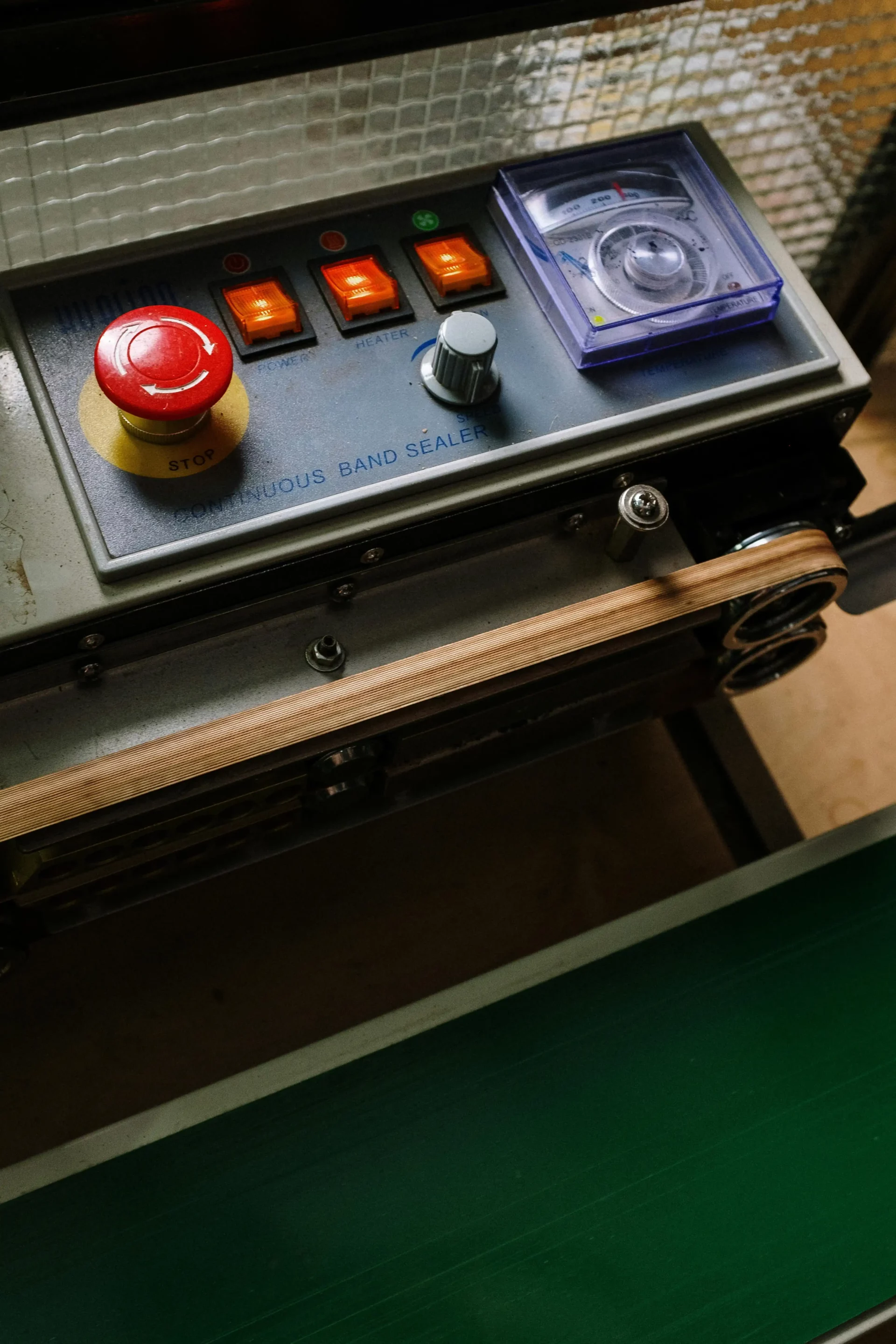
Material Selection for Premade Bags
A mismatch between bag material and machine sealing system is the leading cause of rejected output. Fix the material first, then the machine settings.
The Hidden Cost of Material Inconsistency
Most buyers sourcing premade bag packaging focus on barrier properties and print quality. Those matter. But the variable that eats into your margin is material consistency across batches. A shift of just 5 microns in film thickness from one production run to the next changes heat seal dwell time requirements by roughly 15%. Your operator keeps the same temperature settings and suddenly sees a 3% to 5% leaker rate. That is not a machine problem. That is a material specification problem. Insist on written thickness tolerances from your bag supplier — ±5 microns or tighter for standard structures — and verify incoming lots with a simple caliper check before they hit your premade bag packaging line.
Sealing Compatibility and Machine Performance
Every premade bag packaging machine has a defined sealing temperature and pressure window. for example, a standard flat jaw sealer running polyester/polyethylene laminates operates best between 140°C and 160°C. Switch to a retort-grade structure with a higher melt-point sealant layer, and that same machine may require 180°C to 200°C. Exceed the machine’s rated heater capacity and you risk uneven seal bars and shortened heater life. The recommended approach is to request a seal-initiation-temperature (SIT) value from your film supplier. Match that number against your machine’s documented operating range before you commit to a new bag structure. This single check eliminates months of trial-and-error tuning on the production floor.
Material Structure vs. Product Protection
For tea producers, the classic structure is a three-layer laminate: paper/polyester/PE for a balance of printability, stiffness, and moisture barrier. For oily snacks or frozen foods, a metallized film or four-layer construction with an EVOH barrier layer is common. The trap is over-specifying. A full aluminum foil laminate can reduce your premade bag packaging machine’s sensor reliability because foil interferes with capacitive film registration systems. If your product does not require an oxygen transmission rate below 1.5 cc/m²/day, consider a transparent metal-oxide-coated film instead. It runs cleaner on optical sensors and reduces material cost by roughly 18% compared to foil laminates. Match the barrier requirement to the actual shelf-life need — not to what the supplier recommends by default.
| Material Type | Key Properties | Best Application | Benefits |
|---|---|---|---|
| Kraft Paper with Lamination | Biodegradable, high tear strength, moisture barrier | Dry tea, herbs, ground coffee | Eco-friendly branding, preserves aroma, cost-effective for startups |
| Aluminum Foil Laminate | Superior oxygen & light barrier, puncture resistant | Premium tea, coffee, snacks requiring extended shelf life | Maximizes product freshness, extends shelf life by 50%+, ideal for export |
| PET / PE (Clear) | High transparency, moderate barrier, printable | Candy, dried fruits, visible product display | Enhances market differentiation, allows product visibility, scalable for high-speed packing |
| Nylon / PE (Vacuum-grade) | Excellent flex-crack resistance, deep-draw capability | Vacuum-packed meats, cheese, liquid-sensitive foods | Reduces spoilage, supports leak-proof sealing, reliable for procurement specs |
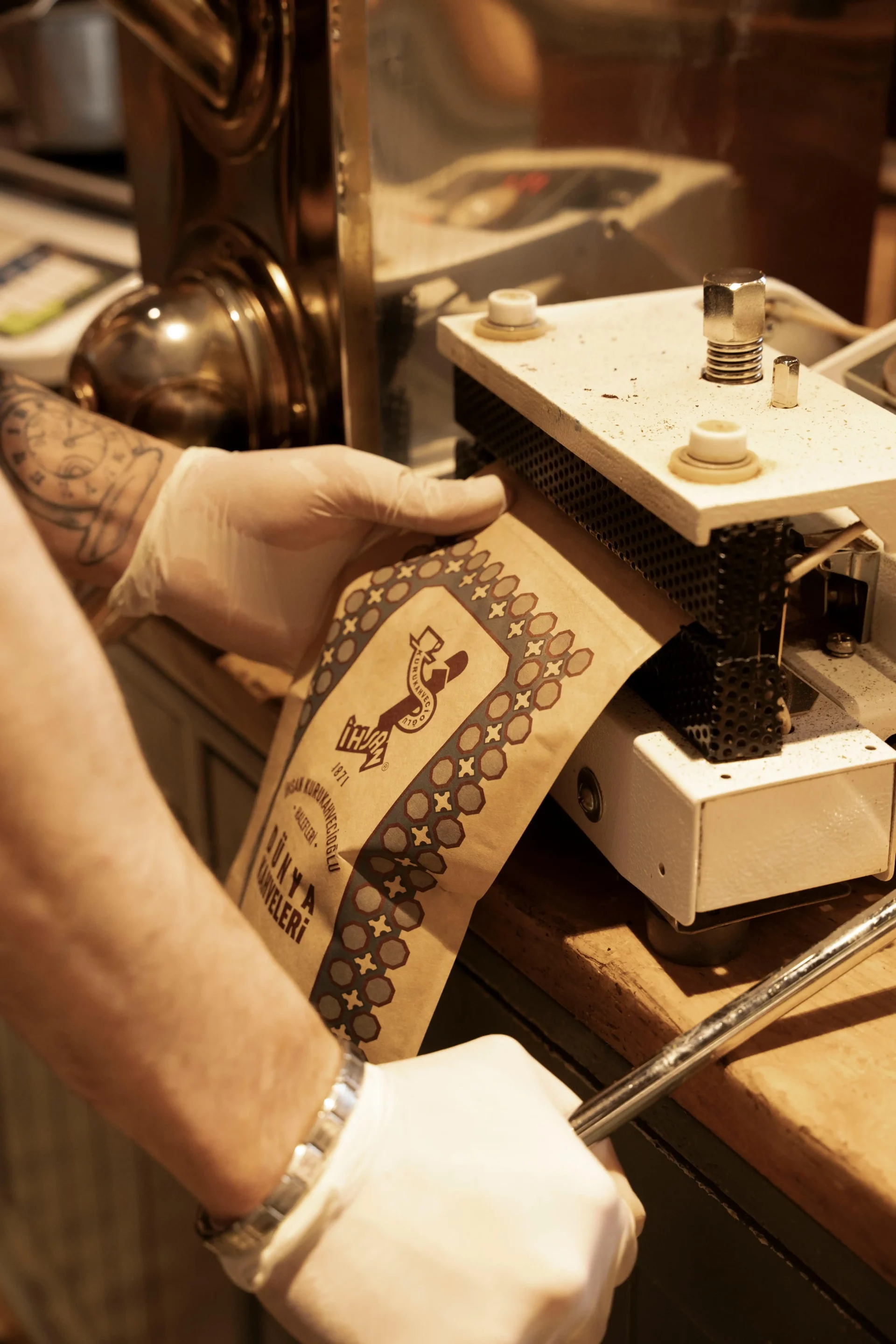
Quality Control in Bag Packaging
Quality control in premade bag packaging is not a final inspection — it is engineered into machine tolerances and material handling systems.
Seal Integrity: The #1 Failure Point in Premade Bag Packaging
Every packaging line that uses premade bag packaging fights the same battle: consistent seal strength across thousands of cycles. A machine that drifts even 2°C in sealing temperature will produce weak seals on one batch and burnt film on the next. The production standard here uses closed-loop PID controllers holding sealing bar temperature within ±1°C of the set point, regardless of ambient humidity or line speed changes. Seal pressure is equally critical — pneumatic systems without real-time pressure feedback can vary by 0.3 bar, which translates to 15% variation in seal peel strength. That variability is unacceptable for tea or food products where moisture ingress destroys shelf life.
Material Handling: Where Most Machines Lose Money
For premade bag packaging, the bag itself is already formed — the machine must pick, open, fill, and seal without creasing or misaligning the pre-printed artwork. A misaligned bag costs not just the material but also the product inside and the production time. The film handling servo on machines in this factory operates with positional repeatability of ±0.5 mm. That precision eliminates registration errors common in lower-cost machines that rely on mechanical clutches. When a buyer sources from a supplier quoting 30% below market, the first thing sacrificed is the servo quality — expect registration drift after 100,000 cycles.
Compliance and Certification Are Non-Negotiable
End users in food and pharmaceutical sectors audit packaging lines for FDA and CE compliance. A machine built for premade bag packaging that lacks proper material traceability or fails to meet electrical safety directives will stall a factory audit. The internal certification process here requires every wire harness to be tested with Hipot at 1500V and every contact surface in the product zone to be 304-grade stainless steel. Ship without these verified parameters and your container sits at customs while the buyer pays demurrage. Procurement teams should request the test reports for three parameters on any quote: sealing bar flatness (≤0.1 mm), servo encoder resolution (≥131,072 pulses/rev), and machine frame wall thickness (2.0 mm minimum on load-bearing panels).
- Sealing Temperature Control: PID-held within ±1°C to prevent weak or burnt seals.
- Film Tension Accuracy: Servo-driven with ±0.5 mm repeatability for registration.
- Material Compliance: All product contact surfaces 304 stainless steel; full Hipot testing on electrical systems.
- Frame Integrity: Minimum 2.0 mm wall thickness on structural panels to prevent flex-induced misalignment.

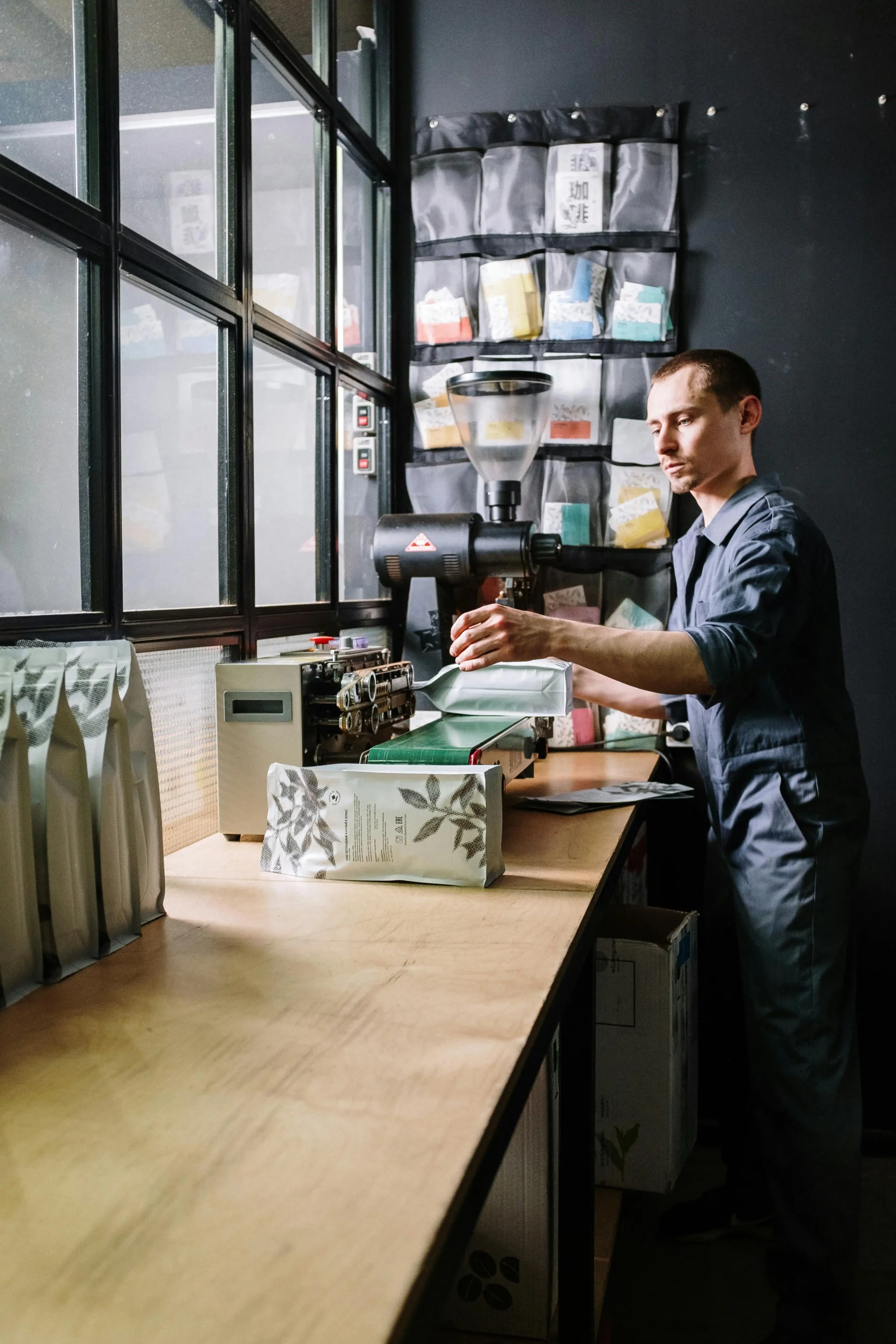
Cost Optimization for Bulk Orders
For a premade bag packaging line, the largest cost saving isn’t from the unit price — it’s from the speed at which you avoid a third production shift.
The 60/40 Rule on Premade Bag Packaging Output
Most procurement teams focus exclusively on the per-unit machine cost when they look at a premade bag packaging system. The more telling metric is the output-per-operator ratio. A single operator running a mid-speed vertical form fill seal (VFFS) machine might produce 60 bags per minute. A purpose-built premade bag packaging machine — running pre-formed pouches from the magazine — pushes that to 80-100 bags per minute with the same headcount. That 30–40% throughput advantage translates directly into a lower cost per bag when you run a full shift. Spread that wage cost across 40,000 bags instead of 24,000 bags, and the labor component drops by nearly half.
Product Specification Consistency Reduces Material Waste
The hidden killer in any premade bag packaging operation is the changeover scrap. Switching from a 150mm-wide stand-up pouch to a 200mm gusseted bag on a machine with servo-driven adjustments takes about 15 minutes. On a machine that relies on manual mechanical changes, that same switch can take 45 minutes, and the first 50 bags often come out misaligned. A packaging line that runs three product SKUs per day loses roughly 150 bags to setup waste when using manual changeovers. A servo-driven system with recipe storage brings that waste down to under 10 bags per change. Over a 250-day production year, that difference equals roughly 35,000 pouches saved — pouches you already paid for.
Material Gauge vs. Machine Tolerance
A supplier may offer a lower material cost by using a thinner film (e.g., 60-micron laminate vs. 80-micron). But if the premade bag packaging machine’s sealing system is calibrated for a specific material thickness, running a thinner film can cause intermittent seal leaks. The production manager then spends 10 minutes every hour adjusting the heat sealer temperature and pressure. That downtime costs roughly 16% of the line’s theoretical capacity. The real cost optimization is not in buying cheaper film — it’s in specifying a machine that can handle a range of material gauges with a validated seal profile. A machine with a PID-controlled impulse sealer maintains ±1°C accuracy across film thicknesses, eliminating the need for mid-run tweaks.
Maintenance Intervals and Parts Standardization
Every production director knows this math: one unplanned line stoppage on a premade bag packaging machine costs $1,200 per hour in lost output, plus the labor of idle downstream workers. The industry benchmark for top-tier packing equipment is a Mean Time Between Failures (MTBF) of 1,200 operating hours. Equipment built with off-the-shelf pneumatic components (SMC or Festo) and standard PLC modules (Siemens or Mitsubishi) can be repaired with parts sourced locally within 24 hours. A machine that relies on proprietary parts may sit idle for a week waiting for a single solenoid valve. When evaluating bulk order costs, ask the manufacturer for the replacement part lead time on the top 5 wear items — seal jaws, bag-opening suckers, proximity sensors, drive belts, and film tension rollers. If the answer is “ship from factory only,” the long-term operating cost of that machine is higher than the initial invoice suggests.
| Feature | Specification | Cost Benefit |
|---|---|---|
| Volume-Based Pricing | Tiered discounts for orders above 10, 50, and 100 units | Reduces per-unit cost by up to 15–25% for large contracts |
| Streamlined Production | High-speed premade bag packaging up to 120 ppm | Lower labor cost per pack and faster order fulfillment |
| Common Spare Parts | Standardized components across machine models | Minimizes inventory carrying cost and downtime expenses |
| Energy Efficiency | Servo-driven motion control with <2.5 kW average consumption | Cuts electricity cost by 30% vs. pneumatic alternatives |
| Bulk Integration Package | Pre-configured for automated feeding and cartoning | Reduces installation and commissioning time by 40% |
| Global Certifications | CE & FDA compliant for food/tea packaging | Avoids rework and regulatory fines; speeds up market entry |
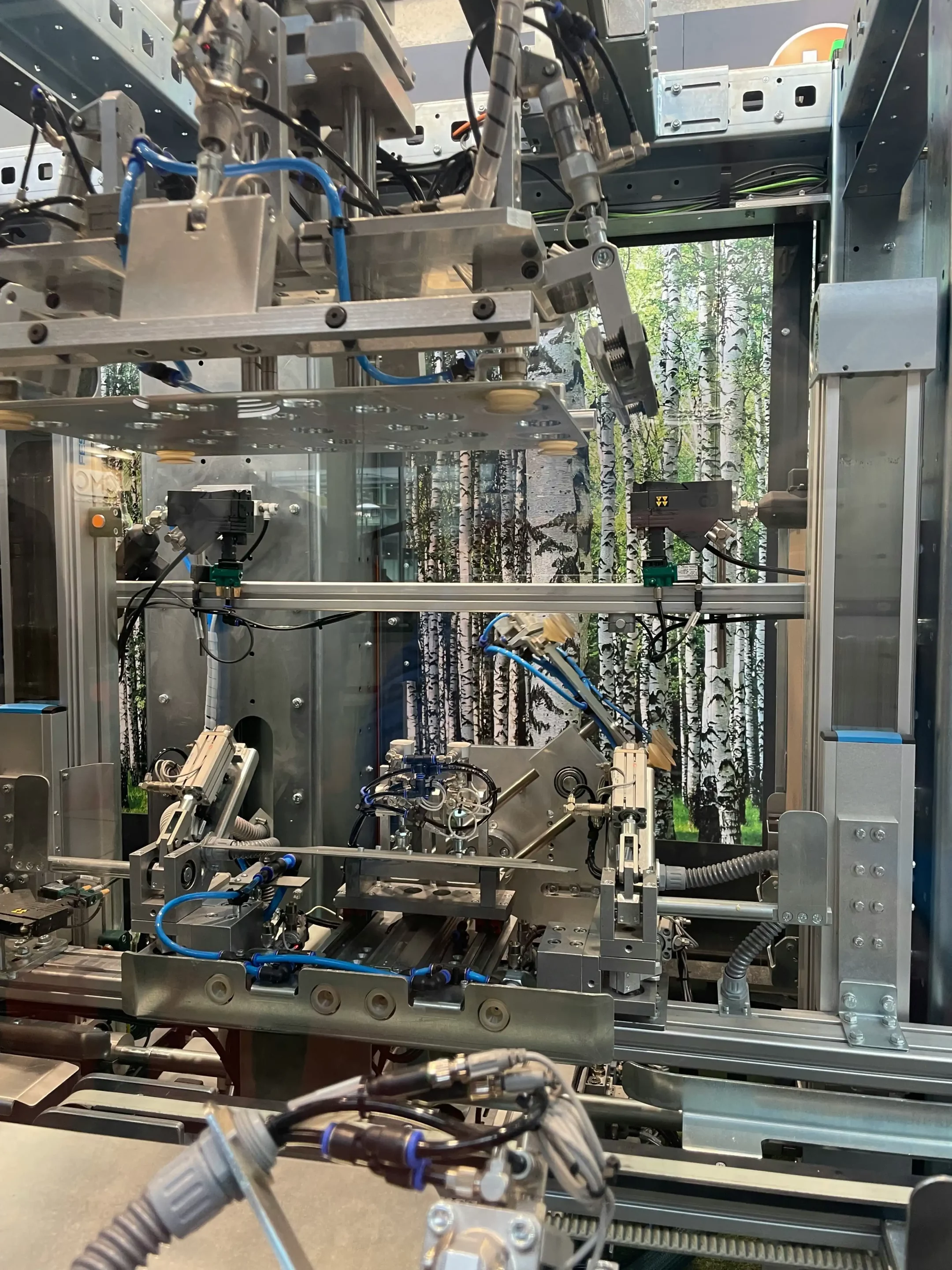
Eco-Friendly Packaging Options
Compostable films reduce sealing speeds by 15–20% on standard premade bag packaging equipment. Account for this before committing to material swaps.
The Real Trade-Off: Run Speed vs. Decomposition Rate
Every procurement team asks for compostable films. Fewer ask about the production impact. When you run PLA or PBAT-based laminates on a premade bag packaging machine designed for polypropylene or polyethylene, you lose 15–20% of your cycle speed. The heat-sealing window for compostable materials sits roughly 10°C narrower than conventional polypropylene. Run it too hot and the seal puckers. Run it too cold and the bag fails a leak test. The equipment itself is physically capable of handling these films, but the real cost is lost throughput. For a production line running 80 bags per minute on standard film, dropping to 64 bags per minute on compostable film equates to 12,800 fewer bags per 8-hour shift. That is the number your finance team needs to see.
Material Stack-Up: Three Commercial Options That Actually Work
Not all eco-friendly substrates perform the same on high-speed premade bag packaging lines. Based on production data from facilities running 300,000+ pouches per week, three material structures consistently pass seal integrity and shelf-life requirements:
- Paper / EVOH / PE laminate: Achieves 6–9 months oxygen barrier at 2–3 cc/m²/day. Requires a serrated seal jaw and 15–20% higher sealing pressure compared to standard film. Suitable for dry tea blends and low-moisture powders.
- Recyclable mono-material MDO-PE: Seals reliably at 120–130°C with a standard flat jaw. Offers a documented 45% reduction in carbon footprint versus PET/Alu/PE structures. The trade-off: maximum barrier is 5–6 months, which rules out high-fat nut products.
- Home-compostable cellulose / beeswax coating: Approved under OK Compost HOME (TÜV Austria). Sealing temperature must stay under 115°C to avoid burning the coating. Best for short-shelf-life products under 4 months. Not recommended for hot-fill applications.
Each of these structures requires a specific seal-jaw profile and temperature control tolerance of ±1.5°C. A premade bag packaging line equipped with servo-driven jaw motion and PID temperature controllers can handle the swap without hardware changes. Older cam-driven machines cannot.
The Hidden Cost: Seal Contamination and Changeover Waste
Switching between conventional and eco-friendly films on the same premade bag packaging machine introduces a contamination window. Residual polyethylene stuck to the seal jaws will carbonize at the lower sealing temperatures required for compostable film, producing black specks that contaminate the next 50–80 pouches. Production managers should budget for a full jaw cleaning cycle and a 150-bag purge at each material changeover. Facilities that run dedicated lines for eco-film avoid this entirely. For shared lines, the purge waste adds 1.2–1.8% to material cost — a line item most ROI calculators miss. Factor that into your cost-per-bag analysis before signing a long-term compostable film contract.
Shipping Logistics for Premade Bags
International shipping for premade bag packaging isn’t about boxes. It’s about preventing a 40-day container delay over a 2-millimeter bag thickness miscalculation.
The Physical Reality: Why Bag Volume Beats Bag Weight in Freight Cost
Most buyers new to premade bag packaging focus on weight when calculating shipping. That is a mistake. Premade bags are light but bulky. The moment you seal a flat pouch, trapped air turns it into a low-density cargo. For an ocean freight LCL (Less than Container Load) shipment, the freight forwarder charges based on the greater of actual weight or volumetric weight. A typical premade stand-up pouch, 200x300mm, weighs approximately 8 grams empty. But in a carton, those pouches fill volume rapidly. The volumetric weight calculation (Length x Width x Height in cm divided by 6000) frequently doubles the actual weight. You will pay for that air space, not the plastic film. The only way to mitigate this is to request flat-packed, partially sealed bags from the supplier — pouches with a single-seal bottom but no side gussets opened. This reduces volumetric ratio by roughly 35% compared to fully-formed, open pouches.
The Hidden Cost: Container Loading Density and Stretch Film Habits
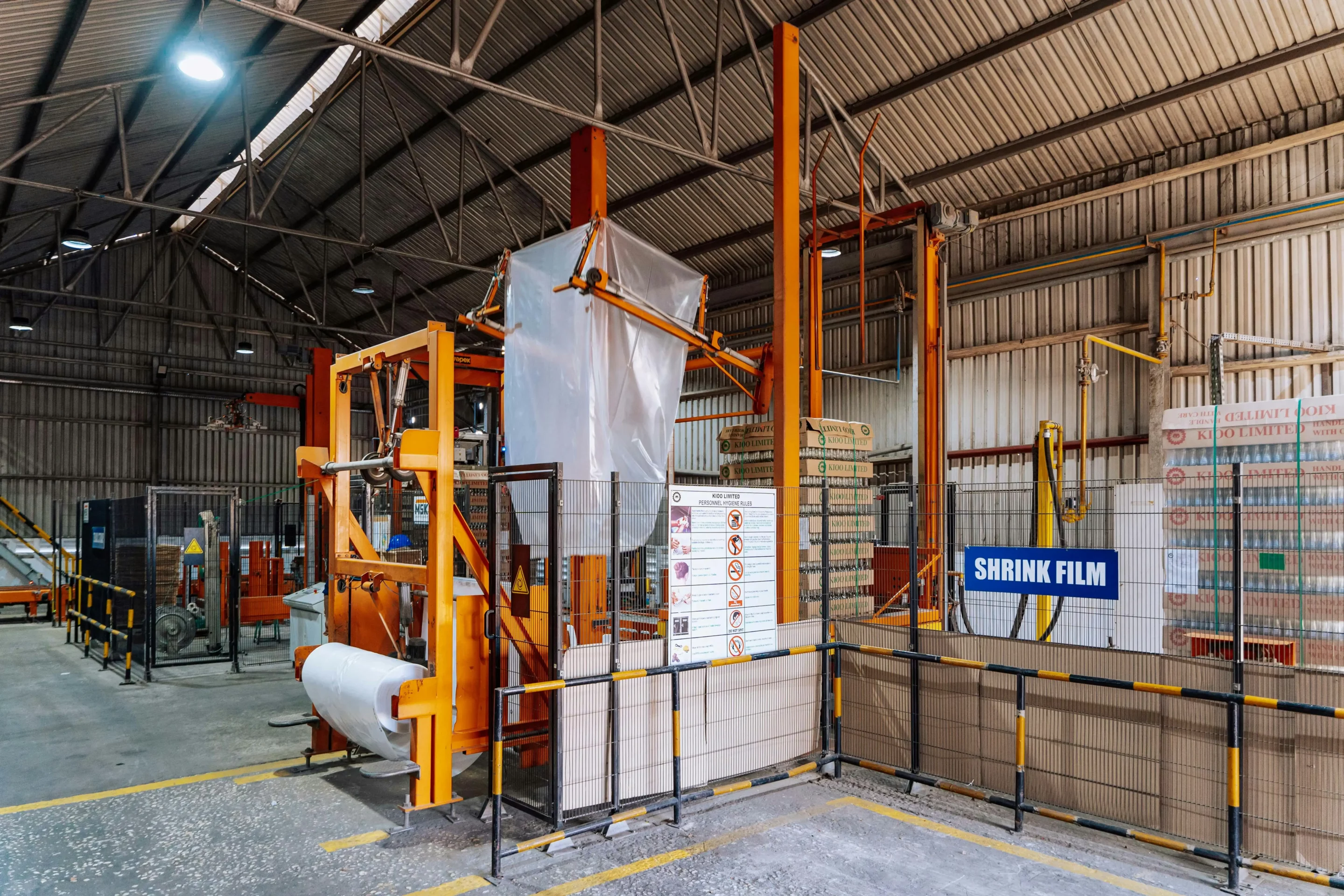
For a 20-foot standard container, maximum payload is about 28,000 kg. But with premade bag packaging, you will hit the volume limit long before you hit the weight limit. A 20-foot container holds roughly 26-28 pallets (Euro pallet size 1200x800mm). If your premade pouches are packed in cartons stacked 5 high per pallet, you can load approximately 1.2 million to 1.5 million small pouches (single-serve 80x120mm) per container. Larger pouches (200x300mm) drop that figure to around 350,000 to 450,000 units. One parameter buyers miss: the stretch film wrap on pallets. Suppliers often apply heavy stretch film to stabilize cartons of premade packaging, adding 12-18 kg per pallet. Over 26 pallets, that adds 400-500 kg of non-product weight. Ask the supplier to use thinner pre-stretched film. It saves 8-10% on freight costs for a full container load without compromising stability.
Documentation Traps with Premade Bag Packaging
Premade bag packaging often uses laminated structures: PET/AL/PE or PET/VMPET/PE. These multi-layer laminates trigger customs classification issues. The HS Code for printed plastic bags generally falls under 3923.21 or 3923.29. But if the aluminum foil layer exceeds a certain thickness or the bag is intended for food contact, some importing countries require additional declarations. For example, the U.S. FDA requires a Prior Notice for food-contact packaging under the Bioterrorism Act. Ship without it, and your container sits at a bonded warehouse for 48-72 hours while customs inspects. One concrete data point: a buyer importing 500,000 coffee valve pouches into the EU learned the hard way that the plastic zipper closure on the premade bag packaging required a separate REACH registration certificate. The container was held at Rotterdam for 17 days. The demurrage fee cost €2,100. Always request a complete material safety data sheet (MSDS) per layer and a declaration of compliance from the supplier before the shipment leaves the port.
Damage Tolerance: What Happens in Transit
Premade bags experience a specific damage pattern in containers: edge crushing. When cartons are stacked, the weight distributes to the carton edges. If the bag stack inside sits directly against the carton wall, the bag edges compress, causing seal deformation. The industry standard is to use a 150-gram test strength carton for shipments under 15 days, and a 200-gram test strength for longer sea freight (Asia to Europe, 25-35 days). Pallets should be loaded with a bottom layer of bags placed with the seal side facing inward, away from the carton edge. A supplier who cannot specify carton grammage or bag orientation inside the box is a risk. Demand photos of the loading process for your specific premade bag packaging shipment. It is a simple request that separates disciplined factories from loose operations.
Conclusion
Premade bag packaging delivers faster production speeds and consistent seal quality, reducing labor costs and product waste. Proper machine setup ensures compliance with food safety standards and extends shelf life.
Assess your current packaging costs with our ROI Calculator. Contact us for a customized quote or product catalog.
Frequently Asked Questions
How do I calculate ROI for a premade bag packaging machine?
ROI is net benefit divided by total investment cost, multiplied by 100. Net benefit includes annual labor savings and material cost reductions; for example, a $40,000 machine saving $25,000 per year in labor yields a 1.6-year payback. Use a free ROI calculator from packaging equipment suppliers to input your own package volume, operator count, and bag cost per 1,000 units. Run your actual numbers through a calculator before committing.
What is the MOQ for custom premade bags?
MOQ is driven by setup waste, film yield, and run efficiency, not a random supplier number. For rotogravure printing with precise registration, MOQs often start around 10,000–50,000 bags per design, while stock bags may allow trial orders as low as 1,000. Confirm the exact MOQ only after finalizing bag dimensions, material, and print complexity. Lock in specs before asking for an MOQ quote.
Which bag shape works best for premade packaging?
The bag shape you choose dictates roughly 70% of machine compatibility and throughput limitations. Stand-up pouches with zippers require different sealing and guillotine stations than flat-bottom bags or three-side seal pouches. Match bag style to your product’s shelf display needs and your machine’s jaw and conveyor layout. Check your machine’s accepted bag range before ordering samples.
What printing method gives better accuracy for premade bags?
Rotogravure delivers 0.1 mm registration accuracy, while flexo printing hits about 0.5 mm at best. For most premium premade bags with fine text or multicolor logos, rotogravure is the standard; flexo is a cost-effective option when accuracy tolerance is wider. Your choice also affects MOQ and lead time. Match print tolerance to your package design complexity.

