Sachet vs stick pack: which format should you choose?
A sachet is usually a small, flat pouch; a stick pack is a narrow, elongated pack with a longitudinal seal and seals at both ends. Both can serve single portions. The useful comparison is how each proposed bag handles your product, opens for the user and runs on the specified equipment.

Choose a wider sachet when the opening or flat print area suits the job; consider a stick pack when a narrow pour opening and slim shape suit it. Then check the dose, film, filling system, lane count and finished-pack handling. Neither shape alone guarantees lower cost, higher output or more accurate filling.
This guide compares the two formats and provides a blank quotation checklist. For equipment routes, see our sachet packaging machines and stick pack machine selection page.
Sachet and stick pack basics
What is a sachet?
In this comparison, “sachet” means a small, flat flexible pouch. Its construction can use three or four perimeter seals; the bag drawing matters more than the name. Taylor’s packaging catalogue, for example, describes a three-side-seal sachet, while Matrix’s INVpack sachet system describes four-side-seal flat packs.
A wider face can provide room for graphics or instructions, and the opening can be designed for pouring, squeezing or taking out the contents. These are design choices to check on a sample, rather than fixed advantages for every sachet.
What is a stick pack?
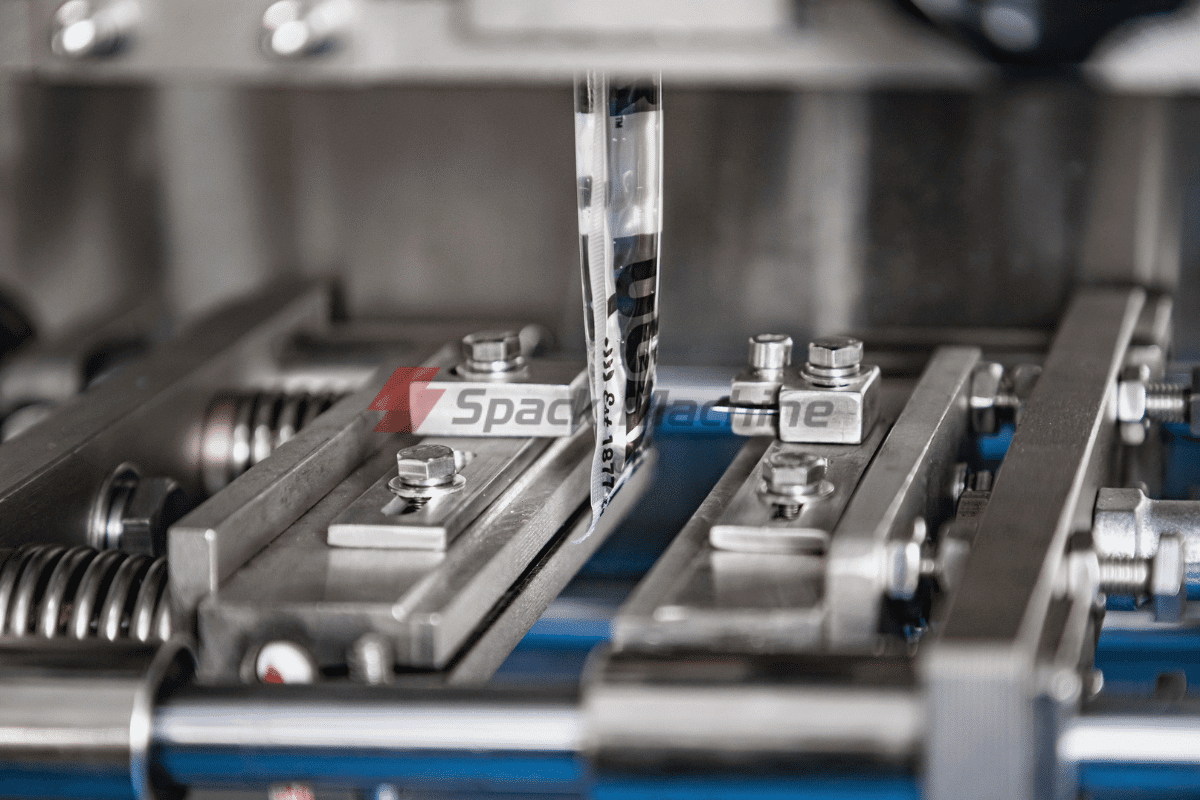
A stick pack has a slim, tube-like profile. In common roll-fed designs, film forms around a filling tube, with a longitudinal seam and transverse end seals. The seam arrangement, tear feature and cut shape belong on the proposed bag drawing.
A narrow opening can be useful for pouring a portion into a bottle or cup. Product flow, clumping and residue still affect how well it empties. A slim bag does not make the dosing system more accurate.
Keep the format and machine decisions separate
A bag name does not specify a filler, lane count or output. Matrix / INVpack’s equipment catalogue includes multilane routes for both sachets and stick packs. The available lanes depend on the particular machine and bag configuration. When discussing a Spack Machine project, confirm the exact configuration against your product and bag requirements.
Key differences that affect production
On a phone, each row appears as a separate comparison.
| Decision | Sachet route | Stick pack route | What to confirm |
|---|---|---|---|
| Shape and seals | Flat pouch; confirm three- or four-side construction. | Narrow pack; confirm the longitudinal seam and end seals. | Finished bag drawing, usable fill space, seal areas and cut position. |
| Opening and use | A wider opening may suit squeezing or broader access. | A narrow opening may suit directed pouring. | Tear force, opening size, emptying and product left inside a filled sample. |
| Product and dose | Select filling equipment for the actual powder, granule, liquid or paste. | Make the same product-based choice; check the narrower filling path. | Flow behaviour, particle size, target dose, nozzle or tube clearance and weight records. |
| Lanes and output | Single- and multilane designs exist. | Single- and multilane designs exist. | Specific model, active lanes and accepted packs from a timed product run. |
| Film and print | Check the full web layout, seal margins and print panels. | Check web slitting, seam allowance, print orientation and end seals. | Film structure, roll specification, artwork repeat and sealing trials. |
| Changeover and cleaning | Bag-size and product changes can require parts and settings. | Bag-width, lane and product changes can also require parts and settings. | Named change parts, access to product-contact areas and a demonstrated cleaning sequence. |
| After the bagger | Define counting, grouping, coding and carton presentation. | Define the same tasks, including handling narrow packs. | Which downstream equipment and manual tasks are included in the offer. |
Sealing depends on the film and filled pack
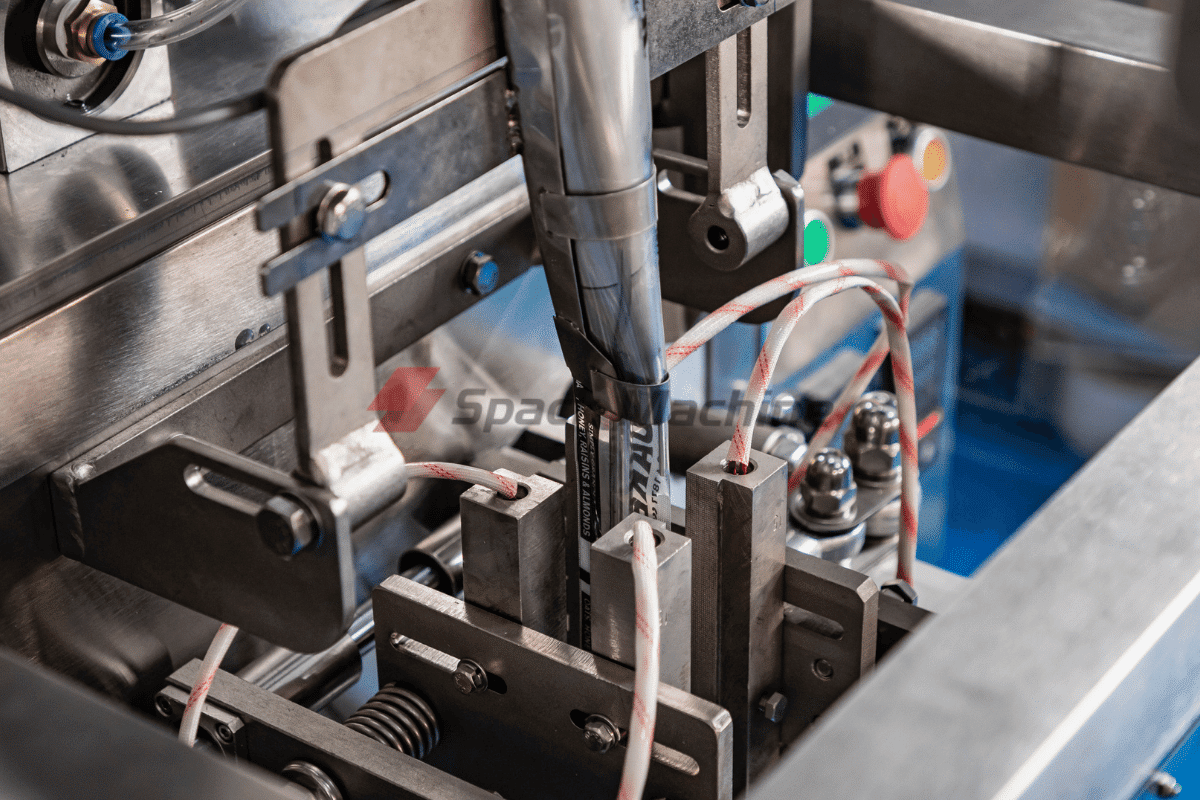
There is no useful universal sealing temperature for “sachet” or “stick pack.” Ask for the proposed film specification, the sealing arrangement and trials with the actual product. Confirm how the filling setup limits powder or liquid entering the seal area, and how finished seals will be checked.
Compare output at the end of the agreed process
Ask whether a stated speed means machine cycles, total packs across all lanes, or accepted packs after inspection. Also identify which tasks the figure includes. An impressive bagger count may leave manual collection or cartoning outside the comparison.
Use the same product, dose, film and run period for a comparison. Record good packs, rejected packs, interruptions and the reason for each interruption. A quoted maximum is a starting point for a test, not the expected output of every project.
Measure film consumption from the complete layout
Comparing only the visible front face misses seams, folds, seal allowances and trimming. Ask the film converter and machine supplier to agree the web drawing, then record film consumed and accepted packs during the same run. Include setup and changeover waste on a stated basis. A narrow shape can use less material in a particular design, but the saving must come from that design and its operating data.
Cost comparison: use matching quotation inputs

Neither sachets nor stick packs are always the cheaper option. A useful comparison holds the product, dose, protection requirements, print needs and accepted-pack criteria constant. Separate the purchase price of equipment from the cost of running it.
Copy the blank table below into your request for quotation. Fill each side with supplier information and mark anything excluded. The blanks are project inputs, not indicative prices or machine specifications.
On a phone, each row appears as a separate comparison.
| Input to match | Sachet proposal | Stick pack proposal |
|---|---|---|
| Product, target dose and acceptance criteria | ________ | ________ |
| Bag width × length, seal drawing and opening | ________ | ________ |
| Film structure, thickness, roll layout and print order | ________ | ________ |
| Filler, bagger model, active lanes and included checks | ________ | ________ |
| Accepted packs per shift, test conditions and stoppages | ________ | ________ |
| Film price, consumed amount, scrap and order minimum | ________ | ________ |
| Operators, energy and other utility assumptions | ________ | ________ |
| Size changes, cleaning time, parts and maintenance scope | ________ | ________ |
| Coding, counting, cartoning and manual tasks | ________ | ________ |
| Equipment price, currency, freight and included services | ________ | ________ |
State units consistently: for example, bag dimensions in mm with inches where needed, and the dose in the relevant mass or volume unit. Do not interchange weight and volume without the product data needed for conversion.
Materials, labour and changeovers
Compare the same film specification and ordering basis. Include the printing and roll quantities you will actually buy. For running cost, account for operators, utilities, consumables, product giveaway, rejects and planned changes. Use accepted packs as the common denominator and state which costs are included.
Short runs with frequent product changes can have a different cost pattern from long runs with the same recipe. Request a relevant changeover demonstration instead of assuming one format is cheaper below a universal annual volume.
Shipping and secondary packaging
Compare the final sale unit and shipping carton, not loose pouch dimensions alone. Count packs per carton, carton dimensions and gross weight for each proposal. Confirm whether the retailer wants loose packs, connected strips or cartons, and how that requirement changes the line.
If you are choosing a first machine or planning an expansion, continue with our small sachet machine buying and cost guide. It addresses the equipment investment decision; this page addresses the format trade-off.
Best applications: test how the customer will use the pack
Powders and granules
For drink powders, coffee or other granular portions, test flow through the intended filling path and opening. A powder that pours freely in a cup may behave differently in a narrow tube or humid conditions. Look for bridging, dust near the seal and residue after emptying. Decide on the filler from the product’s behaviour rather than assigning every powder to a stick pack.
Liquids, pastes and sample products
For sauces, gels and personal-care samples, compare how easily a filled pack opens and empties. Specify the dispensing action: pouring into another container, squeezing onto a surface or applying directly. Check leakage, trapped product, stringing at the nozzle and the cleanliness of the seal area. A wider opening may help a particular product; a narrow opening may suit another.
Instructions, portion control and pack presentation
Place the actual artwork on both proposed bag drawings. Check readable instructions, date coding and the area occupied by seals. Confirm the required fill tolerance through the proposed filling and inspection process. A “single-serve” shape does not by itself establish dose accuracy, a pharmaceutical qualification or shelf life.
Give the samples to people who will use them in the intended way. Compare opening, controlled emptying and convenience alongside the machine trial. Treat either format as single-use unless the product and package have a separately validated arrangement for storage after opening.
Material efficiency and sustainability
A lighter pack and a recyclable pack answer different questions. Compare material consumed per accepted pack, the protection the product needs and the disposal route in its intended market. The bag shape alone does not establish recyclability, compostability or a lower carbon footprint.
Material suppliers offer specific structures for sachets and stick packs. For example, Amcor’s High Shield range describes particular laminate options and makes recycling conditional on the relevant collection stream existing. The relevant question is which specific structure meets your product and local recovery requirements.
For a proposed film change, obtain its structure and supplier documentation, check the required barrier and product-contact suitability, and arrange a trial for forming, sealing and handling. Compare scrap and finished-pack protection as well as material weight. Avoid replacing a verified film with an “eco” label alone.
Make the next decision with a bag drawing and product sample
Start with the product, dose and way the customer should open and empty the pack. Compare two actual bag drawings, then match each to a specified filling and sealing configuration. Use the same accepted-pack and quotation criteria before choosing a format.
Review the sachet machine route or stick pack selection route. To discuss a project, share the product, dose, bag drawing, film information and target accepted packs per shift. Specify any lane-count or downstream requirements so the exact configuration can be checked.
Frequently asked questions
What is the main difference between a sachet and a stick pack?
A sachet usually has a small, flat pouch shape; a stick pack is narrow and elongated. The proposed drawing should identify the seals, opening and usable fill space. Do not choose a filler or assume a production rate from the bag name alone.
Does a stick pack always use less film?
No. Compare complete film layouts for the same product and dose, including seams, seal areas, trimming and process waste. A particular stick design may use less film, but the percentage must be established for that design.
Which format costs less?
There is no universal winner. Match the product, dose, film, accepted-pack criteria and line scope. Compare both equipment investment and running costs, including changes, cleaning and downstream work.
Can the same machine make both formats?
Do not assume it can. Confirm the exact machine, forming and sealing arrangement, dosing setup and change parts for each bag drawing. A machine advertised as VFFS is not automatically interchangeable between every sachet and stick format.
Is a stick pack more accurate or always faster?
No. Dose performance depends on the product, filling system and verification method. Output depends on the machine, active lanes, operating conditions and downstream process. Compare accepted-pack results from a defined run.
Can either format use recyclable film?
Assess the specific film structure, collection route, product protection and machine trial. Neither the name “sachet” nor “stick pack” makes a package recyclable or confirms film compatibility.
What should I send when requesting a comparison?
Send the product details, target dose, proposed drawings or samples, film specification, intended user action and required accepted output per shift. Add cleaning, changeover, coding and cartoning requirements, then use the blank quotation checklist above.
Sources and further reading
- Matrix / INVpack: separate equipment routes for stick packs and sachets.
- Matrix BY3 EVO and MVA4 EVO: examples of format-specific machinery and configuration choices.
- Taylor: flexible packaging formats and film selection.
- Amcor: material-specific sachet and stick pack laminate options.