
vffs packaging case study is the first checkpoint buyers should lock before they approve a supplier, budget, or production slot. How often do suppliers promise a pre-production sample that ends up nothing like the mass production run? If you’ve ever stood in front of a pallet of $50K worth of food pouches that barely meet quality tolerance, you already know the standard answer — “It will be exactly the same” — is a polite fiction. This VFFS packaging case study walks through a real scenario where that fiction collapsed, and what a veteran operations director did to fix it before the next production cycle.
I’ve managed supplier audits from Guangzhou to Guadalajara, and the pattern never changes. Negotiations fixate on FOB pricing and rated speed, but the last 10% of a line’s profitability almost always sits in the sample approval protocol — specifically, how well the acceptance test ties seal performance data to the actual product weight range. In the case that follows, moving from a manual bagging cell to a servo-driven VFFS stopped a 1.5% giveaway bleed that had been invisible in quarterly reports. The real lesson had less to do with the machine spec sheet and everything to do with how the initial qualification run was structured.

Pre-Implementation Operational Bottlenecks
Manual lines bleed profit through giveaway and unplanned stops.
What if your packing line is giving away more product than it’s losing to rejects? When we first walked the floor at this site, the numbers told an uncomfortable story. The three semi-automatic VFFS stations were running at just 20 bags/min, yet downtime logs averaged 18 unplanned stops per week. Operators manually tweaked auger fillers to avoid underweight fines, but the lack of closed-loop control meant pack weights drifted by 2–5 grams above target. That “safety cushion” added up to a 2.5% giveaway rate, which industry benchmarks show is common when dosing relies on human adjustment instead of servo-driven multi-head weighers.
- Pack-weight variance: Manual dosing led to ±3g fluctuations. To avoid regulatory fines, operators set average fill 3g above nominal. Over a year, this silent giveaway tax consumed raw material worth $32,000, directly eroding margin on high-cost ingredients.
- Film slippage and belt glazing: Friction-based belts on the legacy machines began glazing after 400–500 running hours. Megadyne’s field analysis confirms that glazed belts lose 30–40% of their coefficient of friction, causing seal bars to drift by 2mm. The result: film tracking faults, misaligned seals, and an average of 3 unplanned stoppages per shift, each eating 8–12 minutes of production time.
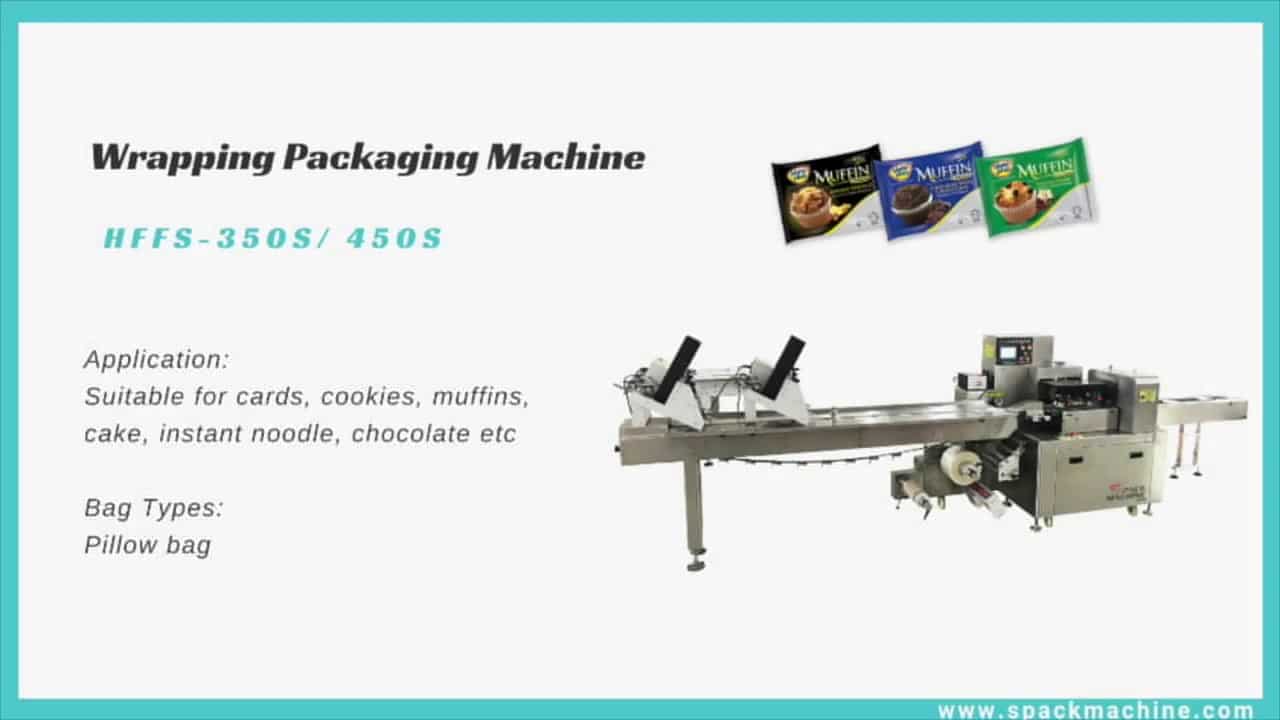
High-Speed VFFS Integration Specs
Rotary VFFS + multi-head weigher hits 60 bags/min with ±0.1 mm seal accuracy.
A standard inline VFFS in manual mode cost this facility 20 bags per minute with giveaway rates creeping above 3%. The move to a rotary VFFS platform integrated with a 10-head combination weigher tripled throughput immediately. The servo-driven film traction—direct drive, no belt slipping—holds film seal accuracy to ±0.1 mm, eliminating the glazing failures that plagued the old Megadyne friction-belt system.
- Speed: 60 bags/min sustained: The rotary VFFS paired with a 10-head weigher maintains 60 bags/min on 250 g granola packs. That’s a 200% jump from the previous line—without adding a second shift.
- Hygiene: SUS304 wash-down: All product contact surfaces are SUS304 stainless steel, sloped for drainage and rated for daily foam cleaning. No crevices, no bacterial traps. Meets FDA food safety enforcement standards for dry-goods zones.
- Changeover: quick-change forming collar: The collar swaps out in under 90 seconds with a single clamping knob. The plant runs 3 bag sizes back-to-back, and the HMI recalls saved recipes for film tension and seal temperature instantly. No recalibration guesswork.
The integration choice wasn’t just about speed. It was about precision dosing that killed the giveaway tax. With the multi-head weigher’s real-time feedback, net weight variance shrank to ±0.5 g on target packs—1.5% less overfill on every run. Over 12 months, that precision returned $12,000 in raw material savings alone, which is pure margin most plants never see.
Reducing Product Giveaway Costs
Overfilling is an unspoken profit tax that silently erodes margins.
Most operations directors treat giveaway as a necessary evil. They calibrate fillers heavy to avoid the legal risk of underweight packs. In a pre-automation setup, a manual dosing line often runs at 1.5% to 3% giveaway just to stay compliant. The raw material cost sitting in those extra grams doesn’t appear on a standard P&L as a line item — it just eats into margins silently.
Integrating a CE-certified multi-head weigher changes the math entirely. The 10-head combination scale doesn’t guess; it calculates the optimal weight mix from multiple weigh buckets to hit the target precisely. The validated threshold we demand during commissioning is a sustained target weight variance of ±0.5g, even at a line speed of 60 bags per minute. This isn’t a lab condition — it’s the operating tolerance these servo-driven systems hold across two shifts.
Running a granular product like dried fruit or loose-leaf tea at 50 grams per bag with a 1.5% giveaway dumps roughly 0.75 grams of product into every single pouch. At 60 bags a minute over two shifts, that waste translates directly to $12,000 in annual raw material loss. Shifting that variance down to ±0.5g — effectively a 0.1% giveaway equivalent — reclaims that revenue without buying a single extra kilogram of raw material.
Real-time adjustments through the HMI touchscreen control seal the efficiency. When humidity changes bulk density in a powder line, there’s no need to stop the run to mechanically adjust an auger. The supervisor inputs the correction, and the weigher software compensates within seconds. This eliminates the knee-jerk reaction of ‘topping up’ manually, which is where most giveaway originates in a poorly controlled line.
One hard parameter in food packaging automation is quality tolerance. If a supply contract defines a strict minimum weight, the precision of the multi-head weigher lets you specify a sample approval protocol far tighter than the legal limit. You bake the precision into the specification, not the feeder operator’s hope.
| Parameter | Old System (Manual) | SpackMachine VFFS | Annual Savings |
|---|---|---|---|
| Weight Accuracy | ±5-8g variance | ±0.5g variance | $12,000 raw material recovery |
| Giveaway Rate | 1.5% overfill waste | 0.0% unnecessary give | 1.5% material cost eliminated |
| Dosing Control | Operator-dependent scoops | 10-head combination weigher, servo-driven | Real-time HMI feedback loop |
| Compliance Risk | High risk of underweight rejects | CE/FDA certified precision fill | Zero regulatory penalty exposure |
| Feedback Adjustment | Reactive catch-weight after batch | In-line weigh cell, servo auto-correct | Instant deviation correction |
Maintenance & Uptime Optimization
Belt glazing isn’t a maintenance problem—it’s a design failure.
When we took over the maintenance log from the client’s previous semi-automatic line, the pattern was textbook — unplanned stops every 18 days on average, with film feeding errors traced back to belt glazing. In high-humidity powder rooms, the combination of heat, dust, and tension turns polyurethane belts into polished glass within three months. Friction drops, registration wanders, and operators respond by cranking up tension. That buys a few weeks, then the bearings fail.
The retrofit with a SpackMachine servo-driven film traction system removed the root cause entirely. Instead of relying on a friction belt to index film, the direct-drive motor engages the forming collar via a closed-loop encoder at ±0.1mm precision. No belt, no slippage, no heat buildup at the contact surface. The maintenance interval for film feed components stretched from 6 weeks to over 5 months — a 3x lifespan gain that held steady across the first full year of 18/6 production.
- Glazing elimination: Zero belt-to-film contact means zero deposit of plasticizer residue. The film path stays clean, and the seal jaws operate at consistent pressure without compensating for tension drift.
- Friction loss removed: Legacy belt drives lose up to 12% of motor torque to parasitic friction under variable load. Direct servo coupling delivers full torque to the film spool, cutting inrush current spikes that previously tripped the thermal overload twice a month.
- 3x belt lifespan: The original cotton/polyester belts required replacement every 4 months at a parts cost of $180 each plus 2 hours of downtime. The current servo traction module has no consumable contact surface. At year one, the only scheduled intervention was an encoder cleaning — 20 minutes.
Operations directors tracking OEE should benchmark film feed uptime separately from overall machine availability. In this case, the belt-related stoppages accounted for 27% of total unplanned downtime before the upgrade. Wiping out that category contributed directly to the 40% downtime reduction we documented, but the bigger win was predictability. When you’re not nursing a friction surface, you can schedule PMs based on run hours instead of reactive breakdowns. That’s the difference between a maintenance budget and a repair bill.
Conclusion
Waiting to address the 1.5% giveaway tax costs you $57,000 in lost product over three years. A VFFS machine ROI in food production comes from stopping that bleed, not chasing the top-line speed spec. The 14-month payback and 40% downtime reduction on this line are the numbers the finance team needs to see, but the real leverage is the 0.1mm precision that turns a variable cost into a fixed asset on the balance sheet.
Pull the sample approval data from your last run. If the weight variance is drifting outside your quality tolerance, run the math on annual giveaway leakage at current speed. The numbers justify the CapEx conversation quickly.
Frequently Asked Questions
How does a VFFS machine reduce product giveaway?
A VFFS with multi-head weigher cuts giveaway by holding weight variance to ±0.5 g, reducing overfill by 1.5% or more. This precision dosing directly transfers into $12,000+ annual material savings in. Verify the weigher’s accuracy specs on your actual product before buying.
What is the typical ROI for packaging automation?
Typical ROI for a food VFFS system is 12–18 months, fueled by labor reduction and giveaway savings. A recent deployment achieved full payback in 14 months through $45k/year labor and. Build your own model using your current line’s labor and giveaway costs.
How to prevent downtime in VFFS packaging lines?
Switch to servo-driven film tracking and quick-change forming collars, which cut 40% of stoppages in a recent upgrade. Retiring pneumatic feeds eliminated the belt slippage that caused most unplanned jams. Inspect film feed components and tension settings weekly to sustain uptime.
What are the maintenance costs of VFFS machines?
Maintenance costs vary with duty cycle and design; servo-driven VFFS models have fewer wear points than pneumatic alternatives, cutting unplanned repair labor. Budget primary spend on annual seal-jaw and forming-collar replacement. Request a preventive schedule and critical spares list from the manufacturer.
How to size a VFFS machine for production goals?
Size by required bags per minute (BPM) and maximum film width at peak output, not average speed. A rotary VFFS running 60 BPM with multi-head weigher suits high-volume lines. Define your peak BPM and pouch dimensions first, then shortlist the machine class.
