

Doypack / stand-up
Bottom gusset. Retail stand-up. Premade fill-and-seal on this site.
Stand-up pouch routes
Bottom gusset. Retail shelf. Premade fill-and-seal — two hosts, not a third machine.
A doypack is a stand-up pouch (bottom gusset, usually premade). On this site it is filled and sealed on a rotary or horizontal premade host — not a unique doypack machine, and not a VFFS sachet.
Confirm first: this is a format hub for stand-up pouches. 3-side, 4-side, stick and pillow packs belong on the sachet, stick and pillow hubs. Zipper and spout are pouch features. Forming a stand-up from rollstock is not a published Spack VFFS family.
01
Finished bag
Buyers say “doypack packing machine” or “doy pack machine” for a stand-up pouch. The bag stands because of a bottom gusset. That is a format, not a Spack SKU.
02
Format fork
These four searches overlap. Use the table to pick a hub, then open a machine page. Do not treat every stand-up word as a new SKU.
Bottom gusset. Retail stand-up. Premade fill-and-seal on this site.

Side, bottom or M-fold. A doypack is one bottom-gusset case. Depth lives on the gusset hub.

Block or quad base. Not the same drawing as a simple stand-up doypack.

Flat 3-side or 4-side, or a back-fin pillow, formed from roll film — not premade stand-up.
| Finished bag | What it is | Packed on this site | Open |
|---|---|---|---|
| Doypack / stand-up | Bottom gusset so the pouch stands. Often zipper or spout — those are pouch features. | Premade rotary or horizontal fill-and-seal. | This hub, then rotary or horizontal. |
| Gusset bag | Extra folds on the sides, bottom, or as an M-fold. A doypack is the bottom-gusset stand-up case. | Usually the same two premade hosts. VFFS gusset tooling is not a published family here. | Gusset bag hub |
| Flat-bottom / box pouch | Stands on a block or quad base, not only a bottom gusset. | Usually the same two premade hosts. Quad-seal VFFS is not published here. | Flat-bottom hub |
| Sachet | Flat 3-side or 4-side pack formed from roll film. | VFFS. Not a premade doypack host. | Sachet hub |
| Pillow / back-seal | Tube with a rear vertical seal. Lies down unless a gusset is added — and that VFFS gusset is unpublished here. | VFFS pillow family. Horizontal piece-good pillows belong on flow wrap. | Pillow hub |
Information words. Lifestyle copy about doypack packaging stays on the doypack article. This hub is the machine-selection URL.
03
Not a third machine
Other sites sell a “doypack packaging machine” as if it were its own frame. On this site that job is premade pouch fill-and-seal — rotary or horizontal. There is no third doypack CPT.
A magazine of premade stand-up pouches, opened, filled and sealed. That is a doypack packing machine in search language. The host is still one of the two premade pages already live.
A unique Doypack SKU. A VFFS machine that forms a stand-up pouch from film. Horizontal rollstock pouch (HFFS) as a Spack product. Stick pack as a mini doypack.
Route cap. Public premade layer is the category hub plus rotary and horizontal. This format page hands off to those two hosts. Both may consider a stand-up pouch after a pouch sample.
04
Host fork
Pick the host from the pouch and the changeover, not from the word doypack. The forks below are already confirmed on the premade buying guide.
| Decision | Rotary premade | Horizontal premade | Why it matters on a doypack |
|---|---|---|---|
| Width change | Operator enters the pouch width; gripper arms reposition automatically. | Width change is manual and comparatively involved. Frequent width SKUs are a poor fit. | Several stand-up widths in one shift usually point rotary first. |
| Opening the pouch | Grips both sides. Some M-shaped / gusset pouches may not expand fully. | Suction cups can pull the faces fully open — an advantage on M-gussets. | A simple bottom-gusset doypack can sit on either host after a sample. An M-fold base is the horizontal conversation. |
| Zipper opener | Confirm from the real pouch. Not assumed on every quotation. | Zipper opening device is an option, not a standard BOM. | A zipper on the artwork does not prove the host includes an opener. |
| Line price (qualitative) | Generally above the horizontal host for a comparable project. | Generally priced slightly below rotary. Final line price still depends on filler, options and scope. | Do not pick a host from a website price. Ask for an itemized quotation on the same pouch. |
How to compare. Longer buying questions stay on the top premade pouch filling machines guide so this hub does not duplicate it.
05
The two machines
There is no separate Doypack SKU on this site. Screen the two live premade Keep pages. Widths below are published screening figures, not a quoted envelope for your pouch.
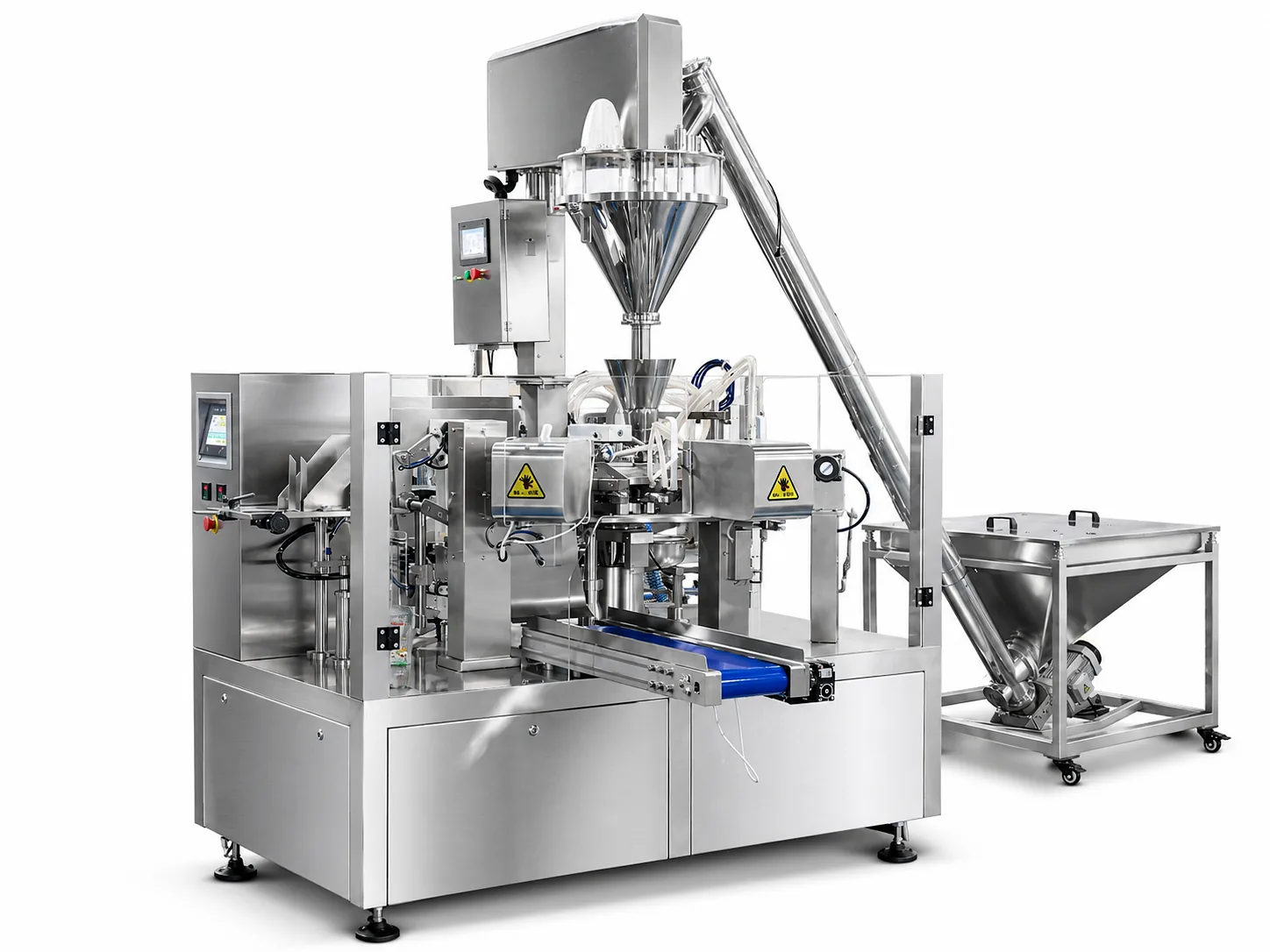
SPM-200R / 250R / 300R
Eight-station rotary host for premade pouches. Use it when stand-up widths will change, or when the project is already a rotary conversation. Auto width change is the confirmed fork versus the linear host.
What the machine has to do
Open a premade pouch, receive the dose, seal. It does not form the bag from film. Zipper and spout stay pouch features until the sample says otherwise.
Published screening figures
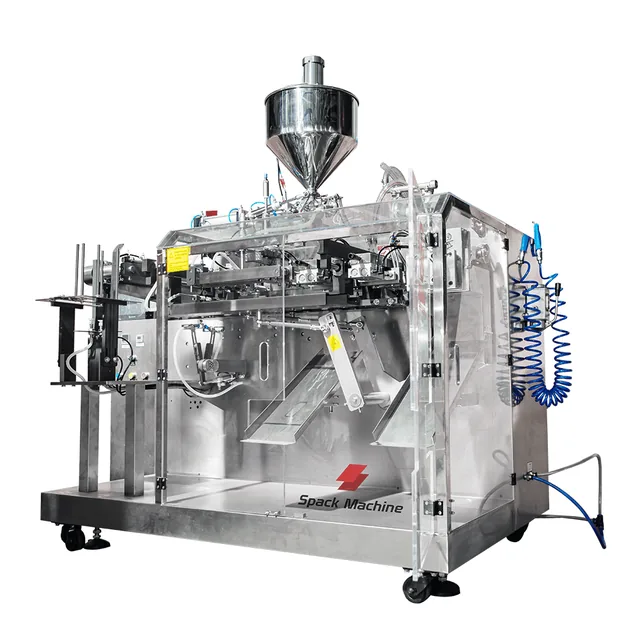
SPM-160 / 210 / 260
Linear magazine host: pick, open, fill, two-step seal. Suction-cup opening is the confirmed advantage on M-gussets. Width change is manual.
What the machine has to do
Same premade fill-and-seal job. Zipper opener is optional. Filler is selected separately and is not assumed in the host price.
Published screening figures
Screening figures. Widths are published millimetre screens from the machine pages, with inch conversions of those millimetres. They are not a quoted envelope for your laminate. Speed conflict on the horizontal page is left unresolved here — open that Keep page; do not treat 50 or 60 bags/min as promised output. Category context: premade bag packaging machines.
06
Pouch features
They are not machine names and not a standard bill of materials. Confirm them from the real pouch before anyone talks about an opener or a cap-fill path.
A reclose feature on the pouch. A zipper opener on the host is optional. Send the zipper type and how far it sits from the top seal — a photograph of someone else’s pack is not a spec.

A corner or top spout is part of the pouch, not a Spack series name. Spout-through-cap filling is not a published Spack family. Treat it as a special pouch and send the drawing.
Degassing valve, tear notch, euro slot and hang-hole are listed pack features on the host pages. They are confirmed from the pouch — not assumed included, and not a market-approval claim.
Format references. These photographs are editorial packshots already used on the premade pages. They are not customer samples, retail brands or a compatibility list.
07
What you can pack
Powder, granule and liquid each need their own dosing route. The premade host is not the filler. A product name is not a compatibility statement.

Dust on the seal is the usual failure, not brochure speed. An auger route is a common starting point. Industry notes: powder packaging.
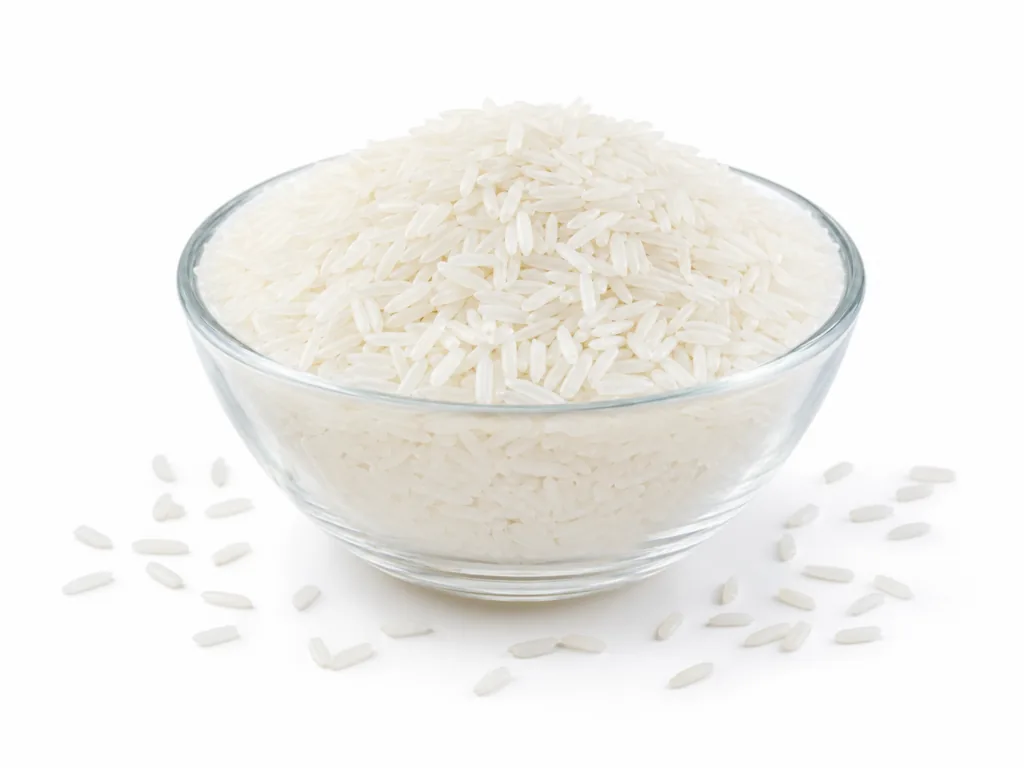
Cup, linear weigh or multihead weigh is chosen from piece size, fragility and target dose. Industry notes: granule and solid packaging.

Pump or piston routes follow viscosity, splash and clean-down. A sauce in a stand-up pouch still needs a sample. Industry notes: liquid and paste packaging.
Screening images. Visual examples of product state, already used on the horizontal premade page. They are not measured particle-size or hygiene specifications. Compatibility is confirmed by running your own sample.
08
Project inputs
Eight inputs settle most of the questions that follow. Send what you already have; gaps are normal on a first project.
Sample validation. Compatibility is confirmed with a production-representative product sample and the intended pouches. A product name or a photograph alone does not confirm opening or sealing.
09
Before you order
These machines are built in Shantou, Guangdong, China. Most first-time problems are not mechanical — they are things that were never confirmed in writing before the order. US buyers are the first audience for this page; UK and Australian plants ask the same utility and clearance questions.
Confirm supply voltage, phase and frequency against the configuration, along with compressed air. Do not infer a US 480 V / 60 Hz or a UK 415 V / 50 Hz supply from a website.
Powders cake, films slip and seals weaken when the plant runs humid. If that is your room, raise it early — it affects sustained output more than peak rate.
Decide which certificates and food-contact declarations you need on arrival, and who issues them — the machine builder or the pouch supplier. This page does not claim a destination-market approval.
Crated dimensions and weight drive freight; the HS classification drives duty. The customs clearance walkthrough lists what a US, UK or Australian broker will ask for.
Agree what the machine has to demonstrate before it ships — which product, which pouch, what weight tolerance — and that it runs your sample, not a generic one.
List wear parts and the change parts for each pouch width you plan to run. Warranty on the premade hosts is 12 months from receipt; freight on replacement parts during that period is the buyer’s.
Not a commitment. Nothing on this page states lead time, installation scope or after-sales terms. Those are confirmed per project in writing. First-time importers can start from the packaging machine buying guide. If you were searching for a doypack machine manufacturer in India, this is a Chinese-built line — say so in the enquiry so the comparison stays honest.
10
Common questions
Each answer opens with the answer itself, then the reasoning. Lifestyle copy stays on the article; host specs stay on the machine pages.
A doypack packaging machine, in buyer language, is a premade fill-and-seal host that opens a stand-up pouch, doses the product, then seals it.
On this site that job is done by a rotary or a horizontal premade host. There is no unique Doypack SKU. A doypack is the stand-up pouch — bottom gusset, usually premade.
No. Spack does not publish a third premade frame named Doypack.
Screen rotary or horizontal from the pouch. The category owner is premade bag packaging machines.
A doypack is a stand-up pouch with a bottom gusset. A gusset is a fold that can sit on the sides, the bottom, or as an M-fold. A flat-bottom pouch stands on a box or quad base.
They can share the same two premade hosts. Depth lives on the gusset and flat-bottom hubs so this page does not steal those queries.
Use rotary when pouch width will change often — the operator can enter the width and the grippers reposition. Use horizontal when an M-gusset needs the faces pulled fully open by suction cups, or when a linear magazine is the plant preference.
A simple bottom-gusset doypack can be discussed on either host after a pouch sample. Horizontal is generally priced slightly below rotary; the line still depends on the filler.
Not as a published Spack VFFS family. The live VFFS page lists pillow, 3-side, 4-side, shaped sachet and stick — not a formed stand-up / doypack from film.
If you already have a rollstock stand-up drawing, send it. Do not treat the vertical form-fill-seal machine as a doypack host on this site.
No. Zipper, spout, valve, tear notch and hang-hole are features of the pouch, confirmed from the real pouch.
A zipper opener on the horizontal host is optional. Spout-through-cap filling is not a published Spack series.
See the host page. This hub does not pick a number.
The horizontal Keep page publishes both 50 and 60 bags per minute — a conflict, not a guaranteed production rate. Actual output depends on dose, pouch, filler and seal time. Compare quotations on pouches per shift, on the same pouch.
No figure on this page would be meaningful, because price follows the pouch, the filler and the stations around it.
Fix the drawing, dose and pouches per shift, then ask for a comparable quotation. Horizontal is generally priced slightly below rotary; that is qualitative, not a dollar band.
No. A sachet is a small flat pack formed from roll film. A doypack is a stand-up pouch, usually premade.
Open the sachet hub for 3-side and 4-side. Stick pack is not a mini doypack — that is the stick pack page.
No. Spack Machine builds these lines in Shantou, Guangdong, China, and ships them as an imported machine.
If you need a locally built Indian machine, say so in the enquiry so time is not spent on the wrong comparison. The import checks above are written for US, UK and Australian plants receiving a Chinese-built line.
Pouches. On this site a doypack line buys premade stand-up pouches and fills them. It does not form the bag from a film roll.
If you are buying roll film to form a small pack, you are on VFFS / sachet, not this hub.
A pouch drawing or sample (W×L, bottom style, zipper/spout), a production-representative product sample, the target dose, and pouches per shift.
Site power and floor dimensions complete the picture. Anything still open can be marked as such — do not guess a bags-per-minute figure to look ready.
11
Read next
These pages keep lifestyle copy, buying-guide depth and sibling formats off this hub so the commercial URL can stay a selection page.
Article
The information URL for doypack packaging. This hub does not rewrite it.
Buying guide
How to compare rotary and horizontal hosts. Not a fourth machine category.
Category
The public route owner for the premade category. Hands off to the same two hosts.
Sibling
Side, bottom and M-fold as a pouch feature — including when a doypack is the bottom-gusset case.
Sibling
Block / quad / box pouch. Disambiguate from a simple stand-up doypack.
Mis-route
Flat 3-side and 4-side formed from film. Not a stand-up premade pouch.
12
Next step
Tell us the stand-up pouch you sell, the product going into it and the output you need. That is enough to put you on the right premade host.
Project confirmation. Host, opener, filler and output are confirmed against your pouches and site conditions before anything is quoted as final.