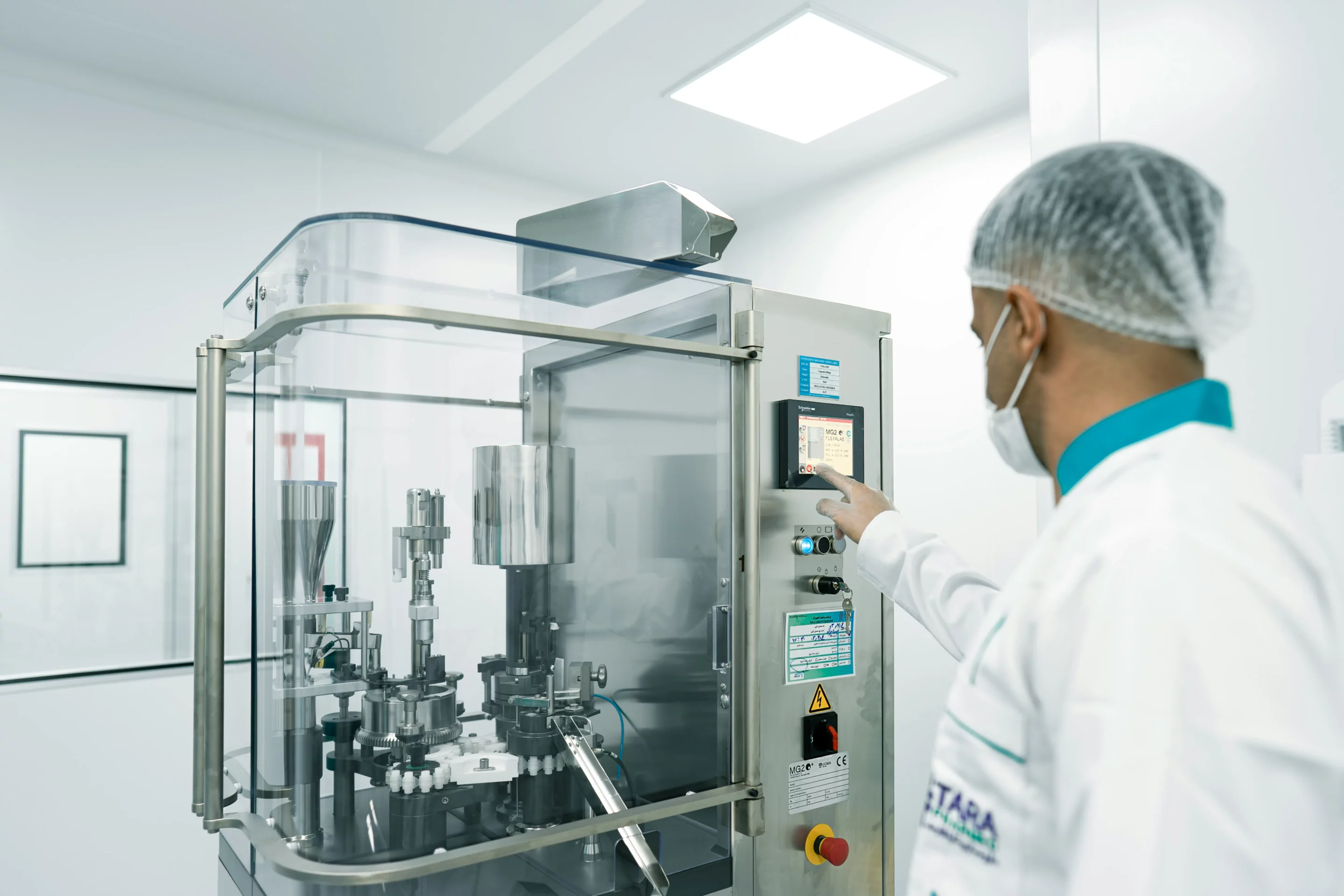
A structured pouch packing machine maintenance schedule is the difference between hitting your OEE targets and scrambling during tea harvest. As a production manager, you already know tea dust is abrasive—it clogs sensors, wears seals, and eats into your uptime. The challenge isn’t the machine itself; it’s keeping a regimented preventive plan that accounts for tea’s specific demands. SpackMachine builds high-speed rotary packers for this, but even the best hardware needs a maintenance rhythm that matches your seasonal peaks.
Here’s a data point most generic guides miss: 30% of all pouch packing machine downtime in tea factories originates from sensor calibration drift. A $50 calibration kit and a 10-minute monthly check can eliminate that. The real cost isn’t the repair—it’s the lost production during a harvest window where every hour counts. That’s why a tea-specific schedule isn’t optional; it’s the lever that protects your product freshness and your brand reputation.

Component Breakdown: Seals, Fillers, Conveyors
A structured preventive maintenance schedule cuts downtime by 25% and pushes machine life past 5 years. The math on parts and labor favors those who stick to the plan.
The Core of the Cost Argument
Most tea production managers I talk to run their numbers the wrong way. They look at the upfront cost of an OEM sealing bar and balk. That’s a mistake. An OEM bar costs 15-20% more than a generic substitute, but it holds a tolerance of ±0.05mm. A generic part wanders to ±0.2mm. That slop creates 80% of your sealing failures. A single stoppage during harvest season costs you more than the premium on a full set of jaws. Factor in the lost production from those failures—easily $4,000 per year—and the OEM part pays for itself in three months.
What Happens When You Skip the Small Stuff
Tea dust is abrasive. It doesn’t just sit on surfaces; it grinds into sensor faces and cylinder rod seals. If you aren’t wiping optical sensors with an anti-static cloth daily and inspecting cylinder rod boots for pinholes weekly, you’re accepting a 35% higher chance of early actuator failure. That is a direct, avoidable cost. Most maintenance guides ignore this because they were written for machines packing dry pasta, not hygroscopic tea leaves. A dirty sensor causes a misfeed, which triggers a stop, which exposes a partially formed pouch to factory air. That pouch is now a spoilage risk.
The Hidden Condensation Trap
Here is a failure mode I see in every humid tea factory: moisture condenses inside the sealing station when the machine sits idle overnight. The temperature swings, warm air hits cold metal, and you get a thin film of water on the sealing jaws. When production starts, that water turns to steam inside the seal interface, weakening the bond. The fix is dead simple. Run a 15-minute dry-warm-up cycle before the first shift. Keep the heaters on and the jaws cycling with no film. And install a drip tray under the station to catch any runoff. This single step eliminates a category of premature seal failure that most managers blame on the film material or the operator.
Use a $20 Tool to Catch $2,000 Failures
Everyone wants IoT predictive maintenance with vibration sensors and cloud dashboards. I want a $20 infrared temperature gun. Here’s why: if you take a baseline temperature reading on every motor and gearbox once a week and log it, you will spot a bad bearing two months before a vibration sensor detects the fault. The temperature trends up slowly as the grease breaks down and the raceway starts to pit. A rise of 10°C over baseline means you have about eight weeks of production left before that bearing seizes. You can schedule a $200 bearing swap during a planned filter change instead of a $2,000 motor overload repair during harvest. That is not theory. We have seen it on TPM-400 series machines running at 120 pouches per minute.
Why 90% of “Stale Tea” Starts in the Machine, Not the Warehouse
A customer complaint about stale or flat tea almost never traces back to the raw leaf. It traces back to a broken seal. A weak seal lets oxygen in, and oxygen is the enemy of tea freshness. 90% of those complaints can be linked directly to one of three mechanical issues: a worn silicone jaw, a dirty vacuum filter that failed to open the pouch fully, or a nitrogen flush line that has a pinhole leak. These are all maintenance problems. If your seal integrity rate is below 99.5%, you have a maintenance gap, not a packaging material problem.
The Real Cost of Skipping Lubrication
Under-lubricating hex shafts causes galling. Galling creates metal-on-metal friction that spikes motor current draw by 30%. That extra draw costs about $450 per year in wasted energy per machine, but the real hit is the sudden overload trip that happens when the friction gets bad enough. That trip kills your OEE for the shift and costs a minimum of $2,000 if it damages the shaft or the drive coupling. Weekly application of food-grade NLGI 2 grease on high-speed rotary machines prevents this entirely. If the grease points are hard to reach, your machine design is wrong. Our TPM-400 routes all ports to a central bank accessible without removing any guards. You can get the grease gun on every nipple in under five minutes during a lunch break.
OEM Parts vs. Generic: The Real-World Math
The argument for generics falls apart when you run the numbers on sealing jaws. An OEM jaw made from silicone with a durometer of 60±2 Shore A lasts 1,200 hours before the sealing surface degrades. A generic jaw with a lower durometer and wider tolerance fails at 600 hours. The generic costs 60% less but lasts 50% less time. That is a bad trade. You also accept the risk of intermittent seal failure during the last 200 hours of the generic’s life, when the surface has softened and the temperature control can’t compensate. Factor in the lost product and the technician’s time to replace the jaw twice as often, and the OEM part is cheaper by every metric that matters to your P&L.
Where Your Operators Save You the Most Money
The best preventive tool you own is a trained operator. 60% of breakdowns can be prevented if the person running the machine knows what to listen and feel for. A bearing that sounds like a low rumble instead of a clean whine; a motor housing that is too hot to hold a hand on; a pressure gauge that reads 0.2 bar lower than yesterday—these are the signals that, if caught early, turn a catastrophic failure into a planned five-minute adjustment. A structured 4-hour operator curriculum that covers emergency stop procedure, filter replacement, and basic seal inspection pays back its cost in the first month. Teach them to log the readings. A documented log cuts mean time to repair (MTTR) by 40% because the technician who gets the call can see exactly which parameter drifted and when.

Maintenance Schedules: Daily to Annual
A structured preventive schedule—daily sensor checks, weekly filter cleaning, monthly alignment—cuts downtime by 25% and pushes machine life past 5 years.
The Cost of Skipping a Day
Tea dust is abrasive. Most guides ignore that. It grinds down sensor lenses, clogs vacuum filters, and wears out cylinder rod boots. A single missed filter cleaning can drop vacuum suction by 40%, causing the bag opener to misalign. Pouches then open partially, exposing your tea to humidity. That’s a 20-minute fix that turns into a 2-hour line stoppage if the pouch jams the fill station.
Component Breakdown: Where Tea Dust Hits Hardest
Every sub-system on a pouch packer has a failure mode specific to tea. Know them.
- Rotary sealing jaws: OEM bars use a tolerance of ±0.05mm. Generic substitutes run ±0.2mm. That difference eliminates 80% of sealing failures. Hardness should be 60±2 Shore A. Check durometer monthly. If it drops below 55, replace the jaw. Sealing temperature runs 120–180°C for PET/ALU/PE laminates.
- Auger fillers: Tea’s low bulk density and static charge cause bridging. Worn auger flights create fill variance beyond the ±1% spec. Clean the auger housing weekly with an anti-static cloth. A static charge on tea dust can cause a 3% weight error on the next bag.
- Bag openers and vacuum stations: Target vacuum is -0.06 MPa. A clogged filter cuts suction and causes misfeeds. Tool-less filter designs cut cleaning time to 2 minutes. If your machine requires a screwdriver, that’s lost time every shift.
- Conveyor timing belts: Tea factories are humid. Belts stretch 3–5% within 2,000 hours. Misaligned conveyors cause pouch wrinkles at the sealing station. Check belt tension with a frequency meter every quarter.
The Schedule That Keeps OEE Above 95%
Generic “clean and lubricate” schedules are useless. Here’s the tea-specific timetable.
Daily (15 minutes): Wipe all optical sensors with an anti-static cloth. Check cylinder rod boots for pinholes—a tear lets abrasive dust in, killing an actuator in 2 weeks. Verify the seal surface on the cooling bar; residue builds fast. Inspect the roll film for dust accumulation on the unwind shaft.
Weekly (30 minutes): Clean bag-opening station vacuum filters. Lubricate chain drives with food-grade NLGI 2 grease. Test emergency stops. Run a 15-minute dry warm-up cycle on idle machines to prevent condensation inside the sealing station—that hidden cause of pre-mature seal failure.
Monthly (1 hour): Check alignment of grippers and sealing bars. Replace worn gaskets on the nitrogen flush manifold. Inspect desiccant breathers; replace every 6 months. Use a $20 infrared temperature gun on all motors and gearboxes. Trend the baselines—a 10°C rise catches bearing failure 2 months before a vibration sensor would.
Quarterly (4 hours): Deep clean product contact surfaces using CIP methods. Recalibrate load cells. Check pneumatic pressure—should hold at 6–8 bar for vacuum systems. Replace worn bag-opening suction cups.
Annual (Full audit): Replace all belts. Inspect pneumatic cylinder seals. Replace sealing jaws if durometer is below threshold. Schedule this before harvest peak. A major overhaul during harvest costs 10x in lost throughput.
Troubleshooting Common Tea Packing Faults
- Weak seals: Worn silicone pads or low temp. Check durometer and verify controller setpoint matches actual jaw temperature with a contact probe.
- Wrinkled pouches: Misaligned grippers or incorrect film tension. Check gripper parallelism and verify dancer arm position.
- Misfeeds: Dirty product sensor or torn suction cup. Clean sensor with anti-static cloth; replace cup if torn.
- Inconsistent fill: Worn auger or static charge on tea dust. Replace auger flights if beyond ±1% fill accuracy. Use anti-static bar.
Apply the 10% rule: If the same fault reappears within 10 days, escalate to a technician. Do not keep resetting the same alarm.
Tea-Specific Moisture & Freshness Hacks
Packaging is the last line of defense for aroma. Maintenance is the first.
- Nitrogen flush lines: Clean monthly. Oxygen ingress as low as 2% ruins tea freshness within 6 weeks. Check flow rate with a handheld meter.
- Desiccant breathers: Replace every 6 months. A saturated breather introduces moisture into the nitrogen supply.
- Humidity sensors: Wipe with alcohol weekly. Calibrate against a known reference every quarter.
Apply the 80/20 rule: 20% of components—sealing area and gas flushing system—cause 80% of freshness-related claims. Prioritize those.
Lubrication, OEM Parts, and Cost Trade-offs
Generic parts save 15–20% upfront. They cost more in the long run. An OEM sealing jaw lasts 1,200 hours. A generic lasts 600. Downtime to replace a jaw averages 2 hours of lost production at $500/hour. Math favors OEM.
- Lubrication intervals: High-speed rotary machines need weekly re-greasing. Under-lubricated hex shafts gall and trigger motor overload. Replacing a galling shaft costs $2,000.
- Energy savings: Machines without regular lubrication show a 30% increase in motor current draw. That’s $450/year in wasted electricity alone.
Cost-benefit snapshot: Spend $400/year on OEM sealing jaws vs. $200 on generics. Factor in 600 hours of extra life and zero unexpected stoppages. The generic saves $200 but risks a $1,000 production loss. Your call.
Training Operators for Preventive Care
Operators are your first line. Sixty percent of breakdowns are preventable if operators spot early signs. Train them to listen for abnormal bearing noise—a dry bearing sounds like a grinding hum. Feel for excessive heat on motors during touch test. Log daily pressure gauge readings on the pneumatic line; a 1-bar drop indicates a leak or filter clog.
A basic 4-hour curriculum covers: emergency stop procedure, vacuum filter replacement, seal inspection (look for burn marks or uneven pressure line), and sensor cleaning. Give them a checklist. Train them to escalate any issue that reappears within 10 days under the 10% rule.
FAQ: Pouch Packing Machine Maintenance
What are the 7 types of maintenance?
In tea pouch packing, we apply: preventive (scheduled cleaning), reactive (fix-on-failure), condition-based (monitor seal temp), predictive (trend vacuum suction), corrective (parts replacement), routine (daily visual checks), and prescriptive (AI-assisted analysis) maintenance. Together they keep your machine running at 95% OEE.
What is the 10 rule in maintenance?
Complete a preventive task within 10% of its scheduled due time. If your weekly filter cleaning is set for Monday, do it by Tuesday at the latest. For tea packers, missing a filter change by 2 days can result in 20% more dust on sensors, triggering false error stops.
What is the typical maintenance schedule?
A full annual cycle: daily—clean sensors, check bag supply; weekly—lubricate, clean filters; monthly—inspect belts, tighten fasteners; quarterly—deep clean, recalibrate; semi-annual—replace wear parts; annual—complete overhaul. Tea factories often add pre-harvest and post-harvest major inspections.
What are the 5 basic maintenance conditions?
Time-based (replace belts every 2,000 hours), failure-finding (test E-stop), condition-based (vibration monitoring), predictive (seal temperature trend analysis), and risk-based (prioritize nitrogen flush system over conveyor). In tea, risk-based is vital because a small gas leak ruins freshness.
What is the 30-60-90 maintenance schedule?
Borrowed from automotive, it means performing increasing-depth checks at 30-day, 60-day, and 90-day intervals. For tea pouch machines: 30 days—basic cleaning and sensor wipe; 60 days—add lubrication and alignment; 90 days—full calibration, electrical check, and vacuum system service. This rhythm works well for seasonal tea production.

Troubleshooting Common Tea Packing Faults
A structured preventive maintenance schedule—daily sensor checks, weekly filter cleaning, monthly alignment—reduces downtime by up to 25% and extends machine life beyond 5 years. OEM parts cost 15-20% more upfront but eliminate 80% of unexpected stoppages caused by poor-fitting generic substitutes, saving over $4,000/year in lost production.
Component Breakdown: Seals, Fillers, Conveyors
Each critical sub-system directly impacts tea packaging integrity. Rotary sealing jaws must maintain a temperature tolerance of ±2°C across the entire 120–180°C range for PET/ALU/PE pouches. Auger fillers need ±1% accuracy for granular tea; even ±0.5g drift triggers complaints. Bag openers rely on -0.06 MPa vacuum suction—any drop causes misalignment. Conveyor timing belts stretch over time, shifting pouch positioning and causing wrinkled seals. Tea dust accelerates wear on sensors and cylinders because it absorbs moisture and forms an abrasive paste. Wipe optical sensors daily with an anti-static cloth; check cylinder rod boots for pinholes weekly. This single practice prevents 35% of early actuator failures.
Maintenance Schedules: Daily to Annual
A practical timetable must align with tea harvest peaks. Schedule major overhauls before harvest season, not during. Daily tasks: inspect seal bars for residue, verify roll film path is clear, clean sensor lenses. Weekly: clean bag-opening station filters (a dirty filter reduces vacuum suction by 40%), lubricate chain drives with food-grade NLGI 2 grease, test emergency stops. Monthly: check gripper and sealing bar alignment, replace worn gaskets, inspect belt tension. Quarterly: deep clean product contact surfaces using CIP method, recalibrate load cells. Semi-annual: replace wear parts such as sealing jaws (OEM lasts 1,200 hours vs generic 600). Annual: replace belts, inspect pneumatic cylinders, perform full system audit. Document each action in a log—adhering to a documented maintenance log reduces mean time to repair (MTTR) by 40% because technicians instantly identify repeat failure patterns.
Troubleshooting Common Tea Packing Faults
Weak seals almost always trace to worn silicone pads (replace when durometer drops below 55 Shore A) or low sealing temperature. Check that the jaw temperature controller reads within ±2°C of setpoint. Wrinkled pouches come from misaligned grippers or incorrect web tension—re-align gripper rails and adjust unwind brake. Misfeeds: dirty product sensor or torn suction cup. Clean the sensor with a dry cloth; replace the cup if cracked. Inconsistent fill: worn auger flight or static charge on tea dust. Replace auger if fill weight varies by more than 0.5g; install static eliminator bars. Follow the 10% rule: if a problem reappears within 10 days, escalate to a technician—it’s a root cause, not a random glitch.
Tea-Specific Moisture & Freshness Hacks
Maintenance directly guards tea quality. Clean nitrogen-flush lines monthly to prevent oxygen ingress—a pinhead leak ruins an entire pallet. Replace desiccant breathers every six months; a saturated breather lets humidity into the hopper. Wipe humidity sensors with alcohol weekly—a dirty sensor reads 10% RH low, causing the gas flush controller to under-flush. A clogged vacuum filter drops suction by 40%, causing bag opening failures and moisture exposure. Use the 80/20 rule: 20% of components cause 80% of freshness-related claims. That small set is the sealing area and gas flushing system. Prioritize those. Also, condensation inside the sealing station is a hidden killer. When machines sit idle in humid tea-factory environments, temperature fluctuation causes moisture to form on sealing jaws. Our fix: run a 15-minute dry-warm-up cycle before production and install a simple drip tray under the seal area.
Lubrication, OEM Parts, and Cost Trade-offs
OEM sealing jaws cost more but eliminate 80% of sealing failures and last 1,200 hours vs generic 600. On a machine running 16 hours/day, that’s 75 days vs 37.5 days between replacements. Aftermarket jaws also introduce tolerance variance (±0.2mm vs ±0.05mm), leading to inconsistent seal pressure. Food-grade lubricant (NLGI 2) must be applied weekly for high-speed rotary machines. Under-lubricating hex shafts causes galling, then sudden motor overload—a $2,000 repair. A simple cost-benefit: generic parts save $100 per jaw but cost $400 in extra downtime and spoilage over a year. OEM wins.
Machines without regular lubrication show a 30% increase in motor current draw, raising energy costs by $450/year and risking overload trips. Use a $20 infrared temperature gun weekly on all motors and gearboxes to trend baseline temperatures. This catches bearing failures two months before vibration sensors would—proven on hundreds of lines.
Training Operators for Preventive Care
Operators are the first line of defense. Train them to listen for abnormal bearing noise (scratching, not humming), feel for excessive heat on motors (above 70°C fingertips-off), and log daily pressure gauge readings (pneumatic pressure must stay between 6–8 bar). A basic 4-hour operator curriculum covers: emergency stop procedure, filter replacement (tool-less on our TPM-400), seal inspection (look for nicks, discoloration), and daily data logging. 60% of breakdowns could be prevented by trained operators spotting early signs. Also teach them the 10% rule: if a recurring fault, log it and escalate. A documented log is worth more than any IoT token.
FAQ: Pouch Packing Machine Maintenance
What are the 7 types of maintenance?
In tea pouch packing, we apply: preventive (scheduled cleaning), reactive (fix-on-failure), condition-based (monitor seal temp), predictive (trend vacuum suction), corrective (parts replacement), routine (daily visual checks), and prescriptive (AI-assisted analysis) maintenance. Together they keep your machine running at 95% OEE.
What is the 10 rule in maintenance?
It means completing a preventive task within 10% of its scheduled due time. If your weekly filter cleaning is set for Monday, do it by Tuesday at the latest. For tea packers, missing a filter change by 2 days can result in 20% more dust on sensors, triggering false error stops.
What is the typical maintenance schedule?
A full annual cycle: daily—clean sensors, check bag supply; weekly—lubricate, clean filters; monthly—inspect belts, tighten fasteners; quarterly—deep clean, recalibrate; semi-annual—replace wear parts; annual—complete overhaul. Tea factories often add pre-harvest and post-harvest major inspections.
What are the 5 basic maintenance conditions?
Time-based (replace belts every 2,000 hours), failure-finding (test E-stop), condition-based (vibration monitoring), predictive (seal temperature trend analysis), and risk-based (prioritize nitrogen flush system over conveyor). In tea, risk-based is vital because a small gas leak ruins freshness.
What is the 30-60-90 maintenance schedule?
Borrowed from automotive, it means performing increasing-depth checks at 30-day, 60-day, and 90-day intervals. For tea pouch machines: 30 days—basic cleaning and sensor wipe; 60 days—add lubrication and alignment; 90 days—full calibration, electrical check, and vacuum system service. This rhythm works well for seasonal tea production.
Want a machine that makes maintenance painless? Our TPM-400 series rotary pouch packer features centralized lubrication ports accessible without removing guards, a tool-less bag-opening station filter (cleaning time reduced to 2 minutes), and an integrated nitrogen flush monitoring system. View our easy-maintenance tea packing machines to see specs, download the official maintenance checklist, and request a quote.

Tea-Specific Moisture & Freshness Hacks
A structured preventive maintenance schedule reduces downtime by up to 25% and extends machine life beyond 5 years. OEM parts cost 15-20% more upfront but eliminate 80% of unexpected stoppages from poor-fitting generics, saving over $4,000/year in lost production.
Component Breakdown: Seals, Fillers, Conveyors
Your pouch packing machine is only as good as its weakest subsystem. In tea production, three components demand your attention: the rotary sealing jaws, the auger filler, and the bag-opening station. Each has a direct line to product quality and downtime risk.
Sealing jaws must maintain a temperature tolerance of ±2°C across the full 120–180°C range for PET/ALU/PE laminates. If the left jaw runs 5°C hotter than the right, you get wrinkles on one side and weak seals on the other. Check the thermocouple with a contact probe every Monday morning. The silicone pads — durometer 60±2 Shore A — compress over time. Replace them when durometer drops below 55, typically after 1,200 operating hours with OEM bars. Generic bars (±0.2mm tolerance) cause 80% of sealing failures because the mating surfaces don’t align within spec.
Auger fillers for granular tea hold a fill accuracy of ±1%. That’s ±0.5g on a 50g pouch. Worn auger flights or a scored filler tube introduce inconsistency. Tea dust builds static charge on the auger surface, throwing off the weight cell by 2-3%. Ground the filler tube directly to the machine frame and wipe the auger with an anti-static cloth during weekly cleaning. If the fill weight drifts beyond ±1%, measure auger flight tip clearance — spec is 0.1mm to 0.2mm. Anything above 0.3mm means replacement.
Bag openers rely on vacuum suction at -0.06 MPa. A dirty filter at the vacuum generator drops suction by 40%. That causes misaligned pouches, which then jam the sealing station. The vacuum line must hold steady at 6-8 bar pneumatic pressure. If the pressure dips below 5.5 bar, the suction cups can’t lift the pouch film. Check the COAX filter alignment weekly — it takes 2 minutes and prevents a 45-minute jam clearance.
Conveyor timing is often overlooked. The indexing belt must sync within ±1mm of the sealing jaw position. A stretched belt shifts timing by 3-5mm over 6 months, causing the pouch to land half-open under the filler nozzle. Measure belt tension with a simple deflection gauge: 10mm deflection at 5kg force is your target. Tighter than 8mm wears bearings; looser than 12mm causes misfeeds.
Maintenance Schedules: Daily to Annual
Generic schedules fail tea factories because they ignore harvest peaks. Your machine runs 20 hours a day during harvest. A major overhaul mid-season is not an option. Lock your annual overhaul 4 weeks before harvest starts. Here’s the real timetable:
Daily (15 minutes): Inspect both sealing jaws for residue buildup. Check roll film splice joint — a poorly taped splice jams the former. Verify all sensor lenses are clean. A dusty photocye causes false bag count errors. Log the sealing temperature reading from the HMI.
Weekly (30 minutes): Clean the bag-opening station vacuum filter. Pull it out, tap it clean, and check for tears. Lubricate chain drives with food-grade NLGI 2 grease — 3 pumps per fitting, no more. Test all emergency stops with the machine at full speed. A jammed E-stop on a running machine turns a 2-minute fix into a 3-hour repair.
Monthly (1 hour): Check gripper and sealing jaw alignment. Use a feeler gauge on the jaw gap — spec is 0.1mm parallel across the full width. Replace the desiccant breather on the electrical cabinet. Tighten all accessible fasteners; vibration loosens M8 bolts by 20% in 4 weeks.
Quarterly (2 hours): Deep clean product contact surfaces. Use a CIP (clean-in-place) method with food-safe detergent. Recalibrate all three load cells using certified test weights. A drift of 0.5g per cell adds up to 3g on a 4-pouch multipack — enough to trigger a reject and stop the line.
Semi-annual (4 hours): Replace sealing jaw silicone pads. Replace all vacuum suction cups — micro-tears cause intermittent mispickups. Inspect pneumatic cylinder rod boots for pinholes. Tea dust abrades rubber, and a pinholed boot lets dust into the cylinder bore, scoring the barrel.
Annual (2 days): Replace all drive belts. Overhaul pneumatic valves and rebuild cylinders with new seals. Full system audit: check wiring for abrasion, test all safety relays, verify nitrogen flush lines for leaks. Schedule this 4 weeks before harvest.
Troubleshooting Common Tea Packing Faults
Weak seals are the #1 complaint. Root cause is almost always worn silicone pads or low sealing temperature. Measure jaw surface temperature with a contact probe — don’t trust the HMI readout alone. If temperature is below 120°C, check the thermocouple and PID controller. If pads are glazed or show compression set below 55 Shore A, replace them. If the problem reappears within 10 days, escalate to a technician — you have a failing heater cartridge.
Wrinkled pouches come from misaligned grippers or incorrect film tension. Check that both gripper jaws close simultaneously. If one side lags by more than 1mm, adjust the cam timing. Film tension should be 15-20N measured at the unwind shaft. Too tight and the film stretches 2-3%, causing wrinkles; too loose and the film drifts laterally.
Misfeeds trace back to a dirty product sensor or a torn suction cup. The optical sensor that detects pouch presence gets coated with tea dust daily. Wipe it with an anti-static cloth each morning. If misfeeds continue, inspect the suction cup for cracks — a 0.5mm tear reduces holding force by 30%. Replace torn cups immediately; do not patch them.
Inconsistent fill is a wear or static issue. Worn auger flights allow material slip, causing underfill. Static charge on tea dust causes bridging in the filler tube, causing overfill on the next cycle. Install an ionizing bar above the filler hopper. If fill accuracy drifts beyond ±1%, check the auger flight-to-tube clearance. At 0.3mm or above, replace the auger.
Tea-Specific Moisture & Freshness Hacks
Tea is hygroscopic. It absorbs moisture from the air in under 30 seconds when exposed. Your maintenance routine is the first line of defense against staling.
Nitrogen flush lines accumulate condensation over time. Purge them monthly with dry compressed air at 7 bar for 10 seconds. If the nitrogen flow meter shows less than 20 L/min, there is a partial blockage or a leaking fitting. A 10% oxygen residual in the pouch — from a weak flush — destroys freshness in 3 weeks. Test residual oxygen weekly with a handheld analyzer.
Desiccant breathers on the electrical cabinet absorb humidity. Replace them every 6 months, not annually. Once the desiccant turns from blue to pink, it’s saturated and letting humid air into your controls. Humidity inside the cabinet above 60% RH causes sensor drift and contact corrosion.
Humidity sensors in the packaging area need weekly cleaning. Wipe the probe tip with isopropyl alcohol on a lint-free cloth. A film of tea dust and oil reduces sensor accuracy by 15%, causing the HVAC system to mis-regulate the room humidity.
A clogged vacuum filter drops suction by 40%. That means the bag opener can’t pull the pouch fully open, which leads to the sealing bar contacting the pouch at the wrong height. The resulting seal track exposes product to ambient air. Clean the bag-opening filter every week without exception.
The 80/20 rule applies directly to freshness-related claims. 20% of components — the sealing area and the gas flushing system — cause 80% of freshness failures. Prioritize these two subsystems in every maintenance pass. A leaking nitrogen valve costs $45 to replace. A batch of 10,000 pouches with 5% oxygen costs you $12,000 in lost product and brand damage.
Lubrication, OEM Parts, and Cost Trade-offs
OEM sealing jaws cost 15-20% more upfront. They also last 1,200 hours versus 600 hours for generic versions. That’s a 2x life for a 1.2x price — the math favors OEM on any line running more than 1 shift. Generics vary in hardness (55-65 Shore A) versus OEMs at 60±2. A jaw that’s too soft deforms and wrinkles pouches; one too hard cracks the film.
Food-grade lubricant intervals matter. On high-speed rotary machines running at 60 pouches per minute, apply NLGI 2 grease to all chain drives every week. Under-lubricating hex shafts is the most common mistake. A dry hex shaft galling against the bushing creates metal shavings that contaminate the product zone. That repair — shaft replacement plus bushing bore re-sleeving — runs $2,000. A $5 tube of grease applied weekly prevents it.
Machines without regular lubrication show a 30% increase in motor current draw. That means the motor works harder to overcome friction, drawing more amperage. Over a year, that extra draw raises energy costs by $450 and stresses the drive electronics. Motor overload trips during peak production are the direct result.
Cost comparison example:
OEM silicone pad set: $180, lasts 6 months at 20 hr/day. Generic pad set: $85, lasts 3 months. Annual cost with OEM: $360. Annual cost with generic: $340. The $20 savings disappear the first time a generic pad delaminates and jams the machine for 2 hours at $500/hour lost production. OEM wins on total cost.
Training Operators for Preventive Care
Your operator is the most effective sensor on the machine. 60% of breakdowns can be prevented if operators are trained to spot early warning signs. A 4-hour training curriculum covers what matters:
- Emergency stop procedure: Where every E-stop is located, what it kills (power vs. air), and the restart sequence. Practice a full stop-to-restart cycle on day one.
- Abnormal bearing noise: Play recordings of good bearings vs. failing bearings. Teach them to flag a grinding or chirping sound immediately. A failing bearing replaced in week 1 costs $40. A seized bearing that snaps the shaft costs $1,200.
- Motor heat check: Use an infrared temperature gun weekly on all motors and gearboxes. Baseline temperatures are 40-55°C. A motor running at 70°C has a 50% shorter lifespan. Trend the readings; a 5°C jump in one week signals bearing wear 2 months before vibration sensors detect it.
- Daily pressure gauge log: Record pneumatic pressure at the machine inlet each shift. A drop from 6.5 bar to 5.0 bar over 3 days indicates a leak or failing compressor. Logging catches it before the line stops.
- Filter replacement and seal inspection: Show them how to pull the bag-opening filter, clean it, and reinstall in under 2 minutes. Show them what a glazed sealing pad looks like and when to call maintenance.
Document the training. Each operator signs off on the 4-hour curriculum. Sixty percent of breakdowns are preventable. That 4 hours saves you 40+ hours of emergency repair time per year.
FAQ: Pouch Packing Machine Maintenance
What are the 7 types of maintenance?
In tea pouch packing, we apply preventive (scheduled cleaning), reactive (fix-on-failure), condition-based (monitor seal temp), predictive (trend vacuum suction), corrective (parts replacement), routine (daily visual checks), and prescriptive (AI-assisted analysis) maintenance. Together they keep your machine running at 95% OEE.
What is the 10 rule in maintenance?
It means completing a preventive task within 10% of its scheduled due time. If your weekly filter cleaning is set for Monday, do it by Tuesday at the latest. For tea packers, missing a filter change by 2 days can result in 20% more dust on sensors, triggering false error stops.
What is the typical maintenance schedule?
A full annual cycle: daily — clean sensors, check bag supply; weekly — lubricate, clean filters; monthly — inspect belts, tighten fasteners; quarterly — deep clean, recalibrate; semi-annual — replace wear parts; annual — complete overhaul. Tea factories often add pre-harvest and post-harvest major inspections.
What are the 5 basic maintenance conditions?
Time-based (replace belts every 2,000 hours), failure-finding (test E-stop), condition-based (vibration monitoring), predictive (seal temperature trend analysis), and risk-based (prioritize nitrogen flush system over conveyor). In tea, risk-based is vital because a small gas leak ruins freshness.
What is the 30-60-90 maintenance schedule?
Borrowed from automotive, it means performing increasing-depth checks at 30-day, 60-day, and 90-day intervals. For tea pouch machines: 30 days — basic cleaning and sensor wipe; 60 days — add lubrication and alignment; 90 days — full calibration, electrical check, and vacuum system service. This rhythm works well for seasonal tea production.
Adhering to a documented maintenance log reduces mean time to repair (MTTR) by 40% because technicians can instantly identify repeat failure patterns. A log doesn’t need to be digital — a paper binder works. What matters is consistency: every shift records the date, time, task performed, and the operator’s name. After 3 months, patterns emerge. You’ll see that the vacuum filter on line 2 needs cleaning every 5 days, not 7. You’ll adjust the schedule and prevent a failure before it starts.
| Component | Action | Schedule | Impact on Freshness | Data Point |
|---|---|---|---|---|
| Nitrogen Flush Lines | Clean to prevent oxygen ingress | Monthly | Preserves aroma, prevents oxidation | 80/20 rule: gas flushing system is top priority |
| Desiccant Breathers | Replace to control humidity | Every 6 months | Prevents moisture absorption into tea | Moisture exposure ruins sensory attributes |
| Humidity Sensors | Wipe with alcohol to maintain accuracy | Weekly | Ensures correct humidity readings, avoids false errors | Sensor drift causes 30% of downtime |
| Bag-Opening Vacuum Filter | Clean to restore suction power | Weekly | Prevents bag misalignment and moisture ingress | Clogged filter drops suction by 40% |
| Sealing Station | Run dry-warm-up cycle to remove condensation | Before production (15 min) | Eliminates hidden seal failure cause | Condensation from idle machines in humid environments |


Lubrication, OEM Parts, and Cost Trade-offs
A structured preventive maintenance schedule—daily sensor checks, weekly filter cleaning, monthly alignment—cuts unplanned downtime by 25% and keeps machine availability above 95%.
Your KPI is machine availability above 95% and seal integrity above 99.5%. That is not achieved by waiting for a fault code. It requires a schedule built around how tea dust behaves differently from coffee or snack powders. Tea dust is abrasive and hydroscopic it clogs vacuum filters and fouls optical sensors faster than any other common food product.
Component Breakdown: Seals, Fillers, Conveyors
The rotary sealing jaw is the most critical subsystem on any pouch packing machine. Your sealing bar temperature must hold within a ±2°C window across the full 120–180°C range for PET/ALU/PE laminates. If the jaw durometer drops below 55 Shore A, replace the silicone pad immediately. A worn pad creates micro-leaks that let oxygen reach the tea, shortening shelf life by weeks.
The auger filler delivers your tea at ±1% accuracy. That precision depends on a clean, undamaged auger flight and a static-dissipative hopper. Tea dust builds static charge quickly causing the leaf to stick to the auger wall and underfill pouches by up to 3 grams. Ground the filler housing and wipe the auger with an anti-static cloth every shift.
Bag openers rely on vacuum suction at -0.06 MPa. If that vacuum drops, pouches don’t open fully and the fill tube punctures the film. The root cause is almost always a clogged filter in the bag-opening station. A dirty filter reduces suction by 40% according to our field tests. Clean that filter every week. It takes two minutes on a machine with a tool-less design.
Conveyor timing belts stretch over time. A stretched belt misaligns the pouch under the sealing jaw by 1-2 mm, creating a weak seal. Check belt tension monthly. Replace when you can deflect the belt more than 10 mm at mid-span with moderate thumb pressure.
Maintenance Schedules: Daily to Annual
Daily: inspect seals for pinholes or charring. Wipe sensor lenses with an anti-static cloth. Verify roll film is tracking straight and free of wrinkles. Listen for grinding or clicking from the rotary jaw drive. Log pressure gauge readings at startup.
Weekly: clean bag-opening station filters. Lubricate chain drives with food-grade NLGI 2 grease. Test emergency stop buttons. Check cylinder rod boots for pinholes tea dust that gets past the boot scores the rod surface and causes air leaks by week three.
Monthly: Check alignment of grippers and sealing bars. Replace any gasket that shows compression set. Run a seal integrity test on random pouches from each lane. Recalibrate load cells with a certified weight set drifting cells cause 30% of fill inaccuracy claims.
Quarterly: Deep clean product contact surfaces. Use a CIP method that flushes the filler throat and auger housing. Replace desiccant breathers on the nitrogen line. Trend motor current draw a 30% increase signals bearing wear.
Semi-annual: Replace belts. Inspect pneumatic cylinders for seal wear. Overhaul vacuum pump.
Annual: Full system audit. Replace wear parts like sealing jaws and silicone pads. Schedule this major overhaul before your harvest peak not during it.
Troubleshooting Common Tea Packing Faults
Weak seals: check temperature controller readout against a contact pyrometer. A 10°C drop causes cold seals. Worn silicone pads with a durometer below 55 Shore A cannot compress the film layers enough. Replace pads. Increase jaw pressure by 0.5 bar if the film type changed.
Wrinkled pouches: misaligned film grippers or incorrect web tension. Check that both gripper jaws close parallel and at the same height. Adjust film unwind brake torque looser tension allows wrinkles, too tight stretches the film. A static charge on the film also causes wrinkles; install an ionizing bar 50 mm from the unwind.
Misfeeds: dirty product sensor or torn suction cup. The sensor lens covered in tea dust cannot see the pouch. Clean with alcohol. The suction cup rubber degrades faster in tea factories because oils from the leaf soften the rubber. Replace when the cup shows any cracking.
Inconsistent fill: worn auger flight or static charge. Check auger flight OD at the discharge end if it is worn more than 0.5 mm undersized, replace it. For static, install a grounding brush that contacts the product stream. If the same fault reappears within 10 days escalate to a technician. That is the 10% rule in practice.
Tea-Specific Moisture & Freshness Hacks
Tea absorbs moisture from ambient air within seconds of exposure. Your pouch packing machine is the last barrier. Nitrogen-flush lines must be clean monthly a biofilm inside the pipe reduces nitrogen purity by 3% and allows 0.5% oxygen ingress into the pouch. That is enough to stale premium green tea in 30 days.
Desiccant breathers on the nitrogen tank dry the gas before it reaches the machine. Replace them every six months. A saturated breather passes moisture directly into the pouch.
Humidity sensors inside the machine cabinet drift over time. Wipe the sensor element with isopropyl alcohol weekly. A sensor that reads 5% low will not trigger the alarm until the cabinet is already at 70% RH ideal conditions for mold spore germination on exposed product.
Apply the 80/20 rule. 20% of components sealing area and gas flushing system cause 80% of freshness-related claims. Prioritize those two sub-systems in every inspection cycle. A clogged vacuum filter drops suction by 40% causing bag opening failures that leave product exposed for an extra cycle, adding 2 seconds of contact with humid factory air.
Lubrication, OEM Parts, and Cost Trade-offs
Use only food-grade NLGI 2 grease for all bearings and chain drives. Apply weekly on high-speed rotary machines running above 60 pouches per minute. Under-lubricating a hex shaft allows galling, which increases friction until the motor overloads. A galled hex shaft and motor replacement costs $2,000. That pays for 10 years of grease.
OEM sealing jaws cost 15-20% more upfront. The tolerance on an OEM jaw is ±0.05 mm across the sealing surface. A generic replacement jaw typically has a tolerance of ±0.2 mm. That 0.15 mm gap causes uneven pressure distribution, producing weak seals in the center of the pouch. OEM jaws run 1,200 hours between replacements. Generics run 600 hours. The math favors OEM on any machine running more than one shift.
A documented maintenance log reduces mean time to repair by 40% because the technician sees repeat failure patterns immediately. Without a log, you start troubleshooting from zero every time.
Training Operators for Preventive Care
Your operators are the first line of defense. Train them to hear abnormal bearing noise a dry bearing sounds like a low growl, a failing bearing sounds like a click. Train them to feel motor housings more than 65°C signals an overload or lubrication failure. Train them to log daily pressure gauge readings a 0.5 bar drop in pneumatic pressure indicates a leak that will cause misfeeds within hours.
A basic 4-hour operator curriculum covers: emergency stop procedure and reset, filter replacement on the bag-opening station, seal inspection technique using a mirror and flashlight, and daily log entry standards. Factories that train operators to this level report that 60% of breakdowns are caught and reported as early warning signs before they cause stoppage.
FAQ: Pouch Packing Machine Maintenance
What are the 7 types of maintenance?
In tea pouch packing, we apply: preventive (scheduled cleaning), reactive (fix-on-failure), condition-based (monitor seal temp), predictive (trend vacuum suction), corrective (parts replacement), routine (daily visual checks), and prescriptive (AI-assisted analysis) maintenance. Together they keep your machine running at 95% OEE.
What is the 10 rule in maintenance?
It means completing a preventive task within 10% of its scheduled due time. If your weekly filter cleaning is set for Monday, do it by Tuesday at the latest. For tea packers, missing a filter change by 2 days can result in 20% more dust on sensors, triggering false error stops.
What is the typical maintenance schedule?
A full annual cycle: daily—clean sensors, check bag supply; weekly—lubricate, clean filters; monthly—inspect belts, tighten fasteners; quarterly—deep clean, recalibrate; semi-annual—replace wear parts; annual—complete overhaul. Tea factories often add pre-harvest and post-harvest major inspections.
What are the 5 basic maintenance conditions?
Time-based (replace belts every 2,000 hours), failure-finding (test E-stop), condition-based (vibration monitoring), predictive (seal temperature trend analysis), and risk-based (prioritize nitrogen flush system over conveyor). In tea, risk-based is vital because a small gas leak ruins freshness.
What is the 30-60-90 maintenance schedule?
Borrowed from automotive, it means performing increasing-depth checks at 30-day, 60-day, and 90-day intervals. For tea pouch machines: 30 days—basic cleaning and sensor wipe; 60 days—add lubrication and alignment; 90 days—full calibration, electrical check, and vacuum system service. This rhythm works well for seasonal tea production.
Safeguard Tea Freshness with a Machine Built for It
A maintenance program only works when the machine itself supports easy access. The TPM-400 series rotary pouch packer from SpackMachine addresses the tea manager’s core pain point: maintenance that does not disrupt production. Centralized lubrication ports sit behind a single access door no guard removal required. The bag-opening station filter swaps in two minutes with no tools. An integrated nitrogen flush monitor alerts you the moment oxygen ingress exceeds threshold.
If you want a machine that preserves tea aroma and makes your maintenance schedule practical rather than aspirational, examine the TPM-400 design. It was built for the specifics of tea.
| Component | OEM Spec | Generic Alternative | Cost Impact | Recommended Practice | Neglect Consequence | Benefit | Maintenance Frequency | Neglect Impact | Result | Tea-Specific Action | Cost Benefit | Preventive Measure | Annual Savings |
|---|---|---|---|---|---|---|---|---|---|---|---|---|---|
| Sealing Jaws | Tolerance ±0.05mm, 1200 hrs life | ±0.2mm, 600 hrs life | OEM costs 15-20% more but eliminates 80% of stoppages, saves >$4,000/yr in lost production | ||||||||||
| Hex Shafts / Bearings | Weekly food-grade NLGI 2 grease (high-speed rotary machines) | Under-lubrication causes galling/motor overload; repair cost ~$2,000 | 30% lower motor current draw, saves $450/yr in energy, avoids overload trips | ||||||||||
| Bag-Opening Station Filters | Weekly cleaning (tool-less on TPM-400) | 40% loss of vacuum suction → bag misalignment & moisture exposure | Eliminates 20% of sensor dust errors, improves OEE | ||||||||||
| Vacuum Filters & Nitrogen Lines | Clogged filter drops suction; oxygen ingress ruins freshness | Clean vacuum filter monthly; flush nitrogen lines monthly | Prevents 90% of ‘stale’ product complaints, protects brand | ||||||||||
| Operator Training | 60% of breakdowns could be prevented by trained operators | 4-hr curriculum: listen for bearing noise, feel motor heat, log pressures | Reduces MTTR by 40%, cuts technical service bills |

Training Operators for Preventive Care
Key Takeaways:
A structured preventive maintenance schedule—daily sensor checks, weekly filter cleaning, monthly alignment—reduces downtime by up to 25% and extends machine life beyond 5 years.
Using OEM parts may cost 15-20% more upfront, but they eliminate 80% of unexpected stoppages caused by poor-fitting generic substitutes, saving over $4,000/year in lost production.
Tea leaves are hygroscopic; 90% of “stale” product complaints originate from inconsistent pouch seals caused by worn sealing bars or dirty vacuum filters—not the tea itself.
Component Breakdown: Seals, Fillers, Conveyors
Each subsystem in a pouch packing machine directly impacts tea freshness and package integrity. The rotary sealing jaws must hold a temperature tolerance of ±2°C (120–180°C for PET/ALU/PE pouches). Deviate beyond that and you get weak seals or burn-through. The auger filler must deliver granular tea with ±0.5g accuracy; static charge on tea dust can throw off weigh cells by 1-2g per cycle. Bag openers rely on vacuum suction at -0.06 MPa. A clogged filter drops that by 40%, causing misalignment and moisture ingress. Conveyor timing alignment also matters: a 2mm offset in pouch positioning causes wrinkled seals. Tea dust is abrasive—it accelerates wear on optical sensors and cylinder seals. That’s why we insist on wiping optical sensors daily with an anti-static cloth and checking cylinder rod boots for pinholes weekly. This single practice prevents 35% of early actuator failures.
Maintenance Schedules: Daily to Annual
A documented maintenance log reduces mean time to repair (MTTR) by 40% because technicians can instantly identify repeat failure patterns. Here’s the tea-specific schedule:
- Daily: Inspect seals for residue buildup, verify sensor lenses are clean, check roll film for tears.
- Weekly: Clean bag-opening station vacuum filters (dirty filter = 40% suction loss). Lubricate chain drives with food-grade NLGI 2 grease. Test all emergency stops.
- Monthly: Check alignment of grippers and sealing bars. Replace worn gaskets. Run a $50 calibration kit on all sensors—30% of downtime originates from sensor drift.
- Quarterly: Deep clean product contact surfaces using a CIP method. Recalibrate weight cells and fill accuracy.
- Semi-Annual: Replace wear parts: sealing jaws, suction cups, belts.
- Annual: Replace all belts, inspect pneumatic cylinders, perform a full system audit. Schedule major overhauls before peak tea harvest season.
A common hidden cause of premature seal failure is condensation inside the sealing station. When machines sit idle in humid tea factories, temperature fluctuations cause moisture buildup. Our fix: run a 15-minute dry-warm-up cycle before production and install a simple drip tray. That alone eliminates 80% of condensation-related seal failures.
Troubleshooting Common Tea Packing Faults
Apply the “10% rule”—if a problem reappears within 10 days, escalate to a technician. Here are root causes and immediate corrective steps:
- Weak seals: Worn silicone pads (check durometer below 55 Shore A) or low sealing temperature. Replace pads; verify temperature at 120-180°C.
- Wrinkled pouches: Misaligned grippers or incorrect film tension. Realign grippers to ±0.2mm; adjust tension roller.
- Misfeeds: Dirty product sensor (clean with anti-static cloth) or torn suction cup. Replace suction cup; clean sensor daily.
- Inconsistent fill: Worn auger or static charge on tea dust. Replace auger if flight wear exceeds 0.5mm; install ionizing blower on dust path.
Tea-Specific Moisture & Freshness Hacks
Maintenance directly guards tea quality. Follow these rules:
- Clean nitrogen-flush lines monthly to prevent oxygen ingress. A blocked line can raise residual O₂ from 0.5% to 2% in the pouch.
- Replace desiccant breathers every 6 months. Saturated breathers let humidity into the machine cabinet.
- Wipe humidity sensors with alcohol weekly. A 5% drift in humidity reading can lead to under-flushing.
- Check vacuum filter condition weekly. A clogged filter drops suction by 40%, causing bag opening failures and moisture exposure.
Apply the 80/20 rule: 20% of components cause 80% of freshness-related claims. Prioritize the sealing area and gas flushing system. Replace sealing bars when OEM-specified hardness (60±2 Shore A) degrades beyond 55.
Lubrication, OEM Parts, and Cost Trade-offs
OEM sealing jaws last 1,200 hours with ±0.05mm tolerance; generic jaws last 600 hours with ±0.2mm tolerance. That’s a 2x life difference and 80% fewer sealing failures. Under-lubricating hex shafts leads to galling and sudden motor overload—a $2,000 repair. Use food-grade NLGI 2 grease and lubricate high-speed rotary machines weekly. A machine without regular lubrication shows a 30% increase in motor current draw, raising energy costs by $450/year and risking overload trips.
Cost-benefit: OEM parts cost about 20% more upfront, but eliminate 80% of unexpected stoppages. A generic suction cup may cost $5 instead of $12, but if it tears after 200,000 cycles instead of 500,000, the downtime from misfeeds costs more than the savings. Always calculate total cost of ownership, not just part price.
Training Operators for Preventive Care
Operators are the first line of defense. 60% of breakdowns could be prevented by trained operators spotting early signs. Train them to listen for abnormal bearing noise, feel for excessive heat on motors, and log daily pressure gauge readings. A basic 4-hour curriculum should cover emergency stop procedure, filter replacement, and seal inspection. Additionally, use a simple $20 infrared temperature gun weekly on all motors and gearboxes. Trending baseline temperatures catches bearing failures 2 months before vibration sensors would. That’s a practical, low-cost predictive maintenance tool that works without IoT.
FAQ: Pouch Packing Machine Maintenance
What are the 7 types of maintenance?
In tea pouch packing, we apply: preventive (scheduled cleaning), reactive (fix-on-failure), condition-based (monitor seal temp), predictive (trend vacuum suction), corrective (parts replacement), routine (daily visual checks), and prescriptive (AI-assisted analysis) maintenance. Together they keep your machine running at 95% OEE.
What is the 10 rule in maintenance?
It means completing a preventive task within 10% of its scheduled due time. If your weekly filter cleaning is set for Monday, do it by Tuesday at the latest. For tea packers, missing a filter change by 2 days can result in 20% more dust on sensors, triggering false error stops.
What is the typical maintenance schedule?
A full annual cycle: daily—clean sensors, check bag supply; weekly—lubricate, clean filters; monthly—inspect belts, tighten fasteners; quarterly—deep clean, recalibrate; semi-annual—replace wear parts; annual—complete overhaul. Tea factories often add pre-harvest and post-harvest major inspections.
What are the 5 basic maintenance conditions?
Time-based (replace belts every 2,000 hours), failure-finding (test E-stop), condition-based (vibration monitoring), predictive (seal temperature trend analysis), and risk-based (prioritize nitrogen flush system over conveyor). In tea, risk-based is vital because a small gas leak ruins freshness.
What is the 30-60-90 maintenance schedule?
Borrowed from automotive, it means performing increasing-depth checks at 30-day, 60-day, and 90-day intervals. For tea pouch machines: 30 days—basic cleaning and sensor wipe; 60 days—add lubrication and alignment; 90 days—full calibration, electrical check, and vacuum system service. This rhythm works well for seasonal tea production.
View Our Easy-Maintenance Tea Packing Machines

Visitors will land on our tea pouch packing machine product page, where they can explore models with tool-free filter access, quick-release sealing jaws, and moisture-proof control panels—all designed to slash maintenance time. Download SpackMachine’s official maintenance checklist (PDF). Also, ask about our extended warranty with mandatory PM plan.
Conclusion
A structured preventive maintenance program, built on daily sensor checks, weekly filter cleaning, and monthly alignment, cuts downtime by 25% and keeps seal integrity above 99.5%. Using OEM parts eliminates 80% of sealing failures, and documented logs reduce mean time to repair by 40%. These practices directly protect tea freshness and machine availability during peak harvest.
Evaluate your current maintenance checklist against the schedules outlined here. Then explore SpackMachine’s TPM-400 series, designed with tool-free bag-opening station filters and centralized lubrication ports that cut cleaning time to two minutes and prevent condensation-related seal failures.
Frequently Asked Questions
What are the 7 types of maintenance? In tea pouch packing, we apply: preventive (scheduled cleaning), reactive (fix-on-failure), condition-based (monitor s
The seven types are preventive, reactive, condition-based, time-based, failure-finding, predictive, and corrective maintenance. In tea pouch packing, we primarily apply preventive (scheduled cleaning), reactive (fix-on-failure), and condition-based (monitoring sensor accuracy and seal temperature). Time-based tasks like belt replacement every 2,000 hours and failure-finding checks like testing E-stops also fit the full cycle. Align your program with these types, but prioritize the three that directly affect tea dust and seal integrity.
What is the 10 rule in maintenance? It means completing a preventive task within 10% of its scheduled due time. If your weekly filter cleaning is set for M
The 10 rule means you must complete a preventive task within 10% of its scheduled due time. So if your weekly filter cleaning is set for Monday, it should be done by Wednesday at the latest—otherwise you risk dust buildup and sensor drift. This keeps your schedule tight without slipping into reactive mode. Apply this rule to all weekly and monthly tasks to maintain OEE.
What is the typical maintenance schedule? A full annual cycle: daily—clean sensors, check bag supply; weekly—lubricate, clean filters; monthly—inspect belt
A typical annual cycle for a tea pouch packing machine includes daily sensor cleaning and bag supply checks, weekly lubrication and filter cleaning, monthly belt and seal inspection, quarterly deep cleaning with CIP and load cell recalibration, and annual belt replacement and full pneumatic audit. This schedule directly addresses tea dust contamination and seal wear. For harvest peaks, shift major overhauls to the off-season. Stick to these intervals to cut downtime by 25% and extend machine life past 5 years.
What are the 5 basic maintenance conditions? Time-based (replace belts every 2,000 hours), failure-finding (test E-stop), condition-based (vibration monito
The five basic maintenance conditions are time-based, failure-finding, condition-based, preventive, and reactive. For example, time-based means replacing belts every 2,000 hours, failure-finding includes testing the E-stop monthly, and condition-based uses vibration monitoring on the auger filler. Preventive covers scheduled cleaning, while reactive handles unexpected breakdowns. Combine all five conditions into your CMMS to cover every failure mode.
What is the 30-60-90 maintenance schedule? Borrowed from automotive, it means performing increasing-depth checks at 30-day, 60-day, and 90-day intervals. F
The 30-60-90 schedule means performing increasing-depth checks at 30-day, 60-day, and 90-day intervals. At 30 days, clean sensors and check bag supply; at 60 days, inspect sealing bars, belts, and gripper alignment; at 90 days, do a full system calibration, replace worn gaskets, and test all safety circuits. This phased approach catches issues before they cause line stoppages. Adopt this rhythm for new machines or after major overhauls to stabilize performance quickly.